Question: This is going to roam a bit, but what are the core concepts to the Stars purview? How does starlight differ from either sunlight or moonlight and so on?
Hmm, well, this is really talking about two different things: core concepts for Stars, and core concepts for light in general.
Light is of course a big deal in mythology because it's a big deal in the world, especially for ancient peoples who didn't have things like reliable or portable artificial lights to help them out when things got dark. The sun, moon and stars (and to a lesser extent fire, although it tends to more often be celebrated for heat than light) are the natural lights of the cosmos and therefore objects of reverence and worship in many ancient religions, simply because they kept away the terror of darkness and the things that might lurk in it. They are, however, different in the quality of that light. The sun was celebrated because it was the great light of day; it gave mankind the ability to move and trade and craft and do things during the brightly lit daylight hours, and its light was also recognized to feed plants and contribute to the fertility of the earth. The moon, on the other hand, was beloved as the great light in the darkness, the strongest comfort during nighttime when almost all else was black and dangerous, and the one thing that could help a lost traveler in the night find his way. The stars, finally, were objects of awe because of the mysteriousness of their lights, which were visible but not strong enough to really illuminate anything; ancient mankind wondered what that light was for if not for seeing, and invented hosts of different stories to explain it.
The Stars purview is therefore a little more eclectic than Sun or even Moon. Where Sun is all about light all the time because most mythological concepts for it are all light all the time, and Moon depends on several boons that refer to its light in the darkness roll and the changing light shed by its phases, Stars has to be and do a lot more than just light, since it has such a varied role in mythologies around the world.
Light is a concept that Stars uses, but in a less in-your-face role than the other two purviews; things like Aurora or Starfire trade on that idea of the light of the stars, but they focus on its conceptualization as a strange and faraway beauty rather than something people would use to light their way in the dark. Another major theme is that of navigation; once humanity realized that the stars appeared to have fixed patterns and movements, they became used widely as points of reference for travelers and seafarers, which is what boons like Axis of the Heavens or Celestial Beacon are working with. Another very strong theme is the idea of supernatural knowledge from the stars, which many cultures believed held secrets, writing or wisdom from the very gods in their unfathomable patterns, and that's where you'll see boons like Astronomer's Eye or Portent come into play. That concept's a little harder to deal with without stepping on Mystery's or Prophecy's venerable toes, but it's still a strong one for the overall global myths about stars.
Some other star themes are present in the purview, including creatures that live there (Summon Northern Spirit and Star Beast), the stars as the walkway or traveling path of the gods (The Milky Road) and stars as governers of fortune and fate (Lucky Star, Red Star), which is particularly popular in Asian astrology. Between you and me, we do have quite a few other potential Stars boons now that we've had some time to think about it since the great overhaul from the original rules, although I don't know if they'll get to come to light any time soon. Something for the voting poll, eh?

Showing posts with label Moon. Show all posts
Showing posts with label Moon. Show all posts
Wednesday, October 23, 2013

Tuesday, October 15, 2013
Moon-Mad
Question: How did the moon get so associated with madness and mental illness?
You know, we don't actually know the answer to that completely? The folk belief that lunacy (named after Luna, the Roman goddess of the moon, in our modern English terminology) is connected to the moon is a very ancient one, with mentions of it cropping up in ancient Babylonian texts and all the way through to the modern day. Nobody really started writing down why the moon should affect peoples' minds until comparatively late in mythological development, probably because before that it was one of those folk beliefs that was simply common knowledge, unquestioned and less than understood.
The earliest really firm explanation of lunacy is from Aristotle; he believed that the mind was the "wettest" or "moistest" part of the body, and that therefore the moon's phase would affect it the same way it affects the tides of the ocean and other bodies of water. Various cultures have always noted that there are obvious things affected by the moon, including peoples' bodies in the case of womens' menstruation, so it wasn't a stretch for them to believe that more things might be affected by it as well. Legends of things like lycanthropes, hungry moon deities who became ill or mad during the different phases of the moon, or magical creatures that could only be seen by the light of the full moon all contributed to a general idea that the full moon could and did cause strange things to happen, and many of those things could be considered forms of madness, which naturally opened the door to all madnesses being associated with the moon. Since there are some "madnesses" that only strike at night - for example, sleepwalking, nightmares or night terrors - some ancient peoples believed those must come from the moon, which was obviously the power over the nighttime world.
There are tons of scholarly theories about where people might have gotten this idea and whether or not it's actually true that people are mentally affected by the phase of the moon; even in the modern day there are a lot of very rational, scientific people who are utterly convinced that there is a greater chance for people to go fucking nuts on the full moon than at any other time, or who think everyone's moods automatically shift with the moon phase. Some have suggested that since menstrual cycles follow a lunar pattern and often include heavy mood swings or emotional changes thanks to hormonal shifting, the legend might have arisen as a result of women seeming to go a little more "mad" at certain times of the month, naturally ruled over by the moon; others have pointed out that since the moon sheds more light at certain times of the month than others, it might disrupt some peoples' sleep patterns more and more as it grows full, leading to them being irritable or having bad dreams that could be interpreted as madness; still others think it might be sociological in nature and lead back to an ancient survival instinct that tells people to become more alert and paranoid as the moon's phases change in preparation for the increased danger of the lightless nights that come with the new moon.
And, of course, there are also plenty of scientists who point to studies that show that there really isn't much correlation between moon phases and insanity at all, and who believe everyone who thinks there is is just chasing a bunch of red herrings in order to scientifically prove an old folkloric superstition.
Everyone has their own opinion on it, but most ancient peoples didn't explain why they felt the moon caused madness (except in cases where a god associated with the moon explicitly inflicts madness on someone, such as when Sin is said to cause insanity in those touched by specific rays of lunacy-causing moonlight when he's annoyed by someone); it was simply a fact of life that they all knew and believed, like the fact that plants need sunlight to grow. That folkloric belief is so strong that it's continued into the modern day, especially in western European countries and the Americas, still in that unformed, nebulous way that is not explained but only believed.
Having personally frightened the living daylights out of John with night terrors (seriously, I have straight up attacked him in the middle of the night without ever knowing it), I can definitely see how ancient people might believe that the moon, presiding cold and alien over the strange events of the night, might be the harbinger of madness and inflicter of insanity.
You know, we don't actually know the answer to that completely? The folk belief that lunacy (named after Luna, the Roman goddess of the moon, in our modern English terminology) is connected to the moon is a very ancient one, with mentions of it cropping up in ancient Babylonian texts and all the way through to the modern day. Nobody really started writing down why the moon should affect peoples' minds until comparatively late in mythological development, probably because before that it was one of those folk beliefs that was simply common knowledge, unquestioned and less than understood.
The earliest really firm explanation of lunacy is from Aristotle; he believed that the mind was the "wettest" or "moistest" part of the body, and that therefore the moon's phase would affect it the same way it affects the tides of the ocean and other bodies of water. Various cultures have always noted that there are obvious things affected by the moon, including peoples' bodies in the case of womens' menstruation, so it wasn't a stretch for them to believe that more things might be affected by it as well. Legends of things like lycanthropes, hungry moon deities who became ill or mad during the different phases of the moon, or magical creatures that could only be seen by the light of the full moon all contributed to a general idea that the full moon could and did cause strange things to happen, and many of those things could be considered forms of madness, which naturally opened the door to all madnesses being associated with the moon. Since there are some "madnesses" that only strike at night - for example, sleepwalking, nightmares or night terrors - some ancient peoples believed those must come from the moon, which was obviously the power over the nighttime world.
There are tons of scholarly theories about where people might have gotten this idea and whether or not it's actually true that people are mentally affected by the phase of the moon; even in the modern day there are a lot of very rational, scientific people who are utterly convinced that there is a greater chance for people to go fucking nuts on the full moon than at any other time, or who think everyone's moods automatically shift with the moon phase. Some have suggested that since menstrual cycles follow a lunar pattern and often include heavy mood swings or emotional changes thanks to hormonal shifting, the legend might have arisen as a result of women seeming to go a little more "mad" at certain times of the month, naturally ruled over by the moon; others have pointed out that since the moon sheds more light at certain times of the month than others, it might disrupt some peoples' sleep patterns more and more as it grows full, leading to them being irritable or having bad dreams that could be interpreted as madness; still others think it might be sociological in nature and lead back to an ancient survival instinct that tells people to become more alert and paranoid as the moon's phases change in preparation for the increased danger of the lightless nights that come with the new moon.
And, of course, there are also plenty of scientists who point to studies that show that there really isn't much correlation between moon phases and insanity at all, and who believe everyone who thinks there is is just chasing a bunch of red herrings in order to scientifically prove an old folkloric superstition.
Everyone has their own opinion on it, but most ancient peoples didn't explain why they felt the moon caused madness (except in cases where a god associated with the moon explicitly inflicts madness on someone, such as when Sin is said to cause insanity in those touched by specific rays of lunacy-causing moonlight when he's annoyed by someone); it was simply a fact of life that they all knew and believed, like the fact that plants need sunlight to grow. That folkloric belief is so strong that it's continued into the modern day, especially in western European countries and the Americas, still in that unformed, nebulous way that is not explained but only believed.
Having personally frightened the living daylights out of John with night terrors (seriously, I have straight up attacked him in the middle of the night without ever knowing it), I can definitely see how ancient people might believe that the moon, presiding cold and alien over the strange events of the night, might be the harbinger of madness and inflicter of insanity.
Tuesday, July 23, 2013
Mirror, Mirror
Question: This is a question that has been bugging me for some time: shouldn't there be a better Avatar expression of Moon than The Mirror? I understand the symbolism behind it, but shouldn't it have more to do with the madness/lunacy or the influence of the tides than that?
Not necessarily, but I can see where you're going. The thing about the moon, in mythology, is that it's the heavenly body with he most different and unrelated associations and symbols, and it therefore isn't as easy to reduce down to One Idea the way others are. You know where you stand with Sun - the sun is all about light and brightness and warmth, so The Glory embodies those things and you're good to go - but Moon is more complex. In various myths and cultures, it might represent madness, comfort in the night, the action of the tides, guidance for the traveler, the mirror of the heavens, light, menstruation and other affairs that belong solely to women, death and rebirth and even more. Some cultures assign the moon to only one or two of those things, while others seem to have taken the orb out of the sky and rolled it in symbols until it looks like a feathered pinata.
Tides and lunacy are certainly important parts of the moon's imagery, but so too are all the other things listed above, including the idea of it as the shining silver mirror of the gods/universe/earth. Using just lunacy, for example, as the ultimate expression of Moon's Avatar would be very limited, and wouldn't make very much sense for all the moon gods who don't have anything to do with insanity (and they do exist - Sin, for example). The mirror's one of those concepts that is generally applicable to most moon gods in a way some of the others aren't, and you can see that we nodded to lunacy in the description as well. But it's also hard to have a showstopping representative concept when you're really trying to cover nine concepts at once, so we're not kidding when we say Moon's a difficult one.
However, take heart: the Avatars and Ultimates on the site right now are just the old holdovers from the books, and we're hoping to make overhauling them a major project in the very near future. It's our hope that we can rework the Avatars into powers that not only have more concrete and useful effects and explanations while retaining their awesome scope of power, but also make them more all-inclusive, so that everyone with The Beast doesn't have to be a ravening predator and everyone with The Mirror isn't necessarily just a reflective surface.
Not necessarily, but I can see where you're going. The thing about the moon, in mythology, is that it's the heavenly body with he most different and unrelated associations and symbols, and it therefore isn't as easy to reduce down to One Idea the way others are. You know where you stand with Sun - the sun is all about light and brightness and warmth, so The Glory embodies those things and you're good to go - but Moon is more complex. In various myths and cultures, it might represent madness, comfort in the night, the action of the tides, guidance for the traveler, the mirror of the heavens, light, menstruation and other affairs that belong solely to women, death and rebirth and even more. Some cultures assign the moon to only one or two of those things, while others seem to have taken the orb out of the sky and rolled it in symbols until it looks like a feathered pinata.
Tides and lunacy are certainly important parts of the moon's imagery, but so too are all the other things listed above, including the idea of it as the shining silver mirror of the gods/universe/earth. Using just lunacy, for example, as the ultimate expression of Moon's Avatar would be very limited, and wouldn't make very much sense for all the moon gods who don't have anything to do with insanity (and they do exist - Sin, for example). The mirror's one of those concepts that is generally applicable to most moon gods in a way some of the others aren't, and you can see that we nodded to lunacy in the description as well. But it's also hard to have a showstopping representative concept when you're really trying to cover nine concepts at once, so we're not kidding when we say Moon's a difficult one.
However, take heart: the Avatars and Ultimates on the site right now are just the old holdovers from the books, and we're hoping to make overhauling them a major project in the very near future. It's our hope that we can rework the Avatars into powers that not only have more concrete and useful effects and explanations while retaining their awesome scope of power, but also make them more all-inclusive, so that everyone with The Beast doesn't have to be a ravening predator and everyone with The Mirror isn't necessarily just a reflective surface.
Monday, June 17, 2013
Lunar Landing
Question: How would moon gods and goddesses feel about mankind colonizing the moon?
Well, humans aren't quite there yet... but with Scions in the mix, super-sciencing and super-magicing all over the place, anything could happen. We've had PCs jaunt off to the moon on a lark, and while no one's tried to move in yet, it's totally possible for settlement to happen in almost any Scion game.
I think this is a question with no clear-cut answer; a lot would depend on which god you're looking at and how exactly this moon-colonizing happened, as well as what its effects were. Moon gods have their Lunar Estates in what basically amounts to pocket Terrae Incognita, so they're not going to be feeling too crowded by mortals on the surface of the moon that orbits the Earth, but there are plenty of other considerations to take into account.
Some moon deities would probably actually really enjoy human colonization and inhabitation of the moon. For a set of gods who often wane (ha!) in importance when compared to the more perennially popular sun and storm gods, having a large portion of humanity literally move into their area of influence would probably give them a nice boost of importance and divine political badassness, giving them the opportunity to directly affect people much more closely than distantly directing the tides or causing full-moon madness. Depending on the god's temperament, some might see this as an opportunity to create brand-new, influential cults dedicated in their honor, because after all, aren't they the ones whose hands humanity is solely putting themselves into? Others, less benevolent or more afflicted by the lunacy that is their bailiwick, might savor the ability to directly meddle with and drive mad brand new sets of mortals, reshaping a population the way they never could with other competing gods on Earth. And just think about the awesome scope of the powers of the Moon purview when people are actually on the moon; sure, using Moonrise to cause a lunar eclipse on earth is intimidating, but how much more crazy badass is it when you can turn the entire planetoid that mortals are inhabiting and plunge them into darkness on your whim?
On the other hand, some moon gods probably wouldn't be huge fans of the idea of a lot of mortals cluttering up their space. Some might view it as a prideful intrusion of mankind into an arena they were never meant for, or even extend the blame to other gods who aren't providing them enough to do on Earth or preventing these sorts of shenanigans. Because mortals would be living day-to-day on the moon's surface, building and shaping its environment to suit them, it also might lose many of the qualities that moon deities would say make it the moon; for example, if too much terraforming and building happens and the surface of the moon becomes habitable and earthlike, what will happen to its famously shining silver light, now dimmed forever thanks to the new topography and buildings blotting it out? If mortals are actually living on the moon and treating it as generally subconsciously thoughtlessly as they tend to treat the Earth, moon gods might be mortally offended by upstarts littering, mining or otherwise defacing their heavenly body, not to mention the fact that much of the mystique and awe of the moon, which those gods depend upon, would undoubtedly be lost on mortals who were living on it all the time. Gods are slow to change, and the moon has been its coldly, symbolically beautiful self for a long time. Many of them are probably going to twig out if major changes occur without their approval.
An interesting side effect of moon colonization would be the probable rise of a new kind of moon god, thanks to the violently shifting symoblism and effects of having people living on the moon instead of looking up at it from the Earth. Most moon deities in ancient mythology are concerned with the moon's effects on distant earth, from its pull on the tides to its softly-glowing light in the darkness to its effects on a humanity who can't touch or experience it except as a subtle push toward madness or the relentless metronome that keeps the rhythm of the months. If the moon is instead colonized, Scions who become new moon gods will most likely need to take on new roles, finding ways to express themselves as gods of something that is tangible, solid and inhabited, a place instead of a faraway heavenly light. What that will mean exactly depends on those Scions, and whether or not the older moon gods adapt or become relics of a time before space travel will seriously impact the divine landscape.
Well, humans aren't quite there yet... but with Scions in the mix, super-sciencing and super-magicing all over the place, anything could happen. We've had PCs jaunt off to the moon on a lark, and while no one's tried to move in yet, it's totally possible for settlement to happen in almost any Scion game.
I think this is a question with no clear-cut answer; a lot would depend on which god you're looking at and how exactly this moon-colonizing happened, as well as what its effects were. Moon gods have their Lunar Estates in what basically amounts to pocket Terrae Incognita, so they're not going to be feeling too crowded by mortals on the surface of the moon that orbits the Earth, but there are plenty of other considerations to take into account.
Some moon deities would probably actually really enjoy human colonization and inhabitation of the moon. For a set of gods who often wane (ha!) in importance when compared to the more perennially popular sun and storm gods, having a large portion of humanity literally move into their area of influence would probably give them a nice boost of importance and divine political badassness, giving them the opportunity to directly affect people much more closely than distantly directing the tides or causing full-moon madness. Depending on the god's temperament, some might see this as an opportunity to create brand-new, influential cults dedicated in their honor, because after all, aren't they the ones whose hands humanity is solely putting themselves into? Others, less benevolent or more afflicted by the lunacy that is their bailiwick, might savor the ability to directly meddle with and drive mad brand new sets of mortals, reshaping a population the way they never could with other competing gods on Earth. And just think about the awesome scope of the powers of the Moon purview when people are actually on the moon; sure, using Moonrise to cause a lunar eclipse on earth is intimidating, but how much more crazy badass is it when you can turn the entire planetoid that mortals are inhabiting and plunge them into darkness on your whim?
On the other hand, some moon gods probably wouldn't be huge fans of the idea of a lot of mortals cluttering up their space. Some might view it as a prideful intrusion of mankind into an arena they were never meant for, or even extend the blame to other gods who aren't providing them enough to do on Earth or preventing these sorts of shenanigans. Because mortals would be living day-to-day on the moon's surface, building and shaping its environment to suit them, it also might lose many of the qualities that moon deities would say make it the moon; for example, if too much terraforming and building happens and the surface of the moon becomes habitable and earthlike, what will happen to its famously shining silver light, now dimmed forever thanks to the new topography and buildings blotting it out? If mortals are actually living on the moon and treating it as generally subconsciously thoughtlessly as they tend to treat the Earth, moon gods might be mortally offended by upstarts littering, mining or otherwise defacing their heavenly body, not to mention the fact that much of the mystique and awe of the moon, which those gods depend upon, would undoubtedly be lost on mortals who were living on it all the time. Gods are slow to change, and the moon has been its coldly, symbolically beautiful self for a long time. Many of them are probably going to twig out if major changes occur without their approval.
An interesting side effect of moon colonization would be the probable rise of a new kind of moon god, thanks to the violently shifting symoblism and effects of having people living on the moon instead of looking up at it from the Earth. Most moon deities in ancient mythology are concerned with the moon's effects on distant earth, from its pull on the tides to its softly-glowing light in the darkness to its effects on a humanity who can't touch or experience it except as a subtle push toward madness or the relentless metronome that keeps the rhythm of the months. If the moon is instead colonized, Scions who become new moon gods will most likely need to take on new roles, finding ways to express themselves as gods of something that is tangible, solid and inhabited, a place instead of a faraway heavenly light. What that will mean exactly depends on those Scions, and whether or not the older moon gods adapt or become relics of a time before space travel will seriously impact the divine landscape.
Friday, May 10, 2013
Fast Cars
Question: Regarding the Chariot Boons: Can a Scion stunt them as something other than chariots? An Egyptian Scion especially seems more likely to use a solar barque, not a chariot. Or something decidedly more modern, like a lunar limo? Also, could Water have a n equivalent Water Chariot Boon?
Yes to the first part, no to the second!
Scions can absolutely use their Sun Chariot or Moon Chariot boons to create vehicles other than the classic two-wheeled contraptions! While the idea of the sun or moon god rolling across the sky in a vehicle of some kind is widespread in various mythologies, it's not always the classical Greco-Roman chariot. Gods like Resheph, Surya, Chandra, Helios, Selene, Apollo and Artemis use chariots, but Ra shepherds the sun on his solar barque, Belenos and the Dagda are most often shown with a giant solar wheel and Dagr and Nott directly ride the horses of day and night. Chariots are the most common form of solar and lunar transportation in Indo-European myth, but they're only the majority, not the rule, and a Scion who hails from another culture or simply wants her moon ride to be that much more awesome can decide on any appropriate vehicle she chooses.
It's worth noting that cultures outside of Europe do the sun-chariot thing much more rarely; Mesoamerican myths almost always involve a god directly carrying the sun on his back or arms while running across the sky, while Asian myths often claim the sun moves on its own, usually out of fear of a sun god who keeps it in line. These are also totally valid sun-god archetypes, but they're a little harder to make tick with the Sun Chariot boon; our advice is to let a Scion stunt whatever makes sense for them as long as they don't start bending the rules of what the boon can actually mechanically do, and don't ruin anyone's fun if they want to go against type a little by starting a new vehicular trend or being very creative about what a "vehicle" really constitutes.
Actually, of our major solar and lunar PC gods, neither has chosen to use the classical chariot. Sowiljr's vehicle of choice is a massive Viking longboat made of golden light, rocking grimacing bear-heads to ornament its prow, and Zwazo Fou Fou's lunar conveyance was a shimmering silvery fanboat straight from the bayous of his youth. We look forward to more celestial characters getting powerful enough to pimp their own rides; it's a fantastic place for a Scion to really customize his own image.
As for the possibility of some kind of Water Chariot, however, that answer is no. While solar and lunar chariots are a major theme that stretches across many mythologies, there's no corresponding proliferation of watery chariots in the same way. We could easily name ten to twenty solar or lunar gods rocking out some form of the chariot, but water vehicles are nowhere near as common, and furthermore the few that are out there aren't tied to a major concept in their purview the same way. Sun and Moon get chariots because the sun or moon god needing to physically carry the celestial lights across the sky is a major mythological theme; Water isn't doing anything similar, and instead has boons tailored to what it does and represents in various mythologies.
You may be thinking of Poseidon and the other Greek sea-deities, and they do indeed have badass chariots, but you should also remember that every god in Greek mythology has their own chariot, pretty much, and it's more likely that they're relic vehicles and status symbols than that every god has some weird custom boon for charioteering. Poseidon's just happens to be suited for the ocean because that's where he does most of his hanging out.
However, if you really want an awesome watery chariot and don't have any Birthrights points to spare, you could totally shape normal waves into the image of a chariot or other vehicle using Water Mastery or similar boons; as long as you keep it rolling around with you, you can get the effect of a water chariot with no need for an extra boon. Plus, you'll be able to unform and reshape it into anything you want with the wave of your hand - let's see the celestial gods try that!
Yes to the first part, no to the second!
Scions can absolutely use their Sun Chariot or Moon Chariot boons to create vehicles other than the classic two-wheeled contraptions! While the idea of the sun or moon god rolling across the sky in a vehicle of some kind is widespread in various mythologies, it's not always the classical Greco-Roman chariot. Gods like Resheph, Surya, Chandra, Helios, Selene, Apollo and Artemis use chariots, but Ra shepherds the sun on his solar barque, Belenos and the Dagda are most often shown with a giant solar wheel and Dagr and Nott directly ride the horses of day and night. Chariots are the most common form of solar and lunar transportation in Indo-European myth, but they're only the majority, not the rule, and a Scion who hails from another culture or simply wants her moon ride to be that much more awesome can decide on any appropriate vehicle she chooses.
It's worth noting that cultures outside of Europe do the sun-chariot thing much more rarely; Mesoamerican myths almost always involve a god directly carrying the sun on his back or arms while running across the sky, while Asian myths often claim the sun moves on its own, usually out of fear of a sun god who keeps it in line. These are also totally valid sun-god archetypes, but they're a little harder to make tick with the Sun Chariot boon; our advice is to let a Scion stunt whatever makes sense for them as long as they don't start bending the rules of what the boon can actually mechanically do, and don't ruin anyone's fun if they want to go against type a little by starting a new vehicular trend or being very creative about what a "vehicle" really constitutes.
Actually, of our major solar and lunar PC gods, neither has chosen to use the classical chariot. Sowiljr's vehicle of choice is a massive Viking longboat made of golden light, rocking grimacing bear-heads to ornament its prow, and Zwazo Fou Fou's lunar conveyance was a shimmering silvery fanboat straight from the bayous of his youth. We look forward to more celestial characters getting powerful enough to pimp their own rides; it's a fantastic place for a Scion to really customize his own image.
As for the possibility of some kind of Water Chariot, however, that answer is no. While solar and lunar chariots are a major theme that stretches across many mythologies, there's no corresponding proliferation of watery chariots in the same way. We could easily name ten to twenty solar or lunar gods rocking out some form of the chariot, but water vehicles are nowhere near as common, and furthermore the few that are out there aren't tied to a major concept in their purview the same way. Sun and Moon get chariots because the sun or moon god needing to physically carry the celestial lights across the sky is a major mythological theme; Water isn't doing anything similar, and instead has boons tailored to what it does and represents in various mythologies.
You may be thinking of Poseidon and the other Greek sea-deities, and they do indeed have badass chariots, but you should also remember that every god in Greek mythology has their own chariot, pretty much, and it's more likely that they're relic vehicles and status symbols than that every god has some weird custom boon for charioteering. Poseidon's just happens to be suited for the ocean because that's where he does most of his hanging out.
However, if you really want an awesome watery chariot and don't have any Birthrights points to spare, you could totally shape normal waves into the image of a chariot or other vehicle using Water Mastery or similar boons; as long as you keep it rolling around with you, you can get the effect of a water chariot with no need for an extra boon. Plus, you'll be able to unform and reshape it into anything you want with the wave of your hand - let's see the celestial gods try that!
Friday, April 26, 2013
Eyes of the Heavens
Question: The Moon and Sun purviews, mostly Moon, feel really weak to me. I just feel like they are either too specified and nuanced in what they do or what they do just won't come up enough to be worth spending time learning those boons. Thoughts? Comments? Also, are these the purviews that your celestial boons adds/edits option is talking about in the latest poll?
Yep, Sun and Moon are among the celestial purviews we are talking about working on in the poll option. Stars and Darkness, as the other major powers in the heavens, are also included.
Well... honestly, we're not sure how to help you. Since you didn't explain why you think those purviews are weak or what you're comparing them to, it's hard to know what might be tripping you up or what options might help you. But we do love Sun and Moon, so we'll talk about how they're awesome and hopefully something will come out of that that you can use!
First of all, we wouldn't say the boons don't come up - far from it, really. One of our flagship characters, Sowiljr, has been abusing Sun for all it's worth since his wee Hero level days, and when Zwazo Fou Fou was alive he was a scourge to be feared with Moon. Sun's baseline abilities - shedding light, creating heat and enhancing the user's presence - are pretty much always great to have around, while Moon's powers that allow Scions to manipulate others and literally disappear are hella useful. Seldom do games go by in which characters with these boons don't use them; how effective they are depends on what they're doing, of course, but nobody's sitting around thinking, "Man, what a useless purview I bought."
Let's get into specifics, starting with Moon. Moon is a grab-bag of insanely (ha!) useful stuff, making it one of the most versatile and fun purviews out there; it's got more than enough to keep any reasonably creative Scion happy, and is generally one of the purviews envied by other players when they don't have it. Scions with Moon can inflict madness and Virtue Extremities on their enemies or heal them from their allies, vanish from sight and resist mental meddling, literally turn the tides of battle and at high levels inflict lasting curses and incredible cures as they see fit. Scions with Moon are forces to be feared, especially since so many of them are half-mad themselves; they hold exclusive powers over the mind that other Scions can't hope to compete with.
Scions with Sun, on the other hand, rely on the bright flashiness of their powers to stun, awe and overcome all who see them. They can inflict penalties from heat and blindness on enemies or bolster their allies with the gentle warmth of sunshine, enhance their own weapons and attacks with blistering heat and at high levels instantly decimate anything related to Darkness, see through the most potent disguises and super-cook anything in their vicinity with a thought. Control of the sun is one of the most beloved powers across all cultures' mythologies, and Scion's expressions of it retain that feeling of incredible power to enhance life or harm it.
And that's not even counting the ridiculously useful stuff like the Moon and Sun Chariots and Lunar Estate, which are so awesome and applicable to so many situations later in the game that the crying over not having access to them is like the wails of a thousand orphaned children in some of our games. If you don't want an awesome inviolate free moonbase where you run the entire show, I don't know what you do think is useful or neat.
Now, if you're talking about purely combat applications, as some players do, Sun and Moon are not the strongest purviews you could get for those purposes. They still have excellent combat applications here and there - Tidal Interference and Silver Blessing are already rocking it up in Moon for the fighters as early as Legend 3, while Sun's Flare Missile and Burn make solar Demigods fearsome on the battlefield indeed, not to mention the later insanity of Bleach - but they are not dedicated solely to the destruction of monsters. If you're just looking to buff your beating fists, you'll probably be happier picking up something like War or Animal.
How different Storytellers run their games is also a factor in how useful these purviews (or any others, for that matter) will be in your game. If your Storyteller never pays any attention to Virtues or runs Extremities as humorous asides that don't really affect anything, Moon's powers over insanity will of course be less potent than they would be in a game where the Storyteller enforces the madness of damaged Virtues. If your Storyteller never runs a story that involves vampires or werewolves or other creepy crawlies, the purviews' special abilities to destroy those things obviously aren't going to come up, and so on. Every Storyteller runs their game a little (or a lot) differently, so it's possible that yours might simply not be giving you very many opportunities to use your powers, which would be a bummer. If you feel like that's the case, go ahead and talk to him or her; explain that you think these powers are really neat but aren't being given a fair shake in the game, and see what they have to say. If they aren't going to change anything or dismiss the problem, then yeah, you'll probably want to just buy something else, but some Storytellers may not realize that's happening or may be interested in your ideas to make the powers pop more. You'll never know if you don't ask!
And, of course, in the end it's up to the player to take ownership of his powers and use them. If you buy a bunch of Sun boons and don't use them, then of course they're going to look useless; if your first instinct is always to find a different way to solve the problem or shine in a scene, then you probably aren't really interested in having these boons at all. If you never try to find creative ways to use boons and just sit around wondering when the Storyteller's going to hand you a platter marked USE MOON NOW, you're going to miss out on a lot of opportunities that you might have been able to sieze if you were on the ball. It's okay, of course, to not want to use these or any other purviews - maybe they just don't fit your play style or you enjoy something else more or you have specific goals in mind they don't cater to - but that's the case with all powers in the game. Every purview could be considered useless if you don't, you know, use it.
But all of those above are extenuating circumstances that can affect the purviews, not failures of the purviews themselves. Moon and Sun are not only useful, they're useful for a wide range of different character types - fighters who take advantange of their awesome buffs, social characters who use them to affect the hearts and minds of those around them, defensive characters who take advantage of the protections they award or tricksters and psychopaths who just want to watch the world burn and aren't afraid to inflict a little exhaustion, blindness and insanity to see it happen. And they're also really neat; Moon is a Swiss army knife of purview versatility with all kinds of cool powers that have different applications, and Sun is like an instant to-the-front-of-the-line set of powers for those who want to be front and center and noticed. They're not just adequate purviews, they're awesome purviews.
If you're out there, feel free to comment and let us know if you have specific problems that you've encountered using the purviews that we didn't cover. We'd love to help find a way for the celestial lights to be as awesome for your game as they are for ours!
Yep, Sun and Moon are among the celestial purviews we are talking about working on in the poll option. Stars and Darkness, as the other major powers in the heavens, are also included.
Well... honestly, we're not sure how to help you. Since you didn't explain why you think those purviews are weak or what you're comparing them to, it's hard to know what might be tripping you up or what options might help you. But we do love Sun and Moon, so we'll talk about how they're awesome and hopefully something will come out of that that you can use!
First of all, we wouldn't say the boons don't come up - far from it, really. One of our flagship characters, Sowiljr, has been abusing Sun for all it's worth since his wee Hero level days, and when Zwazo Fou Fou was alive he was a scourge to be feared with Moon. Sun's baseline abilities - shedding light, creating heat and enhancing the user's presence - are pretty much always great to have around, while Moon's powers that allow Scions to manipulate others and literally disappear are hella useful. Seldom do games go by in which characters with these boons don't use them; how effective they are depends on what they're doing, of course, but nobody's sitting around thinking, "Man, what a useless purview I bought."
Let's get into specifics, starting with Moon. Moon is a grab-bag of insanely (ha!) useful stuff, making it one of the most versatile and fun purviews out there; it's got more than enough to keep any reasonably creative Scion happy, and is generally one of the purviews envied by other players when they don't have it. Scions with Moon can inflict madness and Virtue Extremities on their enemies or heal them from their allies, vanish from sight and resist mental meddling, literally turn the tides of battle and at high levels inflict lasting curses and incredible cures as they see fit. Scions with Moon are forces to be feared, especially since so many of them are half-mad themselves; they hold exclusive powers over the mind that other Scions can't hope to compete with.
Scions with Sun, on the other hand, rely on the bright flashiness of their powers to stun, awe and overcome all who see them. They can inflict penalties from heat and blindness on enemies or bolster their allies with the gentle warmth of sunshine, enhance their own weapons and attacks with blistering heat and at high levels instantly decimate anything related to Darkness, see through the most potent disguises and super-cook anything in their vicinity with a thought. Control of the sun is one of the most beloved powers across all cultures' mythologies, and Scion's expressions of it retain that feeling of incredible power to enhance life or harm it.
And that's not even counting the ridiculously useful stuff like the Moon and Sun Chariots and Lunar Estate, which are so awesome and applicable to so many situations later in the game that the crying over not having access to them is like the wails of a thousand orphaned children in some of our games. If you don't want an awesome inviolate free moonbase where you run the entire show, I don't know what you do think is useful or neat.
Now, if you're talking about purely combat applications, as some players do, Sun and Moon are not the strongest purviews you could get for those purposes. They still have excellent combat applications here and there - Tidal Interference and Silver Blessing are already rocking it up in Moon for the fighters as early as Legend 3, while Sun's Flare Missile and Burn make solar Demigods fearsome on the battlefield indeed, not to mention the later insanity of Bleach - but they are not dedicated solely to the destruction of monsters. If you're just looking to buff your beating fists, you'll probably be happier picking up something like War or Animal.
How different Storytellers run their games is also a factor in how useful these purviews (or any others, for that matter) will be in your game. If your Storyteller never pays any attention to Virtues or runs Extremities as humorous asides that don't really affect anything, Moon's powers over insanity will of course be less potent than they would be in a game where the Storyteller enforces the madness of damaged Virtues. If your Storyteller never runs a story that involves vampires or werewolves or other creepy crawlies, the purviews' special abilities to destroy those things obviously aren't going to come up, and so on. Every Storyteller runs their game a little (or a lot) differently, so it's possible that yours might simply not be giving you very many opportunities to use your powers, which would be a bummer. If you feel like that's the case, go ahead and talk to him or her; explain that you think these powers are really neat but aren't being given a fair shake in the game, and see what they have to say. If they aren't going to change anything or dismiss the problem, then yeah, you'll probably want to just buy something else, but some Storytellers may not realize that's happening or may be interested in your ideas to make the powers pop more. You'll never know if you don't ask!
And, of course, in the end it's up to the player to take ownership of his powers and use them. If you buy a bunch of Sun boons and don't use them, then of course they're going to look useless; if your first instinct is always to find a different way to solve the problem or shine in a scene, then you probably aren't really interested in having these boons at all. If you never try to find creative ways to use boons and just sit around wondering when the Storyteller's going to hand you a platter marked USE MOON NOW, you're going to miss out on a lot of opportunities that you might have been able to sieze if you were on the ball. It's okay, of course, to not want to use these or any other purviews - maybe they just don't fit your play style or you enjoy something else more or you have specific goals in mind they don't cater to - but that's the case with all powers in the game. Every purview could be considered useless if you don't, you know, use it.
But all of those above are extenuating circumstances that can affect the purviews, not failures of the purviews themselves. Moon and Sun are not only useful, they're useful for a wide range of different character types - fighters who take advantange of their awesome buffs, social characters who use them to affect the hearts and minds of those around them, defensive characters who take advantage of the protections they award or tricksters and psychopaths who just want to watch the world burn and aren't afraid to inflict a little exhaustion, blindness and insanity to see it happen. And they're also really neat; Moon is a Swiss army knife of purview versatility with all kinds of cool powers that have different applications, and Sun is like an instant to-the-front-of-the-line set of powers for those who want to be front and center and noticed. They're not just adequate purviews, they're awesome purviews.
If you're out there, feel free to comment and let us know if you have specific problems that you've encountered using the purviews that we didn't cover. We'd love to help find a way for the celestial lights to be as awesome for your game as they are for ours!
Sunday, April 21, 2013
Eyes Full of Light
Question: Are there no sun or moon gods among the Orisha? Were they not important to the Yoruba, or not prominent enough to feature as PC parents?
Actually, there really aren't. There is no Huitzilopochtli among the Yoruba gods, nor is there an Orisha equivalent to Artemis. It's an apparent omission that baffled scholars studying the religion early in the nineteenth century, especially the crazy ones who were convinced that the Yoruba religion must have grown out of the Egyptian one but who couldn't figure out where Ra and Horus disappeared to. The sun and the moon are certainly important, the way they are for most human cultures, but they don't have dedicated deities of their own.
One of the reasons the lights in the heavens don't get their own deities is that they're assumed to be the purview of Olodumare, the great father-god of the Orisha. Olodumare created sun, moon and stars and, as the lights in the vault of heaven, they are controlled and owned by him as the great primordial sky god. None of the Orisha can really compete with the big man when it comes to the affairs of the sky; even Shango is only in charge of storms, not the sky in which they rage.
The only myth we know of that directly involves someone other than Olodumare affecting the sun or moon is about Obatala, which isn't surprising since he's the second-most powerful creator deity in the pantheon. In that story, Obatala consecrates a sacred tree, turns it into sparkling metal and sends it off to Ogun to have it fashioned into a pot. He then puts the pot into a boat with his slave (possibly the same slave that once tried to kill him with a rock) and sends him to fly it back and forth to the earth each day, driving a solar boat for the rest of time. Based on that story, Obatala's the only one close to having Sun, but it's still a bit fishy - Ogun's crafting abilities are also involved and the slave is technically the guy actually doing the sun-driving - and we ended up deciding that it might not be quite strong enough on its own since the god has no whisper of solar connotations in any other story or cult practice.
Our only other possibility is Shango, who at some point during the religion's evolution was syncretized with a neighboring culture's deity named Jakuta who some scholars believe might have originally been solar in nature. Shango has of course lost that association almost completely at this point, but you could decide that he might have a few boons from the purview still kicking around.
It is surprising to see a culture that really doesn't do much in the way of direct veneration of the celestial bodies, especially sun-worship, which is nearly ubiquitous across a great number of different cultures. But every mythology is different, and in the case of the Yoruba there's no direct person representing for the sun or moon. Instead, everyone is covered in water, dirt and plants, and that's how the gods of western Africa roll.
Actually, there really aren't. There is no Huitzilopochtli among the Yoruba gods, nor is there an Orisha equivalent to Artemis. It's an apparent omission that baffled scholars studying the religion early in the nineteenth century, especially the crazy ones who were convinced that the Yoruba religion must have grown out of the Egyptian one but who couldn't figure out where Ra and Horus disappeared to. The sun and the moon are certainly important, the way they are for most human cultures, but they don't have dedicated deities of their own.
One of the reasons the lights in the heavens don't get their own deities is that they're assumed to be the purview of Olodumare, the great father-god of the Orisha. Olodumare created sun, moon and stars and, as the lights in the vault of heaven, they are controlled and owned by him as the great primordial sky god. None of the Orisha can really compete with the big man when it comes to the affairs of the sky; even Shango is only in charge of storms, not the sky in which they rage.
The only myth we know of that directly involves someone other than Olodumare affecting the sun or moon is about Obatala, which isn't surprising since he's the second-most powerful creator deity in the pantheon. In that story, Obatala consecrates a sacred tree, turns it into sparkling metal and sends it off to Ogun to have it fashioned into a pot. He then puts the pot into a boat with his slave (possibly the same slave that once tried to kill him with a rock) and sends him to fly it back and forth to the earth each day, driving a solar boat for the rest of time. Based on that story, Obatala's the only one close to having Sun, but it's still a bit fishy - Ogun's crafting abilities are also involved and the slave is technically the guy actually doing the sun-driving - and we ended up deciding that it might not be quite strong enough on its own since the god has no whisper of solar connotations in any other story or cult practice.
Our only other possibility is Shango, who at some point during the religion's evolution was syncretized with a neighboring culture's deity named Jakuta who some scholars believe might have originally been solar in nature. Shango has of course lost that association almost completely at this point, but you could decide that he might have a few boons from the purview still kicking around.
It is surprising to see a culture that really doesn't do much in the way of direct veneration of the celestial bodies, especially sun-worship, which is nearly ubiquitous across a great number of different cultures. But every mythology is different, and in the case of the Yoruba there's no direct person representing for the sun or moon. Instead, everyone is covered in water, dirt and plants, and that's how the gods of western Africa roll.
Tuesday, March 12, 2013
The Sound of Silence
Question: Why doesn't Shroud of Silence have a stealth bonus when Divine Threnody does?
You make a valid point, sir. Divine Threnody confers a bonus equal to the Scion's total Sky boons in dice to those attempting to sneak around while the boon is being used to deaden sound. It doesn't make a lot of sense that Shroud of Silence, which completely and totally erases all sound, isn't also helping our stealthy rogues out, does it?
We're eyeball-deep in a lot of projects right now and we can't see the light, so this will probably go in our boon changelog along with a million other things for the moment. John suggests that, for the time being, you go ahead and use the same mechanic - Moon boons as dice to Stealth rolls - for Shroud of Silence that is currently in effect for Divine Threnody. We'll probably make that bonus a little more potent when we have time to work on it, since Shroud does a full silence instead of just a muffling and Moon has fewer total boons to call on than does Sky, but for the moment it'll give your lunar Scions a little bit of a boost until we have time to sit down and balance.
John suggests that everyone change their vote on the poll from the Amatsukami overhaul to working on various boons. He promises this is because he has your best interests at heart, and not because he's hiding from Japan and having to fix yet another PSP.
You make a valid point, sir. Divine Threnody confers a bonus equal to the Scion's total Sky boons in dice to those attempting to sneak around while the boon is being used to deaden sound. It doesn't make a lot of sense that Shroud of Silence, which completely and totally erases all sound, isn't also helping our stealthy rogues out, does it?
We're eyeball-deep in a lot of projects right now and we can't see the light, so this will probably go in our boon changelog along with a million other things for the moment. John suggests that, for the time being, you go ahead and use the same mechanic - Moon boons as dice to Stealth rolls - for Shroud of Silence that is currently in effect for Divine Threnody. We'll probably make that bonus a little more potent when we have time to work on it, since Shroud does a full silence instead of just a muffling and Moon has fewer total boons to call on than does Sky, but for the moment it'll give your lunar Scions a little bit of a boost until we have time to sit down and balance.
John suggests that everyone change their vote on the poll from the Amatsukami overhaul to working on various boons. He promises this is because he has your best interests at heart, and not because he's hiding from Japan and having to fix yet another PSP.
Tuesday, January 8, 2013
Moon Bunnies!
Question: Why do so many cultures see a rabbit on the moon? Do the moon rabbits know each other?
There's certainly a strong thread around the world of the moon having something to do with bunnies. Tecciztecatl, the Aztec moon god, is a rabbit himself, while the Chinese moon goddess Chang'e is said to hang out with a rabbit on the moon, the Hindu moon god Chandra is specifically associated with rabbits, and Artemis is the special protector of baby rabbits. Moon bunnies are a worldwide phenomenon, though they are more rare in northern Europe, where (perhaps in part thanks to Mani) we usually refer to the Man in the Moon instead. So where does the bunny mania come from?
From just looking at the moon, actually. The pattern of dark spots and craters on the face of the moon have long appeared to be a rabbit to many cultures, so much so that many of them have myths about the rabbit that lives there or the shape of the rabbit being embedded on it. To shamelessly borrow some images from others on the web, here's a picture of the moon with the bunny outlined in green:
As far as whether or not the moon rabbits hang out with one another, I would imagine it depends on where you are on "the moon" in a cosmic sense. Certainly the abodes of moony Titans like Chandra are often lousy with rabbits, but if you got into a rocketship and landed on the airless surface of the room, it's unlikely that you'd find any floppy-eared rodents hopping around. The moon bunnies are probably in a Terra Incognita - perhaps several Terrae, actually - and while you could invent some kind of moon bunny Terra paradise, the game already gives you a convenient out with the concept of the Lunar Estate boon. We would assume that various moon deities' complements of bunnies are located within the borders of their lunar estates, meaning that the moon science knows about is completely devoid of cottontails, but a sideways Psychopomp step into Chang'e's house might well bring you face to face with the famous lunar rabbit itself.
We've had Scions who visited moon gods at home in the past run into quite a few bunnies, from the general riot of rabbit life in Tecciztecatl's estate to the single, somewhat solemn bunny companion of the Chinese moon goddess. Lunar estates are separate and sovereign, so I doubt the bunnies are traveling between them much, but that doesn't really prevent there from being plenty of rabbits wherever you turn on the moon.
Or hell, invent a Terra Incognita on the moon and name it The Bunny Paradise, and fill it full of zillions of adorable rabbits who frolic in the silvery fields and cuddle visitors with their soft floppy ears. We're not the bosses of you.
There's certainly a strong thread around the world of the moon having something to do with bunnies. Tecciztecatl, the Aztec moon god, is a rabbit himself, while the Chinese moon goddess Chang'e is said to hang out with a rabbit on the moon, the Hindu moon god Chandra is specifically associated with rabbits, and Artemis is the special protector of baby rabbits. Moon bunnies are a worldwide phenomenon, though they are more rare in northern Europe, where (perhaps in part thanks to Mani) we usually refer to the Man in the Moon instead. So where does the bunny mania come from?
From just looking at the moon, actually. The pattern of dark spots and craters on the face of the moon have long appeared to be a rabbit to many cultures, so much so that many of them have myths about the rabbit that lives there or the shape of the rabbit being embedded on it. To shamelessly borrow some images from others on the web, here's a picture of the moon with the bunny outlined in green:


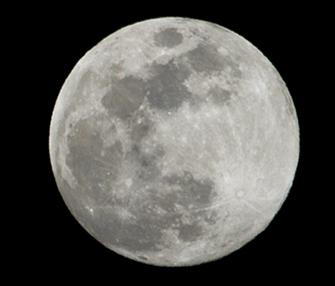
As far as whether or not the moon rabbits hang out with one another, I would imagine it depends on where you are on "the moon" in a cosmic sense. Certainly the abodes of moony Titans like Chandra are often lousy with rabbits, but if you got into a rocketship and landed on the airless surface of the room, it's unlikely that you'd find any floppy-eared rodents hopping around. The moon bunnies are probably in a Terra Incognita - perhaps several Terrae, actually - and while you could invent some kind of moon bunny Terra paradise, the game already gives you a convenient out with the concept of the Lunar Estate boon. We would assume that various moon deities' complements of bunnies are located within the borders of their lunar estates, meaning that the moon science knows about is completely devoid of cottontails, but a sideways Psychopomp step into Chang'e's house might well bring you face to face with the famous lunar rabbit itself.
We've had Scions who visited moon gods at home in the past run into quite a few bunnies, from the general riot of rabbit life in Tecciztecatl's estate to the single, somewhat solemn bunny companion of the Chinese moon goddess. Lunar estates are separate and sovereign, so I doubt the bunnies are traveling between them much, but that doesn't really prevent there from being plenty of rabbits wherever you turn on the moon.
Or hell, invent a Terra Incognita on the moon and name it The Bunny Paradise, and fill it full of zillions of adorable rabbits who frolic in the silvery fields and cuddle visitors with their soft floppy ears. We're not the bosses of you.
Saturday, December 15, 2012
Life on the River
Question: Okay, I have three questions about the Pesedjet. First, did you make any changes to their godrealm? Second, how many moon gods do they have? Finally, do the four sons of Horus - the gods of the canopic jars - live in the overworld or the underworld?
Answers about the Pesedjet - hit it!
1) We actually haven't really decided what to do with the Egyptian Overworld, to tell you the truth. This is mostly because, in all technicality, they kind of don't have one. Egyptian cosmology is very specific about the world's parts and divisions and about the passage into the afterlife, but when it comes to the abode of the gods themselves, it's surprisingly sketchy. Some scholars believe that the gods were simply considered to live in the sky among the stars; others point out that the lack of a fixed overworld suggests that they were believed to be among humans, inhabiting the world as divine powers instead of living in a kingdom of their own. Another popular theory is that the gods were thought to have inhabited their temples, thus being concretely located in their centers of worship. Still others think they probably all resided in the paradisaical afterlife of Osiris' kingdom in Duat, not because they were dead but simply because it was the nicest place around, though this theory is usually countered by other scholars who point out that Osiris being trapped in Duat is clearly something that separates him from the other gods. Certainly some of the death- and judgment-aligned gods of the Pesedjet spend a lot of time in the underworld, but this is always in pursuit of their jobs, not necessarily because they live there. The only possible direct reference to an overworld home of the gods is in the Pyramid Texts, in which there is mentioned a place called On over which Ra was king, but there's no description of the place aside from a possible implication of it having grasslands.
Scion tries to solve this problem by just creating an Egyptian-flavored river-overworld called Iteru (literally just the word for the Nile), which is a nice compromise since it both sets the gods apart from humanity but also retains that idea of them as part of the most important features of the world, especially the all-important river. We really don't know if we're going to keep it, since it sticks in our craw with all its made-up-ness, but then again it's not doing a bad job, considering the lack of basis the writers had to work with. Our PCs have so far only encountered gods of the Pesedjet in Duat, the World or their private Sanctums.
2) The Pesedjet have a lot of moon gods! The most famous is of course Thoth, who bargained an extra five days out of the year by playing games with the moon and thereafter used it to set the course of time for humanity, but he's not the only one. Khonsu, a hawk-headed moon god variously associated with Thoth and other lunar deities, serves as a deity who embodies light in the darkness and illumination and protection for nighttime travelers. Bastet was originally associated with the sun, but her heavy syncretization with Artemis after the Greeks began to trade culture with the Egyptians saw her transform into a lunar goddess for several centuries until the end of the ancient Egyptian civilization. Finally, way back in the misty beginnings of the Old Kingdom, we find the ancient moon-god Iah (literally "moon"), a personification of the moon that lost ground to the younger moon-gods in the later centuries of Egyptian religion and in Scion terms is probably an ancient Titan.
3) Egyptian myth doesn't tell us where the sons of Horus reside, but since they have to do almost exclusively with protection of the dead, we consider them to have their residences in Duat. Our PCs have actually met them there, where they discovered that they have no taste at all for hanging out with people who spend millennia collecting human body parts.
Answers about the Pesedjet - hit it!
1) We actually haven't really decided what to do with the Egyptian Overworld, to tell you the truth. This is mostly because, in all technicality, they kind of don't have one. Egyptian cosmology is very specific about the world's parts and divisions and about the passage into the afterlife, but when it comes to the abode of the gods themselves, it's surprisingly sketchy. Some scholars believe that the gods were simply considered to live in the sky among the stars; others point out that the lack of a fixed overworld suggests that they were believed to be among humans, inhabiting the world as divine powers instead of living in a kingdom of their own. Another popular theory is that the gods were thought to have inhabited their temples, thus being concretely located in their centers of worship. Still others think they probably all resided in the paradisaical afterlife of Osiris' kingdom in Duat, not because they were dead but simply because it was the nicest place around, though this theory is usually countered by other scholars who point out that Osiris being trapped in Duat is clearly something that separates him from the other gods. Certainly some of the death- and judgment-aligned gods of the Pesedjet spend a lot of time in the underworld, but this is always in pursuit of their jobs, not necessarily because they live there. The only possible direct reference to an overworld home of the gods is in the Pyramid Texts, in which there is mentioned a place called On over which Ra was king, but there's no description of the place aside from a possible implication of it having grasslands.
Scion tries to solve this problem by just creating an Egyptian-flavored river-overworld called Iteru (literally just the word for the Nile), which is a nice compromise since it both sets the gods apart from humanity but also retains that idea of them as part of the most important features of the world, especially the all-important river. We really don't know if we're going to keep it, since it sticks in our craw with all its made-up-ness, but then again it's not doing a bad job, considering the lack of basis the writers had to work with. Our PCs have so far only encountered gods of the Pesedjet in Duat, the World or their private Sanctums.
2) The Pesedjet have a lot of moon gods! The most famous is of course Thoth, who bargained an extra five days out of the year by playing games with the moon and thereafter used it to set the course of time for humanity, but he's not the only one. Khonsu, a hawk-headed moon god variously associated with Thoth and other lunar deities, serves as a deity who embodies light in the darkness and illumination and protection for nighttime travelers. Bastet was originally associated with the sun, but her heavy syncretization with Artemis after the Greeks began to trade culture with the Egyptians saw her transform into a lunar goddess for several centuries until the end of the ancient Egyptian civilization. Finally, way back in the misty beginnings of the Old Kingdom, we find the ancient moon-god Iah (literally "moon"), a personification of the moon that lost ground to the younger moon-gods in the later centuries of Egyptian religion and in Scion terms is probably an ancient Titan.
3) Egyptian myth doesn't tell us where the sons of Horus reside, but since they have to do almost exclusively with protection of the dead, we consider them to have their residences in Duat. Our PCs have actually met them there, where they discovered that they have no taste at all for hanging out with people who spend millennia collecting human body parts.
Tuesday, January 10, 2012
Bad Moon Rising
Question: What happened to Eclipse Halo?
We booted that sucker out of the game. It's not because we hate Moon; let me explain.
The easiest mechanical explanation was that, as a boon, it was kind of lackluster. The imagery was nice, but "roll Appearance + Presence, blind people" is already in the game as both a Sun boon (Heavenly Flare) and an Appearance knack (Blinding Visage), both powers that, in addition to doing exactly the same thing, also work better, last longer, and can be used more than once per scene. So that wasn't very exciting out of the gate.
But, more importantly, we didn't feel it was sufficiently mythic to warrant inclusion. The idea of the moon eclipsing the sun is a scientific one (which is not to say that some ancient cultures, particularly the Chinese and Babylonians, weren't hot-stuff astronomists who probably knew about it); mythically, however, the moon is seldom the bringer of darkness but rather the light in the darkness, sort of mankind's last hope in the stygian night. Eclipses were definitely mythic events, but they're usually attributed to some force of darkness - Apep, for example, in Egypt, swallowing the sun while Set was off attending the birth of his son instead of defending Ra, or the Great Bear biting the sun in Pomo legend because it wouldn't get out of his way. And since the Darkness purview is already covering this idea with its high-level boon Eclipse, there didn't seem to be much use for it in Moon. I could see a different eclipse-oriented boon making a comeback, based on the Inuit myths of the two heavenly bodies chasing one another down or some similar idea, but so far we haven't come up with one that was worth including.
Any way you slice it, blinding people with the corona of the sun is not a Moony kind of a thing to do (that's more like using Sun by proxy). If we were going to put some kind of eclipse-y thing back into Moon, it would probably not involve blinding, since that's more the brightness of the sun or the darkness of the night; the moon's the gentle medium between the two.
We booted that sucker out of the game. It's not because we hate Moon; let me explain.
The easiest mechanical explanation was that, as a boon, it was kind of lackluster. The imagery was nice, but "roll Appearance + Presence, blind people" is already in the game as both a Sun boon (Heavenly Flare) and an Appearance knack (Blinding Visage), both powers that, in addition to doing exactly the same thing, also work better, last longer, and can be used more than once per scene. So that wasn't very exciting out of the gate.
But, more importantly, we didn't feel it was sufficiently mythic to warrant inclusion. The idea of the moon eclipsing the sun is a scientific one (which is not to say that some ancient cultures, particularly the Chinese and Babylonians, weren't hot-stuff astronomists who probably knew about it); mythically, however, the moon is seldom the bringer of darkness but rather the light in the darkness, sort of mankind's last hope in the stygian night. Eclipses were definitely mythic events, but they're usually attributed to some force of darkness - Apep, for example, in Egypt, swallowing the sun while Set was off attending the birth of his son instead of defending Ra, or the Great Bear biting the sun in Pomo legend because it wouldn't get out of his way. And since the Darkness purview is already covering this idea with its high-level boon Eclipse, there didn't seem to be much use for it in Moon. I could see a different eclipse-oriented boon making a comeback, based on the Inuit myths of the two heavenly bodies chasing one another down or some similar idea, but so far we haven't come up with one that was worth including.
Any way you slice it, blinding people with the corona of the sun is not a Moony kind of a thing to do (that's more like using Sun by proxy). If we were going to put some kind of eclipse-y thing back into Moon, it would probably not involve blinding, since that's more the brightness of the sun or the darkness of the night; the moon's the gentle medium between the two.
Subscribe to:
Posts (Atom)