Question: Would you ever consider running a game in which the Titans were not the main enemy?
Sure. We've talked about ways to do so before, but generally, it's entirely possible not to use the Titans as your main enemies. If they're still in Tartarus, the gods are fully capable of scheming, fighting and even warring among themselves, both cross-pantheon and among their own people.
This is assuming the Titans are locked up or otherwise neutralized, however - by definition, the gods pretty much have to put their all into fighting them if they're loose, because if they don't the World is going to blow up and the Overworld sieges are going to end in tragedy for everyone.
Of course, the big question is always why - why is it you want to run a game Titan-free? Do you have some kind of plot that you feel like can't possibly work with the Titans in play (rare, because believe me, gods do not stop politicking and screwing one another over just because they're also fighting the Titans)? Is your idea going to have enough staying power over the lifetime of your Scions, with enough new challenges and possibilities at every level? Are you sure you want to cut yourself off from the vast options of the Titans and Titanspawn available in the world, and what are you planning to replace them with as the antagonistic mainstays of the game?
But, if you have answers for all those questions, then sure, go for it. One of our games, the Eastern Promises chronicle, is currently running with the Titans still imprisoned in Tartarus and the pantheons fighting a complex political influence war among themselves, and so far it's going very well (though the Titans and their minions are not entirely absent). There's no reason not to try something like that out if you have a plan; have a blast!
Titans and Titanspawn are fabulous antagonists, but they don't have to be the only ones you use in games. The gods antagonize one another quite frequently and impressively.

Monday, January 21, 2013

The Flayed Lord
Question: So, Family (capital F and all) seems pretty important to the Aztecs. And yet, looking at your pantheon page for them, there's an odd man out. So my question is this: what's the deal with Xipe Totec and his relationship to the rest of the pantheon? Is he a welcomed member of the family, or just 'that one god that feeds our people so we don't sacrifice him'? What's it like for him being the only Aztec not related to the others by blood?
Xipe Totec is in a weird position. He's probably actually a pre-Aztec god, adopted by them at some point in their conquests, but he's neither as wildly influential as Quetzalcoatl nor as marginalized as other adopted gods like Xochipilli. He has an incredibly important function - so important, in fact, that he's one of the four Tezcatlipocas - and yet he also doesn't quite seem to fit into the pantheon anywhere, since we have no surviving genealogy for him and his origins are shrouded in pre-Hispanic mystery. Oddly enough for an Aztec god, he also has no apparent consort, not even a representational one; he's somewhat related to other maize and fertility gods like Chicomecoatl, Xilonen or Centeotl, but they're all spoken for and never said to be his true relatives. He also has no children we know of. So where does he fit into this tightly-knit, familially loyal pantheon?
Well, to begin with, there actually is a familial connection for Xipe Totec, although it's buried in a myth that's less well-known than some of the other Aztec stories. In the Five Suns creation myth, Xipe Totec, along with Quetzalcoatl, Tezcatlipoca and Huitzilopochtli, is born at the beginning of the universe from the original Aztec creation Titan, Ometeotl (sometimes split into two male and female halves that are both the same person, Ometecuhtli and Omecihuatl). He is therefore a full brother to all three of the other Tezcatlipocas, a far cry from a disconnected nobody.
However, this myth is in direct contradiction to other stories surrounding the birth of the Tezcatlipocas, the most famous being Coatlicue's parthenogenic mothering of Huitzilopochtli and Quetzalcoatl's status as son of Mixcoatl. Storytellers looking for a way to make Xipe Totec more connected could follow the Five Suns mythic narrative that makes him brother to the other major powers of the pantheon, but if they do so may find themselves wondering what to do with these other awesome stories of different gods' birth. One option would be to simply transport Xipe Totec's relation to his brothers down to the other myths, declaring him a son of Coatlicue so he can keep his original relationship to them despite the fact that we have no record of him as Coatlicue's child. Another would be to say that, since there also exists a variant myth that says the Tezcatlipocas sacrificed themselves to create the world, both myths are true and they were both born originally of Ometeotl and then reborn of Coatlicue and/or Mixcoatl at a later time. In that case, you could again include Xipe Totec with them, or you could decide that he was the only one of the brothers who didn't die in the sacrifice, and thus has no extra story of his birth.
As far as how the pantheon treats him, brother or not, he's probably considered no less a full and important one of their number. While he might not spark the personal dedication of Loyalty if you decide he isn't anyone's relative, he is still one of the all-important Aztec divinities, a Tezcatlipoca in his own right and a necessary person to the continuing preservation of the universe. Both Conviction and Duty are on his side, and, more importantly, not having a specific genealogy may not make much difference to the rest of the Aztlanti anyway. If he's one of them, he shares the same blood; it doesn't really matter who his mother was, because he's Aztec and that's enough to make him an indispensable part of the community. To the ancient Aztecs, being one of their people by blood meant that they were part of the whole; the exact lineage would determine your place in society, but you would still be part of society regardless. So, I would assume, it is with Xipe Totec.
Of course, if you're setting up a game that plays on racial tensions between native Mexican gods and their borrowed Toltec and Maya pantheon-members, you might find it more interesting to consider him an unrelated import, which would give you a nice split down the middle - Huitzilopochtli and Tezcatlipoca representing for the Mexica, and Quetzalcoatl and Xipe Totec across the way for the conquered peoples they absorbed.
No matter what you choose, though, Xipe Totec is a Tezcatlipoca and one of the most important of the Aztec gods by anyone's reckoning. What he says matters and what he does is to be respected, so whether he's a native son on par with his brothers or a foreign dignitary who made his way to the top, he's nobody to be ignored.
Xipe Totec is in a weird position. He's probably actually a pre-Aztec god, adopted by them at some point in their conquests, but he's neither as wildly influential as Quetzalcoatl nor as marginalized as other adopted gods like Xochipilli. He has an incredibly important function - so important, in fact, that he's one of the four Tezcatlipocas - and yet he also doesn't quite seem to fit into the pantheon anywhere, since we have no surviving genealogy for him and his origins are shrouded in pre-Hispanic mystery. Oddly enough for an Aztec god, he also has no apparent consort, not even a representational one; he's somewhat related to other maize and fertility gods like Chicomecoatl, Xilonen or Centeotl, but they're all spoken for and never said to be his true relatives. He also has no children we know of. So where does he fit into this tightly-knit, familially loyal pantheon?
Well, to begin with, there actually is a familial connection for Xipe Totec, although it's buried in a myth that's less well-known than some of the other Aztec stories. In the Five Suns creation myth, Xipe Totec, along with Quetzalcoatl, Tezcatlipoca and Huitzilopochtli, is born at the beginning of the universe from the original Aztec creation Titan, Ometeotl (sometimes split into two male and female halves that are both the same person, Ometecuhtli and Omecihuatl). He is therefore a full brother to all three of the other Tezcatlipocas, a far cry from a disconnected nobody.
However, this myth is in direct contradiction to other stories surrounding the birth of the Tezcatlipocas, the most famous being Coatlicue's parthenogenic mothering of Huitzilopochtli and Quetzalcoatl's status as son of Mixcoatl. Storytellers looking for a way to make Xipe Totec more connected could follow the Five Suns mythic narrative that makes him brother to the other major powers of the pantheon, but if they do so may find themselves wondering what to do with these other awesome stories of different gods' birth. One option would be to simply transport Xipe Totec's relation to his brothers down to the other myths, declaring him a son of Coatlicue so he can keep his original relationship to them despite the fact that we have no record of him as Coatlicue's child. Another would be to say that, since there also exists a variant myth that says the Tezcatlipocas sacrificed themselves to create the world, both myths are true and they were both born originally of Ometeotl and then reborn of Coatlicue and/or Mixcoatl at a later time. In that case, you could again include Xipe Totec with them, or you could decide that he was the only one of the brothers who didn't die in the sacrifice, and thus has no extra story of his birth.
As far as how the pantheon treats him, brother or not, he's probably considered no less a full and important one of their number. While he might not spark the personal dedication of Loyalty if you decide he isn't anyone's relative, he is still one of the all-important Aztec divinities, a Tezcatlipoca in his own right and a necessary person to the continuing preservation of the universe. Both Conviction and Duty are on his side, and, more importantly, not having a specific genealogy may not make much difference to the rest of the Aztlanti anyway. If he's one of them, he shares the same blood; it doesn't really matter who his mother was, because he's Aztec and that's enough to make him an indispensable part of the community. To the ancient Aztecs, being one of their people by blood meant that they were part of the whole; the exact lineage would determine your place in society, but you would still be part of society regardless. So, I would assume, it is with Xipe Totec.
Of course, if you're setting up a game that plays on racial tensions between native Mexican gods and their borrowed Toltec and Maya pantheon-members, you might find it more interesting to consider him an unrelated import, which would give you a nice split down the middle - Huitzilopochtli and Tezcatlipoca representing for the Mexica, and Quetzalcoatl and Xipe Totec across the way for the conquered peoples they absorbed.
No matter what you choose, though, Xipe Totec is a Tezcatlipoca and one of the most important of the Aztec gods by anyone's reckoning. What he says matters and what he does is to be respected, so whether he's a native son on par with his brothers or a foreign dignitary who made his way to the top, he's nobody to be ignored.
Sunday, January 20, 2013
The Industrial Revolution
Question: Where do I send my "I'm a player and I really need Industry fixed so I can use it!" ticket?!
Right here - received loud and clear!
While we really enjoy working on what the community votes for next, because it's fun to be useful to everybody, we totally get that there are certain things on our lists that are more pressing for players than others. Sure, if you're about to start a game full of Japanese lore, you might need the Amatsukami rewrite done ASAP, but if you're Johnny Ptahson and really want to get your Industry groove on, that being reworked so that it functions better is probably way higher up your priority list.
This actually applies to our own players as well - some of them need things (like, say, Industry or purview Avatars) done that are relevant to them more than they need us to put out something like a pantheon rewrite for the entire community. Our players always need to come first, so lately we've really been brainstorming on ways to keep using the input from all of you guys without shortchanging them just because there are only nine of them and god knows how many of you.
We're thinking about weighting the polls a bit, giving a big vote bump to the things we know our players need more, or maybe even taking a break from the more ambitious projects so we can narrow the options down to just things our players could really use right now. We also don't want to ignore the rest of you guys, but it's also possible in the future that we'll have to make a unilateral decision to push whatever's winning the poll back a slot and work on something else that our players need more immediately, so if we do, please forgive us.
We love all of you guys, but our players are the ones who know they can come to our house with bats if we take too long.
Right here - received loud and clear!
While we really enjoy working on what the community votes for next, because it's fun to be useful to everybody, we totally get that there are certain things on our lists that are more pressing for players than others. Sure, if you're about to start a game full of Japanese lore, you might need the Amatsukami rewrite done ASAP, but if you're Johnny Ptahson and really want to get your Industry groove on, that being reworked so that it functions better is probably way higher up your priority list.
This actually applies to our own players as well - some of them need things (like, say, Industry or purview Avatars) done that are relevant to them more than they need us to put out something like a pantheon rewrite for the entire community. Our players always need to come first, so lately we've really been brainstorming on ways to keep using the input from all of you guys without shortchanging them just because there are only nine of them and god knows how many of you.
We're thinking about weighting the polls a bit, giving a big vote bump to the things we know our players need more, or maybe even taking a break from the more ambitious projects so we can narrow the options down to just things our players could really use right now. We also don't want to ignore the rest of you guys, but it's also possible in the future that we'll have to make a unilateral decision to push whatever's winning the poll back a slot and work on something else that our players need more immediately, so if we do, please forgive us.
We love all of you guys, but our players are the ones who know they can come to our house with bats if we take too long.
Accuracy is in the Eye of the Reader
Question: Which pantheons do you think have been described most and least accurately in the rulebooks?
This question's been in our pile for a long time without an answer, but it's not because of lack of caring. It's just that it's a deceptively enormous question, possibly too big to address in a single post.
When we're talking about how accurately a pantheon is portrayed, there are tons of moving parts that go into that. There's the basic stats attributed to each god in order to represent what they're about, and how well those match up to the way those gods were viewed in their home religions. There's the cosmological and cosmographical aspect of a pantheon, where the book attempts to translate a culture's ancient view of the universe and the magical locales within it into something usable for a Scion game's players. There's the image the books give you of the culture itself, not just through Virtues but through the way the gods and heroes of it are portrayed as behaving and being part of the setting. And then there's the great, overarching question of when it's even necessary or helpful for a pantheon to be strictly adherent to its culture's myths, and when it's okay or even a good idea to deviate or create new material.
And that is a whole lot (a whole lot) of stuff to try to talk about in one blog post. It's a dauntingly huge number of things, many of them open to different interpretations. So while I know the person asking with question is looking for something very simple, like a number-scale that rates the pantheons with how much Storytellers should trust using them out of the box, it's anything but simple to work out from our end.
I'm going to take a stab at it today, but in very bare-bones terms, and mostly focused on the pantheons' associated powers and pantheon-specific purviews. If you were looking for something else, please feel free to send it in to the question box in the future and we'll try to cut this bad boy down to size.
To start with, it's easy to measure how much we thought the original pantheons' associations were broken, because we can just compare against our own current end product. If you give each pantheon a point every time an association that doesn't work has to be removed or one that should be there has to be added (as well as adding a lump of, say, five points whenever a whole deity is removed or added), the highest-scoring pantheons are the ones with the most problems. There are four basic categories (and by the way, we're not penalizing pantheons that came out before Frost, Illusion or Stars for failing to give it to appropriate gods):
Pretty Decent: The Dodekatheon (36 points)
Kind of a Hot Mess: The Pesedjet (42 points), the Yazata (45 points), the Aztlanti (47 points), the Tuatha de Danann (48 points)
I Guess It Could Technically Be Worse: The Aesir (61 points), the Devas (72 points)
WTF: The Loa (full pantheon rewrite), the Nemetondevos (only really one or two Legend 12 gods), the Yankee/Allied/Soviet/Atlanteans (wtf)
We haven't overhauled them yet, but my guess would be that the Amatsukami will probably be around the second category, and the Shen closer to the third. Special honorable mention to Dionysus, Kali and Thor as the only three gods with no major association changes!
There is no category better than "decent", because for the most part the pantheons in the books are extremely inconsistent about their standards in applying associated powers, which is one of the things that happens when you have a lot of different freelancers with different ideas working on the same end product. It ends up schizophrenic and incontiguous. There are also varying levels of difficulty when it comes to statting a pantheon thanks to different concepts and resources for each, so it's no surprise that the Dodekatheon, with a vast body of recognizable-to-westerners literature and very simple, clear functions, scored the highest while pantheons like the Devas, with wildly differing sects, splinters and evolutions over the past few millennia, or the Loa, who are really three or four different religions trying to be smashed together, score abysmally low. For pantheons like the Dodekatheon or Pesedjet, you can get away with cursory research because they're very popular and easily accessible; for pantheons like the Devas or Loa, you really need an expert or some serious book-time to get a good command of what they're about.
I know at least some of you came here for a table, so let me give you a table on the appropriateness and usability of the original book's pantheon-specific purviews:
We totally recognize that PSPs are very difficult to write; they need to be culturally strong and relevant, powerful enough to be widely used and coveted but also not powerful enough to break the game, and interesting throughout their levels for Scions of all different types and functions. That's a really tall order for a writer, and it's very obvious that it's a hard task when you look at the wide variation in how well the PSPs from the original line tend to work. They're the place that I think I most often see Storytellers forced to house-rule, even if they normally like to play vanilla, simply out of self-defense. Jotunblut is so pathetic that I've literally never heard of a group that used it as written, while Enech will blow up your game if you let it and things like Cheval or Deuogdonio can be rendered totally useless depending on the kinds of stories you're embarking on.
There's a lot more to be said about how the different pantheons' cosmologies work and how they're presented as peoples and religions, but this post is already unreasonably long and all we did was do a quick swipe at mechanics. Of course (as if you didn't already know!), this is all based on how we run our games and house-rules, so no one needs to feel obligated not to use the original version of Heku or to change Osiris' associated powers. But you guys asked how we do it, and the answer is that the original line is so inconsistent and busted sometimes that JSR as a whole was created just to keep up with all the ways we needed to fix it.
And with that, back to working with the entirely necessary rewrite of Africa!
This question's been in our pile for a long time without an answer, but it's not because of lack of caring. It's just that it's a deceptively enormous question, possibly too big to address in a single post.
When we're talking about how accurately a pantheon is portrayed, there are tons of moving parts that go into that. There's the basic stats attributed to each god in order to represent what they're about, and how well those match up to the way those gods were viewed in their home religions. There's the cosmological and cosmographical aspect of a pantheon, where the book attempts to translate a culture's ancient view of the universe and the magical locales within it into something usable for a Scion game's players. There's the image the books give you of the culture itself, not just through Virtues but through the way the gods and heroes of it are portrayed as behaving and being part of the setting. And then there's the great, overarching question of when it's even necessary or helpful for a pantheon to be strictly adherent to its culture's myths, and when it's okay or even a good idea to deviate or create new material.
And that is a whole lot (a whole lot) of stuff to try to talk about in one blog post. It's a dauntingly huge number of things, many of them open to different interpretations. So while I know the person asking with question is looking for something very simple, like a number-scale that rates the pantheons with how much Storytellers should trust using them out of the box, it's anything but simple to work out from our end.
I'm going to take a stab at it today, but in very bare-bones terms, and mostly focused on the pantheons' associated powers and pantheon-specific purviews. If you were looking for something else, please feel free to send it in to the question box in the future and we'll try to cut this bad boy down to size.
To start with, it's easy to measure how much we thought the original pantheons' associations were broken, because we can just compare against our own current end product. If you give each pantheon a point every time an association that doesn't work has to be removed or one that should be there has to be added (as well as adding a lump of, say, five points whenever a whole deity is removed or added), the highest-scoring pantheons are the ones with the most problems. There are four basic categories (and by the way, we're not penalizing pantheons that came out before Frost, Illusion or Stars for failing to give it to appropriate gods):
Pretty Decent: The Dodekatheon (36 points)
Kind of a Hot Mess: The Pesedjet (42 points), the Yazata (45 points), the Aztlanti (47 points), the Tuatha de Danann (48 points)
I Guess It Could Technically Be Worse: The Aesir (61 points), the Devas (72 points)
WTF: The Loa (full pantheon rewrite), the Nemetondevos (only really one or two Legend 12 gods), the Yankee/Allied/Soviet/Atlanteans (wtf)
We haven't overhauled them yet, but my guess would be that the Amatsukami will probably be around the second category, and the Shen closer to the third. Special honorable mention to Dionysus, Kali and Thor as the only three gods with no major association changes!
There is no category better than "decent", because for the most part the pantheons in the books are extremely inconsistent about their standards in applying associated powers, which is one of the things that happens when you have a lot of different freelancers with different ideas working on the same end product. It ends up schizophrenic and incontiguous. There are also varying levels of difficulty when it comes to statting a pantheon thanks to different concepts and resources for each, so it's no surprise that the Dodekatheon, with a vast body of recognizable-to-westerners literature and very simple, clear functions, scored the highest while pantheons like the Devas, with wildly differing sects, splinters and evolutions over the past few millennia, or the Loa, who are really three or four different religions trying to be smashed together, score abysmally low. For pantheons like the Dodekatheon or Pesedjet, you can get away with cursory research because they're very popular and easily accessible; for pantheons like the Devas or Loa, you really need an expert or some serious book-time to get a good command of what they're about.
I know at least some of you came here for a table, so let me give you a table on the appropriateness and usability of the original book's pantheon-specific purviews:
| PSP | Rating | Usability |
| Arete | 9 | Flawless mechanics, illustrates concept well |
| Itztli | 8 | Pretty good; basic concepts are there and mechanics work well; needs only minor tweaking |
| Tsukumo-gami | 6 | A good fundamental idea, but lackluster and inconsistent implementation; often underpowered |
| Samsara | 6 | Good basic ideas, but poor execution; some bafflingly contradictory mechanics; trying to do too much |
| Asha | 5 | Another good base concept, but implementation incredibly boring and often overpowered |
| Cheval | 4 | Concept is hamstrung by being tied to very specific concept and ignoring traditional African practices; not very exciting, only situationally useful |
| Deuogdonio | 4 | Concept is interesting but not really tied to the culture strongly; mechanics work well but are punishingly hard to use; only helpful for most Scions at low levels |
| Heku | 2 | Theoretically good ideas, but hopelessly poor mechanics; doesn't represent core concept well; has entire levels useless for many characters |
| Enech | what | Wildly overpowered and broken; fiendishly difficult to manage in play; needs mechanics help like nobody's business |
| Jotunblut | no | Both useless to most players and failing to be closely tied to Norse ideas; so bad almost no game ever uses it |
| Taiyi | stop it | Inconsistent and lacks good unifying theme; boons are alternately over- or underpowered in the extreme; lazy execution; does not reflect Chinese mythological ideas well; basically everything is bad here |
We totally recognize that PSPs are very difficult to write; they need to be culturally strong and relevant, powerful enough to be widely used and coveted but also not powerful enough to break the game, and interesting throughout their levels for Scions of all different types and functions. That's a really tall order for a writer, and it's very obvious that it's a hard task when you look at the wide variation in how well the PSPs from the original line tend to work. They're the place that I think I most often see Storytellers forced to house-rule, even if they normally like to play vanilla, simply out of self-defense. Jotunblut is so pathetic that I've literally never heard of a group that used it as written, while Enech will blow up your game if you let it and things like Cheval or Deuogdonio can be rendered totally useless depending on the kinds of stories you're embarking on.
There's a lot more to be said about how the different pantheons' cosmologies work and how they're presented as peoples and religions, but this post is already unreasonably long and all we did was do a quick swipe at mechanics. Of course (as if you didn't already know!), this is all based on how we run our games and house-rules, so no one needs to feel obligated not to use the original version of Heku or to change Osiris' associated powers. But you guys asked how we do it, and the answer is that the original line is so inconsistent and busted sometimes that JSR as a whole was created just to keep up with all the ways we needed to fix it.
And with that, back to working with the entirely necessary rewrite of Africa!
Saturday, January 19, 2013
Playing Tongue Twister!
Surprisingly, we actually have comparatively few questions this week, and most of them are already in the queue to be answered in writing. But we also have this vlog-specific question, so the blog's fascination with the Aztecs, which has been seriously booming lately, continues!
Question: One of my favorite parts of your vlogs is hearing Anne pronounce the names of the Aztec gods. Even when I think I have a grasp on how to say them, she says them differently. I request a section of the vlog with Anne showing us how to pronounce the names of the Aztec gods. Too much to ask?
Next time we do this, John makes hilarious attempts to pronounce the Ø vowel and declares his undying hatred for triphthongs.
Question: One of my favorite parts of your vlogs is hearing Anne pronounce the names of the Aztec gods. Even when I think I have a grasp on how to say them, she says them differently. I request a section of the vlog with Anne showing us how to pronounce the names of the Aztec gods. Too much to ask?
Next time we do this, John makes hilarious attempts to pronounce the Ø vowel and declares his undying hatred for triphthongs.
The Veil of Lies
Question: Is it permissible for the same Titanrealm to be simultaneously attacking two different Overworlds? As a specific example I had an idea of the Devas and the Yazata being under siege by the same Titanrealm, only for the Devas to see it as Maya, Titanrealm of Illusion, while the Yazata see it as Druj, Titanrealm of Lies, and the split between the pantheons is a result of machinations by the ruling Avatar Ahriman/Mayasura back during the First Titan War. Do you think the idea has any merit?
Holy shit. Who are you? Are you in our house? Oh, my god, the blog questions are coming from inside the house!
What you're describing is pretty much exactly the way we run the Titanrealm of Illusion; it is simultaneously opposing the Devas, who see it as led by Mayasura, lord of illusion, and the Yazata, who see it as led by Ahriman/Angra Mainyu, lord of lies. Lies, illusion, deception, and all other manner of obscuring what is actually there are the domain of the Titanrealm, which is so convincing at them that it has been confusing both pantheons for time immemorial. The Devas believe the Yazata work for the Titan, while the Yazata believe the same in reverse; both are unfortunately afflicted by the realm's tendency to use illusions of their one-time allies as mortal enemies against them.
So... yes, we would say the idea has merit, because it's what we're already doing and it works pretty beautifully. In all other cases, we prefer to stick with the one Titanrealm, one pantheon model, but for the Devas and Yazata, who are already one anothers' worst enemies, this setup makes a great deal of awesome mythical sense.
(Seriously, though, if you're in one of my closets or something, please leave while I'm at work.)
Of course, keep in mind that all Titanrealms are sort of simultaneously attacking all Overworlds; none of them are really only angry at one set of gods, but rather all opposed to all of them on a fundamental, order-and-preservation of the universe level. Titan Avatars of various cultures are likely to harry their home pantheons regardless of which pantheon the realm as a whole most often lays concerted siege to, so it's always possible for agents of Muspelheim to be attacking someone other than the Aesir. It's just not as common or concerted an effort.
Really, though, please don't hide in my trunk or anything.
Holy shit. Who are you? Are you in our house? Oh, my god, the blog questions are coming from inside the house!
What you're describing is pretty much exactly the way we run the Titanrealm of Illusion; it is simultaneously opposing the Devas, who see it as led by Mayasura, lord of illusion, and the Yazata, who see it as led by Ahriman/Angra Mainyu, lord of lies. Lies, illusion, deception, and all other manner of obscuring what is actually there are the domain of the Titanrealm, which is so convincing at them that it has been confusing both pantheons for time immemorial. The Devas believe the Yazata work for the Titan, while the Yazata believe the same in reverse; both are unfortunately afflicted by the realm's tendency to use illusions of their one-time allies as mortal enemies against them.
So... yes, we would say the idea has merit, because it's what we're already doing and it works pretty beautifully. In all other cases, we prefer to stick with the one Titanrealm, one pantheon model, but for the Devas and Yazata, who are already one anothers' worst enemies, this setup makes a great deal of awesome mythical sense.
(Seriously, though, if you're in one of my closets or something, please leave while I'm at work.)
Of course, keep in mind that all Titanrealms are sort of simultaneously attacking all Overworlds; none of them are really only angry at one set of gods, but rather all opposed to all of them on a fundamental, order-and-preservation of the universe level. Titan Avatars of various cultures are likely to harry their home pantheons regardless of which pantheon the realm as a whole most often lays concerted siege to, so it's always possible for agents of Muspelheim to be attacking someone other than the Aesir. It's just not as common or concerted an effort.
Really, though, please don't hide in my trunk or anything.
Friday, January 18, 2013
What the World Has to Offer
Question: Like the question about which pantheon is the biggest, this one is about the smallest-seeming pantheons: the Egyptian and Aztec gods. What do they offer to the world? I mean, they make some cool PC scions, but what do they offer aside from that if you are running a mostly Egypt/Mexico themed game? Like, the Greeks have all those monsters that a young band could go up against - minotaurs, centaurs, harpies, and so on. The Aztecs and Egyptians just have their gods.
You just made me blink, question-asker. I can kind of understand viewing the Aztlanti as one of the smaller pantheons in the game, because their lesser gods are comparatively few and not always well-understood, but what gives you the idea that the Pesedjet are small? There are tons of Egyptian gods, both minor and major; it was a really long-running religion with a very lively cast of deities. They're not even short on playable gods; even after we took Geb and Kebauet off the roster, there are thirteen of them, easily outstripping the smaller pantheons in the game.
If I were going to pinpoint the smallest pantheons in the game, it would probably be the Yazata - who are seriously tiny, as in the people you see on their family tree are pretty much the entire complement of gods - and the Tuatha, who have a decent number of minor members but a fairly small core group of Legend 12 gods. Even they aren't what I'd call "small" pantheons in a global sense, because there are a great many mythologies that have only two to five gods to their names, spread out across the world and its many cultures. Compared to the very small divine groups of the African Bushmen, southern Japanese Ryukyuan or various aboriginal Australian tribes, nine Yazata looks like a giant unified front.
But I think the second half of your question is more important, and very revealing of the strong European bias in Scion and a lot of its players. (Not that I'm picking on you at all - it's pretty normal for most of us!)
Scion is designed for a primarily western audience, mostly targeted at the United States and Canada with small forays into the more westerly of the European countries. It's therefore heavily based on the mythologies that those players are most likely to know well: the Greco-Roman ones, which most of us still learn in school at some point, and to a smaller extent the myths of the Norse gods, which have never gone out of style for most of the western world. They're by far the most well-known mythologies for the intended audience; the fact that Hindu myth is far larger, more complex and absolutely full of adventures and characters wasn't considered important enough to even get it into the game until Companion came out, because it just wasn't very familiar to western players and therefore not on the front lines when the developers were looking for material they thought players would want to use.
But most of us automatically know Greco-Roman and Norse myth, at least a little bit, which makes it seem more "real" and exciting to us. Everyone's heard of Pegasus, knows about Heracles and has at least a passing familiarity with the Greek gods. Everyone knows that Thor is the god of thunder, that he fights giants, and that Ragnarok means the end of the world. We see them all the time, whether in blockbuster movies like Clash of the Titans and Immortals, in popular book series like Percy Jackson orthe Thor comic books, or as the stars of computer games like Age of Mythology. They're a recognizable part of our pop culture, and as a result we tend to know them much, much better than any other pantheons.
Most players that come into Scion (obviously not you guys with anthropology degrees, so don't start getting offended) don't have that familiarity with other cultures' myths. There are no blockbuster movies about the Aztec gods, no popular western comic books that are all about the kami, and if you try to figure out the Pesedjet from Hollywood's infrequent forays into Egypt, you'll just come away with a vague notion that the only major god is some kind of werewolf-monster named Anubis and that maybe the Egyptian gods are all space aliens. As a generality, western culture occasionally borrows the trappings of other mythologies because they're cool and exotic, but it almost never looks into them deeper than that.
So your average player comes into this game with a pretty good foundation in Greco-Roman and maybe one other mythology, and they know all about cyclopes, pegasi, gorgons and other critters that might jump them. But since they have no real knowledge of the other pantheons, they don't have that background for them, and it looks like those mythologies have no important features but the gods themselves. And that, I think, is what's happening for you, my inquisitive friend - it's not that those mythologies don't have things to offer, but just that they aren't nearly as well-known. And that's okay, because not everyone has to come into this game with a background in ancient religions, and that's what this blog is here to help out with!
Egyptian mythology has plenty of mythical creatures of its own. While mummies really aren't one of them - the ancient Egyptians were not at all worried about mummified dead people, which is something that European explorers discovering them centuries later got all wigged out about - there are plenty of other creatures to call up from the annals of Egyptian folklore, from the immortal benu bird to the bizarre serpopard to the four-winged bait serpent to various different kinds of sphinxes, very distinct from the Greek versions. Thanks to the close proximity and overlap between the Greeks and the Egyptians, many creatures we tend to think of as Greek, like gryphons, were also probably originally borrowed from the Egyptians.
Aztec mythology is definitely not empty of folkloric creatures, either, but it's even more obscure to most players, because Egyptian mythology did get some historical attention in Europe and the United States while the Aztecs were much more poorly understood (thanks in part to the fact that they recorded things in pictorial and oral traditions instead of using a formal writing system). From Mexico come such antagonistic beasties as the hungry, man-drowning-and-eating ahuizotl, the lost spirits of the cihuateteo, those canine messengers of the underworld the itzcuintin, an entire race of malevolent, mostly-extinct giants called Quinametzin who may have survived the destruction of the earlier worlds, and of course the hideous, insect-like star-demons known as the tzitzimime. Modern Mexican folklore continues to believe in various other nasty little creatures as well - not just the cliched chupacabra, but also various kinds of malevolent or dangerous goblin-like creatures collectively called duende.
Seems like plenty enough antagonists to keep budding young Scions busy, right? But even more important are the other things each pantheon brings to the game world, far beyond just basic questions like what kinds of monsters Scions might fight. Each pantheon represents a unique culture and religion, which brings entirely new dimensions into the game with it. They bring in the fantastical other worlds of those religions, their underworlds and overworlds and Terrae Incognita and enchanted places and temples. They bring unique cosmic concepts like the necessity of sacrifice, the struggle of righteousness against disorder, the cyclical recreation of the world or the heavenly parts of the divine soul that the game would not otherwise benefit from. They bring personalities, powers and beliefs that exponentially increase the possibilites and options for practically anything Scions want to do in the world.
And that is why strong, fleshed-out pantheons, no matter what their size, are always awesome additions to the game. They aren't necessary for anyone who isn't interested or doesn't want to deal with them, but each added pantheon adds to the incredible, rich diversity and possibilities of the game world, just as each culture you learn about in real life adds to your understanding of how amazing the differences and similarities between human civilizations are. A new pantheon is much more than just a new set of divine parents and a few new Titanspawn to throw at players; it's another glorious and exciting piece of the entire game world.
No one should ever feel obligated to use all the pantheons we put out, or even all the pantheons in the original rules, if they aren't interested in or comfortable with them. No one should ever feel like they need to have a Masters degree or spend all their weekends researching to play this game; anyone who wants to should be able to walk in and create a rollicking adventure from whatever parts of whatever mythologies they most know and love. Every pantheon brings with it unique challenges, antagonists, concepts and deities, and Storytellers should use as many or few of them as they want to. If you feel like Greek mythology has more to offer you than Aztec, then there's no reason you can't run your game primarily based on Greek mythology.
But if you want to use things from those other mythologies, they're always there. All you have to do is go out and hunt them down.
You just made me blink, question-asker. I can kind of understand viewing the Aztlanti as one of the smaller pantheons in the game, because their lesser gods are comparatively few and not always well-understood, but what gives you the idea that the Pesedjet are small? There are tons of Egyptian gods, both minor and major; it was a really long-running religion with a very lively cast of deities. They're not even short on playable gods; even after we took Geb and Kebauet off the roster, there are thirteen of them, easily outstripping the smaller pantheons in the game.
If I were going to pinpoint the smallest pantheons in the game, it would probably be the Yazata - who are seriously tiny, as in the people you see on their family tree are pretty much the entire complement of gods - and the Tuatha, who have a decent number of minor members but a fairly small core group of Legend 12 gods. Even they aren't what I'd call "small" pantheons in a global sense, because there are a great many mythologies that have only two to five gods to their names, spread out across the world and its many cultures. Compared to the very small divine groups of the African Bushmen, southern Japanese Ryukyuan or various aboriginal Australian tribes, nine Yazata looks like a giant unified front.
But I think the second half of your question is more important, and very revealing of the strong European bias in Scion and a lot of its players. (Not that I'm picking on you at all - it's pretty normal for most of us!)
Scion is designed for a primarily western audience, mostly targeted at the United States and Canada with small forays into the more westerly of the European countries. It's therefore heavily based on the mythologies that those players are most likely to know well: the Greco-Roman ones, which most of us still learn in school at some point, and to a smaller extent the myths of the Norse gods, which have never gone out of style for most of the western world. They're by far the most well-known mythologies for the intended audience; the fact that Hindu myth is far larger, more complex and absolutely full of adventures and characters wasn't considered important enough to even get it into the game until Companion came out, because it just wasn't very familiar to western players and therefore not on the front lines when the developers were looking for material they thought players would want to use.
But most of us automatically know Greco-Roman and Norse myth, at least a little bit, which makes it seem more "real" and exciting to us. Everyone's heard of Pegasus, knows about Heracles and has at least a passing familiarity with the Greek gods. Everyone knows that Thor is the god of thunder, that he fights giants, and that Ragnarok means the end of the world. We see them all the time, whether in blockbuster movies like Clash of the Titans and Immortals, in popular book series like Percy Jackson orthe Thor comic books, or as the stars of computer games like Age of Mythology. They're a recognizable part of our pop culture, and as a result we tend to know them much, much better than any other pantheons.
Most players that come into Scion (obviously not you guys with anthropology degrees, so don't start getting offended) don't have that familiarity with other cultures' myths. There are no blockbuster movies about the Aztec gods, no popular western comic books that are all about the kami, and if you try to figure out the Pesedjet from Hollywood's infrequent forays into Egypt, you'll just come away with a vague notion that the only major god is some kind of werewolf-monster named Anubis and that maybe the Egyptian gods are all space aliens. As a generality, western culture occasionally borrows the trappings of other mythologies because they're cool and exotic, but it almost never looks into them deeper than that.
So your average player comes into this game with a pretty good foundation in Greco-Roman and maybe one other mythology, and they know all about cyclopes, pegasi, gorgons and other critters that might jump them. But since they have no real knowledge of the other pantheons, they don't have that background for them, and it looks like those mythologies have no important features but the gods themselves. And that, I think, is what's happening for you, my inquisitive friend - it's not that those mythologies don't have things to offer, but just that they aren't nearly as well-known. And that's okay, because not everyone has to come into this game with a background in ancient religions, and that's what this blog is here to help out with!
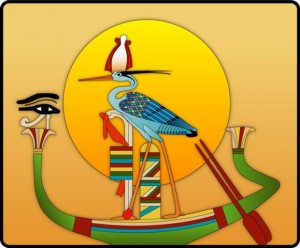
Egyptian mythology has plenty of mythical creatures of its own. While mummies really aren't one of them - the ancient Egyptians were not at all worried about mummified dead people, which is something that European explorers discovering them centuries later got all wigged out about - there are plenty of other creatures to call up from the annals of Egyptian folklore, from the immortal benu bird to the bizarre serpopard to the four-winged bait serpent to various different kinds of sphinxes, very distinct from the Greek versions. Thanks to the close proximity and overlap between the Greeks and the Egyptians, many creatures we tend to think of as Greek, like gryphons, were also probably originally borrowed from the Egyptians.


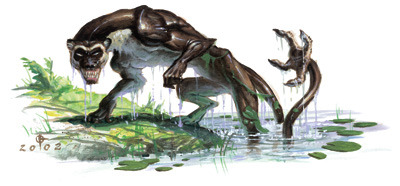
Aztec mythology is definitely not empty of folkloric creatures, either, but it's even more obscure to most players, because Egyptian mythology did get some historical attention in Europe and the United States while the Aztecs were much more poorly understood (thanks in part to the fact that they recorded things in pictorial and oral traditions instead of using a formal writing system). From Mexico come such antagonistic beasties as the hungry, man-drowning-and-eating ahuizotl, the lost spirits of the cihuateteo, those canine messengers of the underworld the itzcuintin, an entire race of malevolent, mostly-extinct giants called Quinametzin who may have survived the destruction of the earlier worlds, and of course the hideous, insect-like star-demons known as the tzitzimime. Modern Mexican folklore continues to believe in various other nasty little creatures as well - not just the cliched chupacabra, but also various kinds of malevolent or dangerous goblin-like creatures collectively called duende.


Seems like plenty enough antagonists to keep budding young Scions busy, right? But even more important are the other things each pantheon brings to the game world, far beyond just basic questions like what kinds of monsters Scions might fight. Each pantheon represents a unique culture and religion, which brings entirely new dimensions into the game with it. They bring in the fantastical other worlds of those religions, their underworlds and overworlds and Terrae Incognita and enchanted places and temples. They bring unique cosmic concepts like the necessity of sacrifice, the struggle of righteousness against disorder, the cyclical recreation of the world or the heavenly parts of the divine soul that the game would not otherwise benefit from. They bring personalities, powers and beliefs that exponentially increase the possibilites and options for practically anything Scions want to do in the world.
And that is why strong, fleshed-out pantheons, no matter what their size, are always awesome additions to the game. They aren't necessary for anyone who isn't interested or doesn't want to deal with them, but each added pantheon adds to the incredible, rich diversity and possibilities of the game world, just as each culture you learn about in real life adds to your understanding of how amazing the differences and similarities between human civilizations are. A new pantheon is much more than just a new set of divine parents and a few new Titanspawn to throw at players; it's another glorious and exciting piece of the entire game world.
No one should ever feel obligated to use all the pantheons we put out, or even all the pantheons in the original rules, if they aren't interested in or comfortable with them. No one should ever feel like they need to have a Masters degree or spend all their weekends researching to play this game; anyone who wants to should be able to walk in and create a rollicking adventure from whatever parts of whatever mythologies they most know and love. Every pantheon brings with it unique challenges, antagonists, concepts and deities, and Storytellers should use as many or few of them as they want to. If you feel like Greek mythology has more to offer you than Aztec, then there's no reason you can't run your game primarily based on Greek mythology.
But if you want to use things from those other mythologies, they're always there. All you have to do is go out and hunt them down.
Subscribe to:
Posts (Atom)