Question: What became of Quetzalpetlatl?
Actually, no one knows. The Codex Chimalpopoca, in its retelling of the story, relates that she was ashamed and miserable the next morning after her brother had sex with her, but it does not elaborate on what she does, instead following Quetzalcoatl as he departs. What she might have chosen to do or how she might have responded to the event is unexamined.
There are various different retellings of the story that suggest different motivations and possibilities for the ill-fated sister of the warring twins. Some stories seem to suggest that Quetzalcoatl raped her against her will, unsurprising considering the Aztec prohibition against incest, while others imply that both siblings were intoxicated by Tezcatlipoca's interference and only realized their misbehavior the next morning. There's also usually a strong stellar background to the story, with Quetzalcoatl as usual representing the morning star and his sisters, Quetzalpetlatl included, appearing as stars in their own right (perhaps the Pleides or some other famous grouping).
Since Quetzalcoatl immediately killed himself (or, in a few versions, exiled himself), it's entirely possible that his sister might have done the same, equally horrified by what had just happened. It's also possible that, if she didn't punish herself, the pantheon might have done it for her; even if she was assaulted, the Aztecs had a fairly inflexible zero-tolerance policy for illict sex, and Tlazolteotl, punisher of sexual misconduct, might very well have inflicted some Justice on her or instituted even more direct forms of chastizement. A Justice boon might have put Quetzalpetlatl out of commission for a long time, and she certainly wouldn't be eager to mingle with the rest of the pantheon even if she went unpunished; the social stigma against her, a woman who not only had out-of-wedlock sex but with her own brother, would be massive and unforgiving.
Because of her connection to stars, Quetzalpetlatl might also have left the pantheon entirely, to follow so many other celestial Aztec figures into the waiting arms of Tamoanchan. While she isn't specifically said to be related to the tzitzimime the way some of the other gods are, she would theoretically be Mixcoatl's daughter if she's Quetzalcoatl's sister, and if her pantheon rejected her (or refused to take action against Quetzalcoatl and Tezcatlipoca, the authors of her misfortune), she might have gone to her father for comfort and asylum. That doesn't necessarily mean that she's a hostile enemy, but she certainly could be. The lady definitely been done wrong.
If you want to get even more wacky, she could even be living with the K'uh; Quetzalcoatl did spend a lot of time hanging out with them back in the day, after all, and you could even say that the disaster with Quetzalpetlatl was what caused him to abandon the Maya gods and move north to become permanently part of the Aztlanti. There is at least one Maya myth about Kulkulkan and an unnamed sister whom he abandoned when he had grown too large for her to take care of anymore, which might be considered a less violent mirror to the Aztec story.
Or she might still be somewhere in Acopa, to be found and spoken to by Scions intent on involving her in their schemes.

Showing posts with label Quetzalcoatl. Show all posts
Showing posts with label Quetzalcoatl. Show all posts
Tuesday, July 2, 2013

Saturday, May 4, 2013
Bloodrush
It's another solo vlog, but don't despair. We'll get back together someday.
This week, because I'm on my own, I'll be talking about Mesoamerican stuff. Because that's what I do when left alone without supervision!
Question: Why did you strip Fertility, Sky, Water and Epic Intelligence from Quetzalcoatl when his description says he is a god of those things? Should the unspoken understanding that he is those things outweigh tthe fact that there are no stories expressly describing him doing said things?
Question: In comparison between Maya and Aztec culture and myth, which one was more prolific with human sacrifice?
Question: First, I just wanted to say that I love your Maya writeup. Kudos to you guys for your awesome work. I have a question, however, concerning the PSP. For the Unici Chupla, Utzil Keban, Caan Cab and Sucun Palil boons, what are the options for characters who want to embody a "between" state, instead of one or the other (say, a hermaphroditic god, or a character who wants to appear as middle-aged, or a "wise child", etc.)? It sems like those boons don't allow for an in-between.
Question: I have a question regarding the sun and moon among the Maya. Who ultimately controls the sun and moon amongst them: K'inich Ahau and Awilix or the Hero Twins? Both pairs seem to have power over the celestial objects, so I was curious.
By the way, for those who wanted some unnecessarily graphic pictures of Maya autosacrifice, I'm here for you. If you didn't want that, I'm here for you anyway. Sorry.
These people are serious about getting serious.
This week, because I'm on my own, I'll be talking about Mesoamerican stuff. Because that's what I do when left alone without supervision!
Question: Why did you strip Fertility, Sky, Water and Epic Intelligence from Quetzalcoatl when his description says he is a god of those things? Should the unspoken understanding that he is those things outweigh tthe fact that there are no stories expressly describing him doing said things?
Question: In comparison between Maya and Aztec culture and myth, which one was more prolific with human sacrifice?
Question: First, I just wanted to say that I love your Maya writeup. Kudos to you guys for your awesome work. I have a question, however, concerning the PSP. For the Unici Chupla, Utzil Keban, Caan Cab and Sucun Palil boons, what are the options for characters who want to embody a "between" state, instead of one or the other (say, a hermaphroditic god, or a character who wants to appear as middle-aged, or a "wise child", etc.)? It sems like those boons don't allow for an in-between.
Question: I have a question regarding the sun and moon among the Maya. Who ultimately controls the sun and moon amongst them: K'inich Ahau and Awilix or the Hero Twins? Both pairs seem to have power over the celestial objects, so I was curious.
By the way, for those who wanted some unnecessarily graphic pictures of Maya autosacrifice, I'm here for you. If you didn't want that, I'm here for you anyway. Sorry.

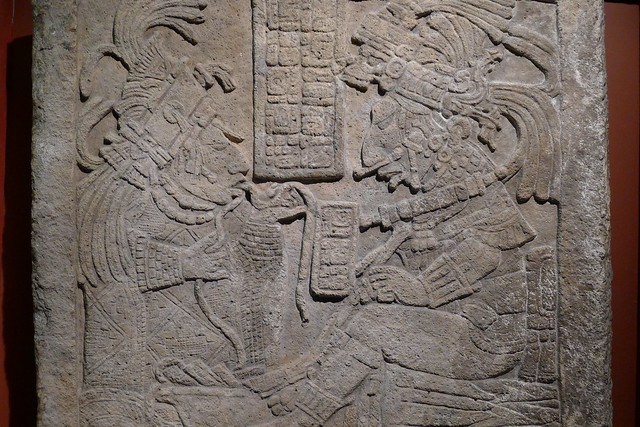
These people are serious about getting serious.
Monday, April 15, 2013
No, We Can't All Just Get Along
Question: In your game, what transpired to make the Trimurti, Quetzalcoatl and Tezcatlipoca the enemies of Odin?
Two separate events, actually.
Quetzalcoatl and Tezcatlipoca join the rest of their pantheon in hating most of Odin's guts. While the two pantheons were supposedly allies, working together and sealed as neighbors by the marriage of their children Geoff and Sangria, Odin was behind the scenes attempting to annex as much of Mexico as he could get away with, partly out of his usual Odin-esque desire for conquest and expansion and partly because he was hoping that entangling his Fate with that of the Aztlanti might help him get out of Ragnarok. The Mexican gods, embroiled as they were in fighting several Titans at the time, didn't notice what he was doing until serious damage had been done, and things eventually came to a cataclysmic and destructive head when they confronted each other. I won't say exactly what happened because it's going to be the subject of some of the upcoming stories about Geoff's band, but the rift between the two pantheons was massive and the vast majority of the Aztlanti now view Odin as a traitor to their alliance.
As for the Trimurti, in their case they were the aggressors. After having serious problems on the home front with a certain one of their members deciding to go batshit and try to uncreate a lot of stuff, they shanghaied Aurora's band into helping them defeat him and clean up the mess. Unfortunately, they didn't ask first, and being that they tend to have a somewhat lofty opinion of themselves, they really didn't feel like they needed to. When Aurora expressed some concern that their divine parents were likely to kick their asses for haring off on a trans-continental Indian adventure instead of doing what they'd been told to do, the Trimurti rolled up into Asgard and Odin's feasting hall while he was having dinner, dropped off the kids and declared in front of most of the Aesir that nobody was to punish them or they would have to answer to them. Then they went home, blissfully uncaring of the epic insult they had just delivered to the king of the Aesir, and the band had to deal with the unpleasant fallout.
While the shenanigans with the Trimurti are not ready to make it to fiction for a while yet, you can see some of the ramp-up of the problems between the Aesir and Aztlanti in some of the stories. In Foundations, the first evidence of problems in Mexico appears and the first accusations of Norse involvement are leveled; in Drums of War the Norse confirm what they're up to but have not yet erupted into actual conflict; in Bone, Muscle, Heart and Sinew Sangria and her fellow Aztlanti Scions begin dealing with the problem and attempting to safeguard their people, and in What Dreams May Come Woody's band sees the Aesir contingent hard at work in Mexico and is warned about the fighting that has begun to break out.
Two separate events, actually.
Quetzalcoatl and Tezcatlipoca join the rest of their pantheon in hating most of Odin's guts. While the two pantheons were supposedly allies, working together and sealed as neighbors by the marriage of their children Geoff and Sangria, Odin was behind the scenes attempting to annex as much of Mexico as he could get away with, partly out of his usual Odin-esque desire for conquest and expansion and partly because he was hoping that entangling his Fate with that of the Aztlanti might help him get out of Ragnarok. The Mexican gods, embroiled as they were in fighting several Titans at the time, didn't notice what he was doing until serious damage had been done, and things eventually came to a cataclysmic and destructive head when they confronted each other. I won't say exactly what happened because it's going to be the subject of some of the upcoming stories about Geoff's band, but the rift between the two pantheons was massive and the vast majority of the Aztlanti now view Odin as a traitor to their alliance.
As for the Trimurti, in their case they were the aggressors. After having serious problems on the home front with a certain one of their members deciding to go batshit and try to uncreate a lot of stuff, they shanghaied Aurora's band into helping them defeat him and clean up the mess. Unfortunately, they didn't ask first, and being that they tend to have a somewhat lofty opinion of themselves, they really didn't feel like they needed to. When Aurora expressed some concern that their divine parents were likely to kick their asses for haring off on a trans-continental Indian adventure instead of doing what they'd been told to do, the Trimurti rolled up into Asgard and Odin's feasting hall while he was having dinner, dropped off the kids and declared in front of most of the Aesir that nobody was to punish them or they would have to answer to them. Then they went home, blissfully uncaring of the epic insult they had just delivered to the king of the Aesir, and the band had to deal with the unpleasant fallout.
While the shenanigans with the Trimurti are not ready to make it to fiction for a while yet, you can see some of the ramp-up of the problems between the Aesir and Aztlanti in some of the stories. In Foundations, the first evidence of problems in Mexico appears and the first accusations of Norse involvement are leveled; in Drums of War the Norse confirm what they're up to but have not yet erupted into actual conflict; in Bone, Muscle, Heart and Sinew Sangria and her fellow Aztlanti Scions begin dealing with the problem and attempting to safeguard their people, and in What Dreams May Come Woody's band sees the Aesir contingent hard at work in Mexico and is warned about the fighting that has begun to break out.
Wednesday, April 10, 2013
The White God
Question: While recently doing some research, I happened upon something that surprised me. Apparently, some Mormons think Quetzalcoatl was Jesus, misinterpreted by the people of Central America. While I don't know how prevalent that thought is, I was wondering, has that ever come up in your sessions? How did you handle it, and if it hasn't, how would you handle it?
It's not just prevalent, it's a real and present tenet of Mormonism, actually. To quickly redact the idea down, the Book of Mormon claims that the Native Americans were made up of four tribes which were descended from Israelites who were either defectors or exiles who departed from the Old World and the worship of God to settle the American continents. In the third Book of Nephi within the Book of Mormon, Jesus resurrects after his crucifixion and announces that he will go forth to preach to his long-lost flocks there, and appears in the Americas as a prophet and teacher, blessing the children and calling the lost tribes to return to his worship. If you'd like to check it out straight from the horse's mouth, the official Mormon website is happy to explain.
The Book of Mormon doesn't directly claim that Jesus was interpreted as Quetzalcoatl, but it's the widely accepted view within the Church of Latter-Day Saints at this point. It's largely confusion stemming from over-simplification of Aztec ideas and religion; basically, because Quetzalcoatl is the White Tezcatlipoca, early European ethnographers interpreted this as him being Caucasian, despite the fact that the color white has very distinct associations in Mesoamerican symbolism and nothing at all to do with race before the introduction of Europeans into the mix. Add that to the confusion of early historians in the Americas who mistakenly believed Quetzalcoatl to be the "high god" of the pantheon, the popularity of the idea of a prophecy of Quetzalcoatl's return one day (which has its own set of problems we've talked about before), the perception of Quetzalcoatl as the only "good" god in the pantheon thanks to focusing on his preference for animal sacrifices, and the perennially popular weirdness of Caucasians believing that Jesus was Caucasian, and you've got a lot of confused Europeans drawing conclusions.
Now, scientific professionals in pretty much every field who are not Mormons have basically said that this entire premise is not only unprovable but thoroughly debunkable; archaeologists and geneticists point out that there's no evidence of these four tribes in the Americas and that the native Americans are largely descended from Asian ancestors, while linguists and anthropologists on both sides of the ocean point out the many inconsistencies in historical and cultural records for both the Levantine and Mesoamerican areas. But that's science talking to a religion, and devout Mormons are equally staunch in their beliefs, so the debate rages on.
As far as using it in our games, we haven't and probably won't. Since we're not interested in monotheistic religion being imported into Scion most of the time, that includes Mormonism, and we aren't particularly interested in bothering with the Book of Mormon. If you happened to be interested in it, though, we'd suggest doing something with Fatebonds and mortal perceptions, perhaps exploring how Mormon beliefs might affect Quetzalcoatl if he gets Fatebound too much or what Mormon religious practices might mean and symbolize to gods and Scions, particularly within the Aztlanti and other Mesoamerican pantheons.
In our games, Quetzalcoatl is probably aware of and mildly amused by the idea, but it probably doesn't go any further than that.
It's not just prevalent, it's a real and present tenet of Mormonism, actually. To quickly redact the idea down, the Book of Mormon claims that the Native Americans were made up of four tribes which were descended from Israelites who were either defectors or exiles who departed from the Old World and the worship of God to settle the American continents. In the third Book of Nephi within the Book of Mormon, Jesus resurrects after his crucifixion and announces that he will go forth to preach to his long-lost flocks there, and appears in the Americas as a prophet and teacher, blessing the children and calling the lost tribes to return to his worship. If you'd like to check it out straight from the horse's mouth, the official Mormon website is happy to explain.
The Book of Mormon doesn't directly claim that Jesus was interpreted as Quetzalcoatl, but it's the widely accepted view within the Church of Latter-Day Saints at this point. It's largely confusion stemming from over-simplification of Aztec ideas and religion; basically, because Quetzalcoatl is the White Tezcatlipoca, early European ethnographers interpreted this as him being Caucasian, despite the fact that the color white has very distinct associations in Mesoamerican symbolism and nothing at all to do with race before the introduction of Europeans into the mix. Add that to the confusion of early historians in the Americas who mistakenly believed Quetzalcoatl to be the "high god" of the pantheon, the popularity of the idea of a prophecy of Quetzalcoatl's return one day (which has its own set of problems we've talked about before), the perception of Quetzalcoatl as the only "good" god in the pantheon thanks to focusing on his preference for animal sacrifices, and the perennially popular weirdness of Caucasians believing that Jesus was Caucasian, and you've got a lot of confused Europeans drawing conclusions.
Now, scientific professionals in pretty much every field who are not Mormons have basically said that this entire premise is not only unprovable but thoroughly debunkable; archaeologists and geneticists point out that there's no evidence of these four tribes in the Americas and that the native Americans are largely descended from Asian ancestors, while linguists and anthropologists on both sides of the ocean point out the many inconsistencies in historical and cultural records for both the Levantine and Mesoamerican areas. But that's science talking to a religion, and devout Mormons are equally staunch in their beliefs, so the debate rages on.
As far as using it in our games, we haven't and probably won't. Since we're not interested in monotheistic religion being imported into Scion most of the time, that includes Mormonism, and we aren't particularly interested in bothering with the Book of Mormon. If you happened to be interested in it, though, we'd suggest doing something with Fatebonds and mortal perceptions, perhaps exploring how Mormon beliefs might affect Quetzalcoatl if he gets Fatebound too much or what Mormon religious practices might mean and symbolize to gods and Scions, particularly within the Aztlanti and other Mesoamerican pantheons.
In our games, Quetzalcoatl is probably aware of and mildly amused by the idea, but it probably doesn't go any further than that.
Thursday, March 21, 2013
Snakes from the Future!
Question: Whatever happened to giving Quetzalcoatl Prophecy? You mentioned it back in April 2012 when the Aztlanti were not overhauled yet.
It's true, we totally did mention that we were considering giving Quetzalcoatl Prophecy and that we thought it was a good possibility back before we finished overhauling the Aztec gods. After we finished the process, however, we ended up deciding it wasn't strong enough to be one of his associations.
There are really only two myths, interrelated, that link Quetzalcoatl to prophecy: the myth of the fall of Tollan, and the myth of the prophesied return of Quetzalcoatl. In the story of Tollan's fall, Tezcatlipoca appears to Quetzalcoatl, at this time the ruler of Tollan, and prophesies that the city will fall before the invading Mexica and never be restored to its former glory. Quetzalcoatl, stricken by grief, bugs out and abandons the city so that he is not there for its destruction, and depending on the version either dies in disgraced loneliness or goes off to found a new kingdom far away.
The second myth is what gives rise to the other attachment of prophecy to Quetzalcoatl's name, which is the prophecy that he will eventually return and recreate Tollan. This prophecy gets a lot more press than it probably deserves; it was likely invented by his priests, who wanted to declare that his cult was going to return to supreme power over the others at some point, and it's really only remembered because it gets caught up in the weird mix of fact-and-fiction lore surrounding the Spanish conquest. Most of us have heard the story that the Aztecs believed that Cortes was the return of Quetzalcoatl and that's why they were so easily conquered by the obviously superior white man; modern historians have since come to the conclusion that that's ridiculous poppycock, but if there are only a couple of things your average Scion player knows about Quetzalcoatl before game starts, that's probably one of them. We need more Mesoamerican legitness in our schools, for real. Aztec awareness, y'all.
But anyway, those are seriously the only incidents that could possibly be parlayed into considering Prophecy for Quetzalcoatl, and I'm sure most of you can tell by now that neither's close enough to meet our standards. The first myth, though occasionally attributed to Quetzalcoatl, is most often a very clear example of Tezcatlipoca demonstrating prophetic powers and not the other way around (incidentally, ol' Tezcat did not end up with Prophecy associated either, as this is the only time he really does it and he might just be being a big bag of dicks as he often tends to do), and standing next to a guy with Prophecy is not exactly grounds for having it yourself. The second myth could be considered one that came from Quetzalcoatl himself - after all, his priests swore he claimed he was coming back, so that's a prophecy you could say came from the Feathered Serpent's mouth - but it's a single isolated incident, and even that's a leap of logic. We never actually get any story in which he vows to return or passes that info on to his people; we don't have any real reason to believe he's all forecasting this and doomsaying that, and having a prophecy about you is also not going to win you any points toward getting the purview associated.
So we gave both due consideration, but even together they couldn't convince us that the purview deserved to make the cut. It's very, very thin and sketchy reasoning to give a god even a little Prophecy, much less The Wyrd, and it was probably based more on specious historical claims than any actual Aztec beliefs.
So what happened was that prophecy wasn't... well, happening. So it didn't.
It's true, we totally did mention that we were considering giving Quetzalcoatl Prophecy and that we thought it was a good possibility back before we finished overhauling the Aztec gods. After we finished the process, however, we ended up deciding it wasn't strong enough to be one of his associations.
There are really only two myths, interrelated, that link Quetzalcoatl to prophecy: the myth of the fall of Tollan, and the myth of the prophesied return of Quetzalcoatl. In the story of Tollan's fall, Tezcatlipoca appears to Quetzalcoatl, at this time the ruler of Tollan, and prophesies that the city will fall before the invading Mexica and never be restored to its former glory. Quetzalcoatl, stricken by grief, bugs out and abandons the city so that he is not there for its destruction, and depending on the version either dies in disgraced loneliness or goes off to found a new kingdom far away.
The second myth is what gives rise to the other attachment of prophecy to Quetzalcoatl's name, which is the prophecy that he will eventually return and recreate Tollan. This prophecy gets a lot more press than it probably deserves; it was likely invented by his priests, who wanted to declare that his cult was going to return to supreme power over the others at some point, and it's really only remembered because it gets caught up in the weird mix of fact-and-fiction lore surrounding the Spanish conquest. Most of us have heard the story that the Aztecs believed that Cortes was the return of Quetzalcoatl and that's why they were so easily conquered by the obviously superior white man; modern historians have since come to the conclusion that that's ridiculous poppycock, but if there are only a couple of things your average Scion player knows about Quetzalcoatl before game starts, that's probably one of them. We need more Mesoamerican legitness in our schools, for real. Aztec awareness, y'all.
But anyway, those are seriously the only incidents that could possibly be parlayed into considering Prophecy for Quetzalcoatl, and I'm sure most of you can tell by now that neither's close enough to meet our standards. The first myth, though occasionally attributed to Quetzalcoatl, is most often a very clear example of Tezcatlipoca demonstrating prophetic powers and not the other way around (incidentally, ol' Tezcat did not end up with Prophecy associated either, as this is the only time he really does it and he might just be being a big bag of dicks as he often tends to do), and standing next to a guy with Prophecy is not exactly grounds for having it yourself. The second myth could be considered one that came from Quetzalcoatl himself - after all, his priests swore he claimed he was coming back, so that's a prophecy you could say came from the Feathered Serpent's mouth - but it's a single isolated incident, and even that's a leap of logic. We never actually get any story in which he vows to return or passes that info on to his people; we don't have any real reason to believe he's all forecasting this and doomsaying that, and having a prophecy about you is also not going to win you any points toward getting the purview associated.
So we gave both due consideration, but even together they couldn't convince us that the purview deserved to make the cut. It's very, very thin and sketchy reasoning to give a god even a little Prophecy, much less The Wyrd, and it was probably based more on specious historical claims than any actual Aztec beliefs.
So what happened was that prophecy wasn't... well, happening. So it didn't.
Wednesday, March 20, 2013
Dog Days
Question: Do you mind if I ask why you haven't made Xolotl a playable god? I remember that a while back your had a post where John classified him as Legend 9, but it seems like he has at least a couple of pretty strong myths going for him (the Xoloitcuintzle, helping Quetzalcoatl steal bones from Mictlan, his status as the evening star). Or am I just overestimating his importance?
You're right, we've looked into him before. More than once, actually, because he's got some neat imagery and we are nothing if not giving to our Aztlanti friends. But unfortunately we always end up having to give him the boot because of his near total lack of myths and only vaguely supported associations. We want to love him, but he just won't let us.
Xolotl's only got two big stories, and the first is the one you mention - accompanying Quetzalcoatl to the Underworld to seize and return the bones of the last age of mankind. The problem with this is not just that Xolotl is obviously not the major player in the myth, since it's Quetzalcoatl that does literally everything except for giving a pep talk about not giving up when they fall in the pit, but also that Xolotl may or may not be involved in the myth at all. The problem here is that, depending on your version of the myth, it's not Xolotl who accompanies Quetzalcoatl but rather Quetzalcoatl's own nahualli - or, to be more direct, it often seems that Xolotl is Quetzalcoatl's nahualli. This would make the two of them different expressions of the same person rather than separate deities, just as Tepeyollotl isn't truly separate from Tezcatlipoca, and it's for this reason that Xolotl's so often just paired up with Quetzalcoatl and then ignored. If Xolotl isn't Quetzalcoatl's nahualli, however, then he's not on this adventure, which makes it less than helpful. It's possible that he is here and the versions mentioning a nahualli are wrong... but you can see that this is a major mess, and even if you decide to run with Xolotl being present here, he isn't actually doing much of anything to help us try to figure out how important he is and what he was about.
His second story involves the myth of Nanahuatzin, Tecciztecatl and the emergence of the new sun Tonatiuh. After the creation of the new sun and the incident in which Itzlacoliuhqui goes mad trying to make it move, the gods decides they'll all need to sacrifice themselves to get it on track; Quetzalcoatl goes for it, but Xolotl doesn't relish dying and, after crying until his eyes literally fall out, he tries to run away and hide by turning himself into various plants and animals before being caught and summarily sacrificed. Unfortunately, it's one of those stories that doesn't really give us a good strong association of any kind; shapeshifting can be covered by tons of things in Scion, and he's not demonstrating any of them particularly obviously, nor behaving in a way that suggests he needs to be Legend 12.
Xolotl certainly is a god in his own right; the Codex Vaticanus makes it clear that he's considered, among other odd things, the patron of the Mesoamerican ballgame, of twins (possibly because you need two to play ball!), and of deformed creatures. The heavy dog imagery associated with him makes it very likely that he's attached to death and passage to the afterlife in some way, because dogs are powerful symbols of the journey from life to death, and as a result he's considered the leader of the xoloitcuintzle, though there is no myth or story attached to this association. Then there are the scholarly theories, which depending on who you ask involve him being a sun-god to him being a star-god to him being a fire-god to him being a vulture-god and practically everything else under the Fifth Sun also, usually because there's no information on him other than iconography and everyone is forced to guess.
So, yeah. John hates guessing, as you guys know, so we went back to our good old first rule: if there's not enough information on a dude for us to have any real idea what the heck was going on with him, then he probably isn't Legend 12. That doesn't mean he isn't around and can't be used in Scion - in fact, he's appeared several times in our games and has a Scion of his own that sometimes bothers the PCs with his demands - but he's probably just not on the same level of importance as dudes like Huitzilopochtli and Tezcatlipoca.
If we were going to stat him, we'd probably peg him at Legend 10, give him Animal (Dog) and Psychopomp with a sprinkling of boons from his other, more sketchy connections, and call it a day.
You're right, we've looked into him before. More than once, actually, because he's got some neat imagery and we are nothing if not giving to our Aztlanti friends. But unfortunately we always end up having to give him the boot because of his near total lack of myths and only vaguely supported associations. We want to love him, but he just won't let us.
Xolotl's only got two big stories, and the first is the one you mention - accompanying Quetzalcoatl to the Underworld to seize and return the bones of the last age of mankind. The problem with this is not just that Xolotl is obviously not the major player in the myth, since it's Quetzalcoatl that does literally everything except for giving a pep talk about not giving up when they fall in the pit, but also that Xolotl may or may not be involved in the myth at all. The problem here is that, depending on your version of the myth, it's not Xolotl who accompanies Quetzalcoatl but rather Quetzalcoatl's own nahualli - or, to be more direct, it often seems that Xolotl is Quetzalcoatl's nahualli. This would make the two of them different expressions of the same person rather than separate deities, just as Tepeyollotl isn't truly separate from Tezcatlipoca, and it's for this reason that Xolotl's so often just paired up with Quetzalcoatl and then ignored. If Xolotl isn't Quetzalcoatl's nahualli, however, then he's not on this adventure, which makes it less than helpful. It's possible that he is here and the versions mentioning a nahualli are wrong... but you can see that this is a major mess, and even if you decide to run with Xolotl being present here, he isn't actually doing much of anything to help us try to figure out how important he is and what he was about.
His second story involves the myth of Nanahuatzin, Tecciztecatl and the emergence of the new sun Tonatiuh. After the creation of the new sun and the incident in which Itzlacoliuhqui goes mad trying to make it move, the gods decides they'll all need to sacrifice themselves to get it on track; Quetzalcoatl goes for it, but Xolotl doesn't relish dying and, after crying until his eyes literally fall out, he tries to run away and hide by turning himself into various plants and animals before being caught and summarily sacrificed. Unfortunately, it's one of those stories that doesn't really give us a good strong association of any kind; shapeshifting can be covered by tons of things in Scion, and he's not demonstrating any of them particularly obviously, nor behaving in a way that suggests he needs to be Legend 12.
Xolotl certainly is a god in his own right; the Codex Vaticanus makes it clear that he's considered, among other odd things, the patron of the Mesoamerican ballgame, of twins (possibly because you need two to play ball!), and of deformed creatures. The heavy dog imagery associated with him makes it very likely that he's attached to death and passage to the afterlife in some way, because dogs are powerful symbols of the journey from life to death, and as a result he's considered the leader of the xoloitcuintzle, though there is no myth or story attached to this association. Then there are the scholarly theories, which depending on who you ask involve him being a sun-god to him being a star-god to him being a fire-god to him being a vulture-god and practically everything else under the Fifth Sun also, usually because there's no information on him other than iconography and everyone is forced to guess.
So, yeah. John hates guessing, as you guys know, so we went back to our good old first rule: if there's not enough information on a dude for us to have any real idea what the heck was going on with him, then he probably isn't Legend 12. That doesn't mean he isn't around and can't be used in Scion - in fact, he's appeared several times in our games and has a Scion of his own that sometimes bothers the PCs with his demands - but he's probably just not on the same level of importance as dudes like Huitzilopochtli and Tezcatlipoca.
If we were going to stat him, we'd probably peg him at Legend 10, give him Animal (Dog) and Psychopomp with a sprinkling of boons from his other, more sketchy connections, and call it a day.
Thursday, January 31, 2013
Meddling in the Affairs of Dragons
Question: Why does Quetzalcoatl hate Fuxi and Nuwa?
In our games, the dragon gods have had something of an ongoing rivalry which occasionally erupts into violent dragon combat, which is something everyone should try to avoid if possible because it is definitely not pretty. The three of them plus Ryujin should generally be kept away from each other when possible (and, indeed, it was Ryujin who killed Quetzalcoatl during the Half-Soul story, although he was later resurrected by the efforts of Geoff's band during Blood Heirs).
Most of the time, I wouldn't take the Rivals and Enemies on our god-pages too seriously. They have to do with events that occurred in our games as often as with basic god-rivalries across cultures. So if you see one that doesn't seem to make sense - especially between gods with cultures that are very remote from one another - it's likely that those gods got into some kind of tiff during one of our plots, rather than that they have some kind of secret mythological rivalry.
In our games, the dragon gods have had something of an ongoing rivalry which occasionally erupts into violent dragon combat, which is something everyone should try to avoid if possible because it is definitely not pretty. The three of them plus Ryujin should generally be kept away from each other when possible (and, indeed, it was Ryujin who killed Quetzalcoatl during the Half-Soul story, although he was later resurrected by the efforts of Geoff's band during Blood Heirs).
Most of the time, I wouldn't take the Rivals and Enemies on our god-pages too seriously. They have to do with events that occurred in our games as often as with basic god-rivalries across cultures. So if you see one that doesn't seem to make sense - especially between gods with cultures that are very remote from one another - it's likely that those gods got into some kind of tiff during one of our plots, rather than that they have some kind of secret mythological rivalry.
Saturday, January 26, 2013
Can You Tell I'm Thinking About This a Lot While I Work on the Maya Pantheon?
Question: So Huitzilopochtli is exclusively a Mexica god. Are there any other gods in the Aztlanti which also are like that, or are everybody else in the pantheon gods the Mexica got from other people?
You know, we've been talking a lot lately about Mexica expansionism and religious syncretism, and I have the feeling that some people may have gotten the mistaken impression that the Aztecs didn't actually have their own religion or gods and just worshiped a random assortment of things they'd conquered. This isn't the case at all, so I'm glad to have the opportunity to talk about it some!
Huitzilopochtli is indeed as Mexica a god as they come; he was the totem and protector deity of their people, the warrior that led them in war, the guidance that led them through the wilderness and the power they believed made them strong. In the era of Tenochtitlan, everything begins and ends with Huitzilopochtli, who not only fulfills the earthly function of protecting and supporting his people but also the all-important celestial function of shepherding the sun to stave off disaster.
He is not, however, the only Aztec god that is uniquely suited to and springing from their people. Tlazolteotl/Toci is also very Aztec, having been created in a specific myth in which Huitzilopochtli instructed the traveling Mexica to flay a foreign princess they'd captured so that he could deify her to aid them. Tezcatlipoca does not appear in all his insane one-footed obsidian-mirrored glory anywhere but the Valley of Mexico, where to the Aztecs he was the patron of nobility and one of the most important deities in existence. The fire-god Xiuhtecuhtli, lord of the end of the year and the ever-burning flame, is as thoroughly Mexica as all the rest, while on the other end of the spectrum the water-goddess Chalchiuhtlicue is unique in Mesoamerican myth with her stint as the sun and her tears of flooding compassion. Xolotl, the dog-headed psychopomp, appears only in Aztec codices and doesn't seem to have any real analogues outside them. And, of course, the massive antagonistic front of the heavens, most notably including the tzitzimime, Coyolxauhqui, Itzpapalotl and others is a strongly Aztec mythological setup, directly at odds with many of the other myths in the area.
But the idea that the Aztecs share and borrow a lot of myth from others around them isn't a mistaken one; it's all a matter of perspective, and also defining what exactly "borrowed" means. There are some gods the unquestionably appear in other Mesoamerican cultures that predate the Aztecs; the most obvious is Quetzalcoatl, who was a major patron of the Toltecs, as Kulkulkan/Gukumatz was revered by the Maya, and appears in art all the way back to the Olmec and Teotihuacan civilizations. The Feathered Serpent has been around pretty much as long as Mesoamerican religions have, and the Aztecs aren't the first to revere him. Similarly, thunder-gods that share marked similarities with Tlaloc also exist in the Maya and Zapotec cultures, and scary skeletal death gods definitely didn't start with Mictlantecuhtli.
But the key here is that, while these gods all share similar imagery, associations and ideas, they are still not actually the same. In fact, the Aztec versions of those gods differ in important ways that are unique to their pantheon, just as the Zapotec version of a god would have differed importantly from a Maya one and so on all the way back to the pre-Olmec era. The Gukumatz of Maya myth has no story of rescuing humanity from the underworld the way the Quetzalcoatl of Aztec myth does, and while Chaac and Cocijo look rather similar to Tlaloc as reptilian storm gods, neither of them ever functioned as the sun, and Chaac was never the personification of the earth of the Valley of Mexico just as Tlaloc never bore Chaac's iconic lightning-axe. It's possible that Tezcatlipoca is represented by Huracan among the Maya, who also has a missing foot and aids the Feathered Serpent in creation, but the two barely show any resemblance beyond that. They are most definitely related gods, obviously sprung from the same root, but they have also become different personalities and figures in their own right, each sculpted to the needs of the culture that held them in such high esteem.
And that kind of borrowing isn't unique to Mesoamerica at all. All of the Indo-European storm gods theoretically sprang from the same original primordial figure, but claiming that Zeus is merely a god that the Greeks "stole" from Indra would be silly, because Zeus and Indra have grown apart so far and become so entrenched in their home cultures that they are obviously not the same god anymore. The same gods have spanned across Asia for time immemorial, but that doesn't mean anyone needs to stop and tell everyone that because Avalokitesvara is originaly Hindu, that means that the Tibetan and Chinese and Japanese cultures that revere Arya Tara, Guanyin or Kannon aren't really real religions of their own. Dionysus, Osiris and Adonis aren't the same god just because they may have all come from the same dying fertility god root, and Aphrodite, Ishtar and Astarte need not be called the same simply because they all came from the same ancient Mediterranean idea of a love goddess. Gods were carried across different places by people who conquered other people, by the conquered peoples themselves, by trade and reputation and prophecy; this is something that happens all over the world, not just among the Mexican and South American cultures.
And just as strong similarities among religions in other parts of the world - like Zeus, Hades and Poseidon being dead ringers for Baal, Mot and Yam - don't have to mean that one people didn't have a religion of their own because they were borrowing another, so it doesn't mean that in Mesoamerica, either. The question of where to draw the line between different gods and different names for the same god is one that Scion deals with all the time, but for some reason, while we're fully willing to accept that Thor and Perun are different guys, there seems to be a prevailing feeling that the Aztecs are just the Maya wearing different clothes, with maybe some Olmec and even Inca thrown in for flavor. A lot of the blame for this falls on European expansionism in the fifteen and sixteenth century; most information on the native religions of Central and South America was sent back to Europe in entirely butchered form, badly translated, interpreted through Christianity and lumped together in a large, semi-differentiated mass of "the religions of the western heathens". The Central and South American mythologies never had the renaissance of serious study in Europe that folks like the Pesedjet, Aesir and Dodekatheon did, and the result is that that narrow, flawed conception of those religions, as the savage and ignorant practices of a bunch of savage and ignorant tribes that most people couldn't be bothered trying to tell apart, has remained for a long time and leaked into much of our popular culture. People have looked me in the eye and said totally seriously that it's a shame Scion never included the Inca as part of the Aztlanti, when the two cultures have almost nothing whatosever in common and aren't even located on the same continent. There's even a TV Trope dedicated to the problem, which is how you know that shit's serious.
So for Scion, the conundrum is of course the same one it always is for every other culture: how close it too close, and is it worth it to try to split these pantheons into separate ones or are they so close they need to be lumped together? For the most part, the major religions of Mesoamerica that are identifiably different are the Aztec and the Maya, which tend to eat up the other smaller pantheons in the area - either because that's what they did historically (i.e., the Huaxtec becoming literally part of the Aztec empire after conquest) or because they're so close that it's silly to try to separate them (the K'iche myths of Guatemala, which feature gods basically identical to the Yucatan Maya deities). You could also maybe throw in a third group with the Zapotec and Mixtec deities shoehorned in between the two; neither was ever as large or widespread, but they do have a few unique concepts of their own.
I'm drifting a little here, so let's go back to the Aztecs for the finale. They absolutely used a number of practices that are widespread across Mesoamerica (blood sacrifice, deity impersonation and so forth), but if you consider that borrowing from everyone else, you'd have to also consider the same of all the European religions that use similar practices to one another (oracular question-answering, livestock sacrifice and so on) to be doing the same thing. They definitely have some gods that were probably originally imported from elsewhere, but just as the originally-Canaanite Adonis has become a firm part of Greek myth, so those gods have gained their own unique status as Aztec divinities. Most Aztec deities are indeed Aztec (and remember, the Mexica were the ruling core of the Aztec empire, but there were also plenty of Aztecs who weren't Mexica!), and most of those that probably came from elsewhere have become so thoroughly nativized that trying to claim they're just a tacked-on addition from a different religion would be like trying to say that Nezha isn't really a Chinese god because he was originally borrowed from the Hindu Nalakuvara.
So really, the answer to your question is that almost everyone in the Aztec pantheon is as legitimately Aztec as the next guy, either by way of being invented for that religion and people or becoming so thoroughly part of it that they no longer really resemble the other gods that came from the same source. That doesn't mean you can't play with the possible tensions of absorbed gods within your game - far from it! - but it's never accurate to say that the Mexica didn't have gods of their own other than Huitzilopochtli, or borrowed their religion wholesale from others. Like every other major pantheon's religion, it developed over time as a result of various cultures and ideas interacting in a unique place in the world; it's no more a borrowed religion than any other.
Except for Quetzalcoatl, because that guy has just been big-pimping it up and down the Central American area forever. Whatever he's up to, it's bound to be a big deal to pretty much everybody.
You know, we've been talking a lot lately about Mexica expansionism and religious syncretism, and I have the feeling that some people may have gotten the mistaken impression that the Aztecs didn't actually have their own religion or gods and just worshiped a random assortment of things they'd conquered. This isn't the case at all, so I'm glad to have the opportunity to talk about it some!
Huitzilopochtli is indeed as Mexica a god as they come; he was the totem and protector deity of their people, the warrior that led them in war, the guidance that led them through the wilderness and the power they believed made them strong. In the era of Tenochtitlan, everything begins and ends with Huitzilopochtli, who not only fulfills the earthly function of protecting and supporting his people but also the all-important celestial function of shepherding the sun to stave off disaster.
He is not, however, the only Aztec god that is uniquely suited to and springing from their people. Tlazolteotl/Toci is also very Aztec, having been created in a specific myth in which Huitzilopochtli instructed the traveling Mexica to flay a foreign princess they'd captured so that he could deify her to aid them. Tezcatlipoca does not appear in all his insane one-footed obsidian-mirrored glory anywhere but the Valley of Mexico, where to the Aztecs he was the patron of nobility and one of the most important deities in existence. The fire-god Xiuhtecuhtli, lord of the end of the year and the ever-burning flame, is as thoroughly Mexica as all the rest, while on the other end of the spectrum the water-goddess Chalchiuhtlicue is unique in Mesoamerican myth with her stint as the sun and her tears of flooding compassion. Xolotl, the dog-headed psychopomp, appears only in Aztec codices and doesn't seem to have any real analogues outside them. And, of course, the massive antagonistic front of the heavens, most notably including the tzitzimime, Coyolxauhqui, Itzpapalotl and others is a strongly Aztec mythological setup, directly at odds with many of the other myths in the area.
But the idea that the Aztecs share and borrow a lot of myth from others around them isn't a mistaken one; it's all a matter of perspective, and also defining what exactly "borrowed" means. There are some gods the unquestionably appear in other Mesoamerican cultures that predate the Aztecs; the most obvious is Quetzalcoatl, who was a major patron of the Toltecs, as Kulkulkan/Gukumatz was revered by the Maya, and appears in art all the way back to the Olmec and Teotihuacan civilizations. The Feathered Serpent has been around pretty much as long as Mesoamerican religions have, and the Aztecs aren't the first to revere him. Similarly, thunder-gods that share marked similarities with Tlaloc also exist in the Maya and Zapotec cultures, and scary skeletal death gods definitely didn't start with Mictlantecuhtli.
But the key here is that, while these gods all share similar imagery, associations and ideas, they are still not actually the same. In fact, the Aztec versions of those gods differ in important ways that are unique to their pantheon, just as the Zapotec version of a god would have differed importantly from a Maya one and so on all the way back to the pre-Olmec era. The Gukumatz of Maya myth has no story of rescuing humanity from the underworld the way the Quetzalcoatl of Aztec myth does, and while Chaac and Cocijo look rather similar to Tlaloc as reptilian storm gods, neither of them ever functioned as the sun, and Chaac was never the personification of the earth of the Valley of Mexico just as Tlaloc never bore Chaac's iconic lightning-axe. It's possible that Tezcatlipoca is represented by Huracan among the Maya, who also has a missing foot and aids the Feathered Serpent in creation, but the two barely show any resemblance beyond that. They are most definitely related gods, obviously sprung from the same root, but they have also become different personalities and figures in their own right, each sculpted to the needs of the culture that held them in such high esteem.
And that kind of borrowing isn't unique to Mesoamerica at all. All of the Indo-European storm gods theoretically sprang from the same original primordial figure, but claiming that Zeus is merely a god that the Greeks "stole" from Indra would be silly, because Zeus and Indra have grown apart so far and become so entrenched in their home cultures that they are obviously not the same god anymore. The same gods have spanned across Asia for time immemorial, but that doesn't mean anyone needs to stop and tell everyone that because Avalokitesvara is originaly Hindu, that means that the Tibetan and Chinese and Japanese cultures that revere Arya Tara, Guanyin or Kannon aren't really real religions of their own. Dionysus, Osiris and Adonis aren't the same god just because they may have all come from the same dying fertility god root, and Aphrodite, Ishtar and Astarte need not be called the same simply because they all came from the same ancient Mediterranean idea of a love goddess. Gods were carried across different places by people who conquered other people, by the conquered peoples themselves, by trade and reputation and prophecy; this is something that happens all over the world, not just among the Mexican and South American cultures.
And just as strong similarities among religions in other parts of the world - like Zeus, Hades and Poseidon being dead ringers for Baal, Mot and Yam - don't have to mean that one people didn't have a religion of their own because they were borrowing another, so it doesn't mean that in Mesoamerica, either. The question of where to draw the line between different gods and different names for the same god is one that Scion deals with all the time, but for some reason, while we're fully willing to accept that Thor and Perun are different guys, there seems to be a prevailing feeling that the Aztecs are just the Maya wearing different clothes, with maybe some Olmec and even Inca thrown in for flavor. A lot of the blame for this falls on European expansionism in the fifteen and sixteenth century; most information on the native religions of Central and South America was sent back to Europe in entirely butchered form, badly translated, interpreted through Christianity and lumped together in a large, semi-differentiated mass of "the religions of the western heathens". The Central and South American mythologies never had the renaissance of serious study in Europe that folks like the Pesedjet, Aesir and Dodekatheon did, and the result is that that narrow, flawed conception of those religions, as the savage and ignorant practices of a bunch of savage and ignorant tribes that most people couldn't be bothered trying to tell apart, has remained for a long time and leaked into much of our popular culture. People have looked me in the eye and said totally seriously that it's a shame Scion never included the Inca as part of the Aztlanti, when the two cultures have almost nothing whatosever in common and aren't even located on the same continent. There's even a TV Trope dedicated to the problem, which is how you know that shit's serious.
So for Scion, the conundrum is of course the same one it always is for every other culture: how close it too close, and is it worth it to try to split these pantheons into separate ones or are they so close they need to be lumped together? For the most part, the major religions of Mesoamerica that are identifiably different are the Aztec and the Maya, which tend to eat up the other smaller pantheons in the area - either because that's what they did historically (i.e., the Huaxtec becoming literally part of the Aztec empire after conquest) or because they're so close that it's silly to try to separate them (the K'iche myths of Guatemala, which feature gods basically identical to the Yucatan Maya deities). You could also maybe throw in a third group with the Zapotec and Mixtec deities shoehorned in between the two; neither was ever as large or widespread, but they do have a few unique concepts of their own.
I'm drifting a little here, so let's go back to the Aztecs for the finale. They absolutely used a number of practices that are widespread across Mesoamerica (blood sacrifice, deity impersonation and so forth), but if you consider that borrowing from everyone else, you'd have to also consider the same of all the European religions that use similar practices to one another (oracular question-answering, livestock sacrifice and so on) to be doing the same thing. They definitely have some gods that were probably originally imported from elsewhere, but just as the originally-Canaanite Adonis has become a firm part of Greek myth, so those gods have gained their own unique status as Aztec divinities. Most Aztec deities are indeed Aztec (and remember, the Mexica were the ruling core of the Aztec empire, but there were also plenty of Aztecs who weren't Mexica!), and most of those that probably came from elsewhere have become so thoroughly nativized that trying to claim they're just a tacked-on addition from a different religion would be like trying to say that Nezha isn't really a Chinese god because he was originally borrowed from the Hindu Nalakuvara.
So really, the answer to your question is that almost everyone in the Aztec pantheon is as legitimately Aztec as the next guy, either by way of being invented for that religion and people or becoming so thoroughly part of it that they no longer really resemble the other gods that came from the same source. That doesn't mean you can't play with the possible tensions of absorbed gods within your game - far from it! - but it's never accurate to say that the Mexica didn't have gods of their own other than Huitzilopochtli, or borrowed their religion wholesale from others. Like every other major pantheon's religion, it developed over time as a result of various cultures and ideas interacting in a unique place in the world; it's no more a borrowed religion than any other.
Except for Quetzalcoatl, because that guy has just been big-pimping it up and down the Central American area forever. Whatever he's up to, it's bound to be a big deal to pretty much everybody.
Tuesday, January 15, 2013
Daddy Dearest
Question: What is Quetzalcoatl's relationship with his father like?
Complicated and uncomfortable, like many of the familial relationships of the Aztlanti. You'd think a people with so much Loyalty would like each other more - or maybe the fact that they're stuck being loyal to one another no matter what shenanigans they pull is what makes them so frequently cranky with each other.
Mixcoatl and Quetzalcoatl are odd men out among the Mexica-dominated Aztlanti, since both are the major patron gods of the preceding Toltecs, retained in the new pantheon but no longer its most powerful members. They're also rather closely linked in function and associations; both are gods of the stars, a dicey proposition among the Aztecs, both are strongly connected to the sky and the cloud serpent imagery that goes with it, and both fill the role of culture hero and teacher for their respective eras. Other than Mixcoatl's unfortunate tendency toward mass murder, they have a lot in common and probably don't have too many conceptual problems with one another.
The best story moment to illustrate the relationship between the two of them comes from the Codex Chimalpopoca. When Quetzalcoatl is born, he immediately joins Mixcoatl's army, but soon thereafter Mixcoatl is murdered by his remaining siblings (why is not addressed, so you're free to decide that they were either afraid he would take them out like the rest of the four hundred and struck pre-emptively, or that they were just ambitious and out to seize his power for themselves). Quetzalcoatl immediately goes batshit and starts a war with his uncles, which ends in him killing them all and sacrificing their bodies on a temple that he builds in his father's honor. He also goes out and makes a point of finding Mixcoatl's bones, which his brothers had hidden from everyone, and bringing them home.
Obviously, this is not a son who is in violent hate with his father. But Mixcoatl is also a Titan, and a major impediment to Huitzilopochtli as the de facto king of the Aztlanti, so Quetzalcoatl is put in an awkward position. Most likely, he is loyal to his father despite not approving of what he's up to, and has to play a dangerous game between trying to keep Mixcoatl from doing anything bad (which he may or may not be any good at), trying to keep his pantheon from getting on Mixcoatl's case, and deciding which Virtues to roll if open hostilities break out and he has to take sides. It's not a comfortable place to be, but that's what happens when you have strong ties to both Loyalty and Duty and your family is not getting along; in fact, it's probably the same problem that Huitzilopochtli has in dealing with his mother Coatlicue, who is a dangerous person to have around but whom he also can't stand anyone trying to hurt.
From Mixcoatl's end, things are probably less complicated. While Quetzalcoatl is likely to be one of the only (or maybe the only) Aztec gods who can approach him on semi-friendly terms instead of getting shot in the face, he's likely to view Quetzalcoatl as subordinate to him and a useful tool for influencing things in the pantheon back home. He'd probably be open to occasionally helping him out, but it's likely that he'd have no qualms about doing very nasty things to his son if he thought he was betraying him to the other gods or taking their side against him.
Alas, almost all pantheons have some poor god who's stuck saying, "But that's my mom/dad!" when everyone else is going after a Titan. Some just have to suck it up and deal with putting their fractious parent down, while others - particularly those with Loyalty - may find themselves going a little crazy if anyone dares lay a hand on the Titan that gave them life.
Complicated and uncomfortable, like many of the familial relationships of the Aztlanti. You'd think a people with so much Loyalty would like each other more - or maybe the fact that they're stuck being loyal to one another no matter what shenanigans they pull is what makes them so frequently cranky with each other.
Mixcoatl and Quetzalcoatl are odd men out among the Mexica-dominated Aztlanti, since both are the major patron gods of the preceding Toltecs, retained in the new pantheon but no longer its most powerful members. They're also rather closely linked in function and associations; both are gods of the stars, a dicey proposition among the Aztecs, both are strongly connected to the sky and the cloud serpent imagery that goes with it, and both fill the role of culture hero and teacher for their respective eras. Other than Mixcoatl's unfortunate tendency toward mass murder, they have a lot in common and probably don't have too many conceptual problems with one another.
The best story moment to illustrate the relationship between the two of them comes from the Codex Chimalpopoca. When Quetzalcoatl is born, he immediately joins Mixcoatl's army, but soon thereafter Mixcoatl is murdered by his remaining siblings (why is not addressed, so you're free to decide that they were either afraid he would take them out like the rest of the four hundred and struck pre-emptively, or that they were just ambitious and out to seize his power for themselves). Quetzalcoatl immediately goes batshit and starts a war with his uncles, which ends in him killing them all and sacrificing their bodies on a temple that he builds in his father's honor. He also goes out and makes a point of finding Mixcoatl's bones, which his brothers had hidden from everyone, and bringing them home.
Obviously, this is not a son who is in violent hate with his father. But Mixcoatl is also a Titan, and a major impediment to Huitzilopochtli as the de facto king of the Aztlanti, so Quetzalcoatl is put in an awkward position. Most likely, he is loyal to his father despite not approving of what he's up to, and has to play a dangerous game between trying to keep Mixcoatl from doing anything bad (which he may or may not be any good at), trying to keep his pantheon from getting on Mixcoatl's case, and deciding which Virtues to roll if open hostilities break out and he has to take sides. It's not a comfortable place to be, but that's what happens when you have strong ties to both Loyalty and Duty and your family is not getting along; in fact, it's probably the same problem that Huitzilopochtli has in dealing with his mother Coatlicue, who is a dangerous person to have around but whom he also can't stand anyone trying to hurt.
From Mixcoatl's end, things are probably less complicated. While Quetzalcoatl is likely to be one of the only (or maybe the only) Aztec gods who can approach him on semi-friendly terms instead of getting shot in the face, he's likely to view Quetzalcoatl as subordinate to him and a useful tool for influencing things in the pantheon back home. He'd probably be open to occasionally helping him out, but it's likely that he'd have no qualms about doing very nasty things to his son if he thought he was betraying him to the other gods or taking their side against him.
Alas, almost all pantheons have some poor god who's stuck saying, "But that's my mom/dad!" when everyone else is going after a Titan. Some just have to suck it up and deal with putting their fractious parent down, while others - particularly those with Loyalty - may find themselves going a little crazy if anyone dares lay a hand on the Titan that gave them life.
Friday, September 28, 2012
Star of Morning
Question: Can you talk a bit about Quetzalcoatl's relationship with the other Aztlanti? If their great nemeses are the Stars, and he is the son of the Star God and a Star himself, how does he get along with Huitzilopochtli? What is he like in your games?
Quetzalcoatl is somewhat long-suffering in our games. As one of the four Tezcatlipocas and a major mover and shaker in his pantheon, he's certainly well-liked and respected, but he has to constantly deal with Huitzilopochtli, who is something of a condescending jock to the other, less-important-because-have-you-seen-how-he-is-currently-totally-carrying-the-sun-around gods, and with Tezcatlipoca, who is as much of a pain in his ass as ever. He's more of a straight shooter with the Scions of the pantheon than some, but he's not involved in their stories as much since none of them are his children (and his own Scions, Kettila's friends Julio and Cesar, kind of got flattened in a major pantheon disaster that left him without much to do in that arena). The pantheon tends to call on him mostly to be the resigned psychopomp shuttling all the gods around, which he does with world-weary patience. He's definitely Up To Stuff, but it's mostly high-level metaplot that the PCs rarely, if ever, figure out.
As for getting along with the stars, he is in an awkward position; clearly Huitzilopochtli is tolerating him, but how much animosity there is between them is something for each Storyteller to decide for their game. In our stories, he tends to not use Stars powers around Huitzilopochtli to avoid getting punched in the teeth if his buddy isn't looking really hard at which stars he's aiming for, and Huitzilopochtli only mentions it when there are Stars powers like Red Star active that he needs him to shut off. It's an uneasy truce where nobody talks about the point of contention, sort of like an awkward family dinner at which everyone in the Whitebread family tries to pretend that Jimmy doesn't have a giant barbell piercing through his Adam's apple since he came home from college.
Quetzalcoatl is somewhat long-suffering in our games. As one of the four Tezcatlipocas and a major mover and shaker in his pantheon, he's certainly well-liked and respected, but he has to constantly deal with Huitzilopochtli, who is something of a condescending jock to the other, less-important-because-have-you-seen-how-he-is-currently-totally-carrying-the-sun-around gods, and with Tezcatlipoca, who is as much of a pain in his ass as ever. He's more of a straight shooter with the Scions of the pantheon than some, but he's not involved in their stories as much since none of them are his children (and his own Scions, Kettila's friends Julio and Cesar, kind of got flattened in a major pantheon disaster that left him without much to do in that arena). The pantheon tends to call on him mostly to be the resigned psychopomp shuttling all the gods around, which he does with world-weary patience. He's definitely Up To Stuff, but it's mostly high-level metaplot that the PCs rarely, if ever, figure out.
As for getting along with the stars, he is in an awkward position; clearly Huitzilopochtli is tolerating him, but how much animosity there is between them is something for each Storyteller to decide for their game. In our stories, he tends to not use Stars powers around Huitzilopochtli to avoid getting punched in the teeth if his buddy isn't looking really hard at which stars he's aiming for, and Huitzilopochtli only mentions it when there are Stars powers like Red Star active that he needs him to shut off. It's an uneasy truce where nobody talks about the point of contention, sort of like an awkward family dinner at which everyone in the Whitebread family tries to pretend that Jimmy doesn't have a giant barbell piercing through his Adam's apple since he came home from college.
Tuesday, September 25, 2012
Gods of Sun and Sacrifice
Question: Could you please go over the Aztec associated powers overhaul? Some of them make sense (Quetzalcoatl gaining Stars or Tezcatlipoca gaining Chaos), but others really, really don't (Tezcatlipoca gaining Health... and Xipe Totec losing it).
Oh, my friends, you know I'm always ready to talk about Aztecs. Let's do this!
...and because I love to talk about Aztecs, I now realize after finishing this post that it's way too long for common consumption. Follow me behind the jump if you dare.
Oh, my friends, you know I'm always ready to talk about Aztecs. Let's do this!
...and because I love to talk about Aztecs, I now realize after finishing this post that it's way too long for common consumption. Follow me behind the jump if you dare.
Subscribe to:
Posts (Atom)