Showing posts with label Zeus. Show all posts

Monday, February 3, 2014

The Lord of Dodona

Question: Why does Zeus have Prophecy associated?

Because Zeus is a god with a giant prophetic cult in his honor! Check this out:


This is the theatre of the Oracle of Dodona, once one of the most famous oracles in Greece, second only to the Oracle of Delphi in importance to the ancient Greeks. Where Apollo was the oracular power behind Delphi, dispensing visions of the future to its famous prophetess, Zeus was the power of Dodona, and granted to his priests visions and portents of the future through visions, the movement of his sacred oak trees, and the practice of augury based on the flight of birds. His oracle was the oldest in Greece, said by several Greek writers to be the first place prophecies were ever given in the land, and was visited by people from all over the ancient world, who came for the god's revelations of the future and predictions about what they should do next. The oracle is most famously mentioned in Greek myth in the Argonautica, where the prophetic powers of the Argo itself are attributed to the fact that it was built with a splinter of wood from the prophetic tree of Dodona.

Basically, he has Prophecy for the same reason that Apollo does. Several Greek gods had prophetic cults, but few as powerful and iconic as the oracles of Dodona and Delphi. Those oracles' powers were believed to come straight from their patron gods themselves, who were sometimes said to actually physically go to the seat of their oracle and at other times merely to send them the visions they dispensed to their seekers. The words of the oracle are directly the words of the god who inspired them, so it is Zeus who gives the prophecies at Dodona, from his own oracular powers. Dodona wasn't his only oracle, either, although it was by far his most famous one.

We don't always give a god an association based purely on cult worship, but in this case, the cult was so strong and influential, and it was so firmly based on the idea of the god himself having that power, that it was totally an easy choice for us. Zeus is a prophetic god with one of the most famous and influential oracles of the ancient world, and strongly associated with other prophecies besides, and that's good enough for us!

Friday, November 22, 2013

Wife Swap

Question: If Metis comes back, what happens to Hera? Metis is the rightful wife of Zeus, so does Hera respect the sanctity of that union and back off, or fight for the sanctity of her own union?

Well, there are a few issues at work here.

The first is whether or not Metis actually ever was Zeus' wife. Hesiod does in fact refer to her as the first wife of Zeus in one passage. Apollodorus, on the other hand, claims that Metis tried to escape Zeus by shapechanging and that her conception of Athena was via rape, and nowhere mentions any permanent bond between them. Whether or not you consider them to have been married in the first place is really a matter of which source of the myth you prefer. It's not out of the question for Zeus to have married an ancient Titaness, especially one as useful to his newfound need to hold the throne as Metis, but then again the seek-and-seize attacks on women who then bear his children is one of Zeus' most traditional methods of relating to females.

If you do consider them married based on Hesiod, however, he also gives you the answer to the second part of the question: he, like everyone else, also calls Hera Zeus' wife, which he would not have done if she had been in any way considered not his legitimate spouse. Most of ancient Greece was monogamous, so it would not be likely for any of these ancient writers to consider Zeus married to more than one goddess at once. That means that if they consider Hera his legitimate wife, Metis must perforce no longer be considered so. That's most likely because Metis is effectively dead in Greek myth, because Zeus went ahead and ate her and that shit's pretty final; or, since most Greek deities weren't considered capable of dying, it might just be that the act of devouring your wife is a pretty clear declaration of divorce. Greek dudes could divorce their wives pretty easily, especially if there were problems with fidelity or children, and it's pretty clear that the ancient Greeks considered there to be an official break between Zeus and Metis at some point. Because, again... he ate her.

So no, Metis returning would not suddenly mean that Hera's position was necessarily threatened. She is Zeus' current, legitimate, by-law and by-bond wife, and the presence of Zeus' ex-wife (if you so assign her) won't suddenly change that. That union was broken before she ever married Zeus, or else she wouldn't have been able to marry him at all. It was totally possible for Greek men to have concubines while married, provided they didn't live with them and potentially disrupt the family unit, but there's a massive avalanche of evidence in Greek myth that Hera is definitely a wife and not a concubine, starting with the fact that no one ever fails to list her as his wife and ending with the fact that as the goddess of marriage and domesticity it would be massively counter to her very nature to fill that role. Zeus was once married to Metis, perhaps, but is not anymore.

That doesn't mean there couldn't be dramatic problems, of course, especially if Zeus decides he's interested in Metis again or vice versa. Zeus has the same problem he originally had with Metis - sleeping with her might lead to his downfall - so he may be able to control himself, and even if he does go for it he probably wouldn't divorce Hera since he's stuck with her through massive gymnastic numbers of affairs, but that won't make his potential interest in her less likely to piss Hera off (and maybe Metis, too, if Apollodorus is right and Zeus assaulted her). If Metis decides she wants Zeus again, we might be looking at an epic battle of Manipulation between her and Hera, as she tries to sway him to return to her and Hera tries to defend her marriage. Other gods might get involved, too, with those hoping to see Zeus go down trying to help get him together with Metis and those trying to protect him from himself doing their best to keep the two apart.

But as far as Hera goes, her marriage with Zeus is completely legal and current, and it's in her character and nature as a goddess to fight tooth and nail to keep it that way. Metis can't supplant her by just showing up, and is in for a rip-roaring fight if she wants to try to change the status quo.

Sunday, October 27, 2013

Brythonic Breeding

Question: I've heard that Merlin, of Athurian Myth, may have been an imported Zeus in ancient Brittonic times. I'm also curious, if Merlin were like this, would he have the same purviews he possessed in the Greek pantheon in addition to having Magic/Prophecy, or would Fate have changed things far too much?

Looks like someone has been reading Professor John Rhys. This is totally an opinion, so feel free to disagree with it, but: that guy is fucking crazy.

Actually, I have nothing against Rhys, who was a distinguished old scholar in the late nineteenth century and who did a lot of good work in the field of Celtic languages and folktales, but his views on Zeus are unorthodox, to say the least. You will not find much literature that links Merlin to Zeus other than Rhys' - in fact, there's hardly any, because it's not a theory that is shared by much of even the fringe community when it comes to Arthurian myth. Merlin is an enigmatic figure and it's a very popular notion among historians and mythographers that he might have roots in some Celtic deity or myth, but Zeus is usually not one of the people anyone is thinking about when they say that.

The evidence Rhys draws upon to link the two figures is sketchy at best. Being a linguist, he draws his conclusions from language, most prominently that he believed that the Irish Mac Og (a byname of Aengus) was the same root name as the Welsh Myrddin (which of course becomes Merlin after Geoffrey of Monmouth gets hold of it). Since he also believed that Mac Og and Zeus were the same (largely because both "overthrow" their fathers, Zeus in the Titanomachy and Mac Og in tricking the Dagda into giving up his home), it followed that Myrddin/Merlin, being Mac Og, must also be Zeus, albeit in a much later descended form. As for story evidence, Merlin turns Uther into Ygraine's husband in order to allow him to have sex with her without getting caught, which is similar to the myth in which Zeus turns himself into Alcmene's husband for the same reason, and Merlin was trapped by Nimue in an oak tree, which happens to be the tree sacred to Zeus. He also points to similarities between Greek temples to Zeus and Stonehenge, and theorizes that Stonehenge itself might have been dedicated to the worship of Merlin/Zeus.

There's a lot going on there, and not very much that we're particularly sold on, especially the root theory that Aengus and Zeus are the same dude (because they're not... like, at all). It's certainly possible, even likely, that Merlin has a basis in ancient mythology somewhere, and it's even possible that that mythology is from the more recent Greco-Roman imports instead of the native Celtic myths, but we don't think it's very likely. They just don't have very much in common, and the idea has been largely discarded in the last century or so of Celtic studies.

We'd suspect that Merlin is more likely to be an echo of one of the Celtic gods, especially one associated with magic or wizardry; maybe Manannan mac Lir or the Dagda or even Cernunnos. But, if you're really sold on the idea of Zeus-as-Merlin and we're just raining all over your Storytelling parade right now, it wouldn't be too far-fetched to decide that maybe Merlin was an Avatar form of Zeus, in which he decided to visit the World and meddle in the affairs of the northern Europeans for some reason, or even a Scion of Zeus (after all, Merlin is said to be half human!) who happens to resemble his father in a few key ways. The Fate half of your question is difficult to answer because we really don't think there's any way Zeus was worshiped as Merlin-a-god at any point so Fate doesn't give a damn about his associateds, but he already has Prophecy and probably at least a little bit of Magic for some of the shapechanging shenanigans he perpetrates on himself and others, so it wouldn't be much of a change even if you do go that route.

If you're going to roll with the wacky Merlin theory, we can only imagine you must have a truly amazing plot seed in mind.

Saturday, August 31, 2013

Half an Hour of Questions

Hi, everybody! Today, John is not home so I go off the rails on a mad question-answering spree. As usual, trying to get caught up so you guys don't have to feel like you send in your questions to a massive black hole in the universe. Hooray!

Question soup, coming at you:

Question: I don't remember where I read this, but there was an article that said that the reason Zeus went on a raping frenzy was so that Hercules would be born to deal with the gaints that Gaia created, and that the battle of Troy was orchestrated so that Zeus could get rid of the demigods that were born as a result of this Batman gambit for Hercules to be born. Is this part of Greek myth?

Question: Mechanically, how do you deal with Thor's strength belt and how it works when it doubles his strength, especially when he pops Ultimate Strength while wearing it?

Question: How would you classify the Aztec land of Tlillan-Tlapallan? Terra Incognita? Part of the Overworld? Sanctum for Quetzalcoatl? Alternate name for some mundane place (some scholars think it might be a name for Chichen Itza)?

Question: Did any of your Visitations have a parent god show up in their true form, or were they all avatared down?

Question: Can you name some of the Titans that might have been responsible for the shattering of Tartarus?

Question: How do you deal with Negative Epic Appearance in a party? Every game I see forces that player to get My Eyes Are Up Here or Visage Great & Terrible, or get kicked out of the group. Nobody wants to be constantly terrified of you or throwing up.

Question: So Hera being the enforcer of fidelity in marriage seems to mean that she only enforces fidelity from wives to their husbands, not the other way around. She never comes down on Zeus, and never smites any mythological male hero who is married for not keeping it in his pants, but comes down on all the women who cheated with Zeus.

Question: In your Fatebinding system, are the expectations and rejections worked out as soon as the Legend is spent? If a Scion spends a bunch of Legend, and then quickly follows that up with some awesome heroic stuff that doesn't cost Legend, would Fate take that into account? Or is it just based on the "initial spend" kind of thing?

Question: Speaking of Celtic Underworlds! Any ideas on the Overworlds and Underworlds of the continental Celts and the Nemetondevos?

Question: Hey, on the progress bar I see there is a Secret Project. Is there anything you can tell us about what it may entail and how large it may be?


Man, sorry for the crazy lighting changes. Someday I'll learn how to video.

Tuesday, August 20, 2013

Mad World

Question: So my character's mother has been been horribly cursed (short form: with insanity) by Hera for the last two decades for having the temerity to get raped and impregnated by Zeus. How would one go about to unravel such a curse? The Greek gods seem very limited in their capacity to undo each others' curses (case in point, Tiresias). Merely compensating for it (again, as in the case of Tiresias) isn't really an option, and even if Hera could withdraw it, she hates my character's guts. Please advise.

Well, that really depends on what exactly Hera did to curse your Scion. Did she use Moon? Magic? A relic? A favor from some other god with that power? Something else entirely? All of those will be different in how they work, what can counter them and how you would go about trying to undo their effects, so without more information there's no way to give you advice about what exactly to do.

But that's a good place to start! If all your character knows is that Hera has cursed him, the first step to trying to fix the problem is to find out what exactly happened. Talk to other people who might know; call on divine allies who might have seen this kind of thing before; bust some Mystery, whatever it takes. Once you've found out what or who actually did a number on you and how, you have the tools to start looking for ways to reverse it.

We can give you a few general suggestions; to start with, the Moon purview has the ability to cure some forms of insanity with boons like Mirror of Lunacy or Tranquility, and if those can't do it, it's almost certain that The Mirror can. Of course, you'd have to come up with some totally baller reasons why a moon god should spend resources on your sorry ass, especially if they have to go all the way up to spending the Avatar, especially if they might have to deal with Hera's displeasure as a possible consequence. Depending on the form of insanity and whether or not it has a physical component, a god with The Savior might also be able to help, although magical madnesses are often totally independent of the body and there may not be much they can do. It's also possible that magical potions, remedies or relics might be able to cure or at least help your Scion keep his condition under control; if you can find out what and where they are, you may be able to go on a quest to find them or work with a crafting Scion or god to try to build something to give you some relief.

Dodekatheon Vengeance-binges are no joke, so our hearts go out to you. Good luck, and remember: even Dionysus managed to get (mostly) back to sanity eventually!

Friday, August 16, 2013

She's Crafty

Question: Hello, Anne and John. On the off chance that Metis somehow escapes Zeus, what actions would she take? Do you believe that Athena would join in her whatever she would do?

Interesting questions, and all totally hypothetical, of course. Depending on your Storyteller's preference, Metis might be dead, might be alive but unable to escape Zeus, might be alive and intentionally remaining within Zeus, or any other weird thing you can think of. But let's pretend she's flown the coop - so what next?

Well, first of all, she might be pregnant, which is a very big deal since she's destined to bear the son that will overthrow Zeus' reign. She was pregnant when Zeus ate her and that pregnancy resulted in Athena; she might be pregnant yet again, having been stewing in a bunch of Zeusly DNA for millennia, or she might instead embark on a campaign to get pregnant in fulfillment of the prophecy. If she has it in for Zeus, or just wants to be mother of the universe's baddest thunder god, she might spend all her crafty cunning on disguising herself so that Zeus sleeps with her again or trying other, weirder methods of getting knocked up, including tricking him out of his semen or finding a magical ritual she can use with some other portion of him as her catalyst.

A lot depends on how cranky Metis is with Zeus, actually: does she want to see him go down or is she still cool with him thanks to memories of old times? She probably has Vengeance, not to mention occupying the same mother-of-downfall role as her grandmother Gaia, so we would assume she wants him to take the entire prophecy to the face, but if you have some kind of background plot that involves her not being angry with the god of thunder, she might also be actively avoiding him. If she doesn't want him to die/be kicked out of Olympus/cry a lot, she'll probably be trying not to get knocked up, which of course probably leads to many hilarious hijinks by Fate as it tries to get her pregnant in spite of what she wants. She might be in hiding, she might be pretending to be someone else, she might be trying crazy Health wizardry to keep herself barren, or whatever else you can think of.

Metis is one of the Oceanids, the innumerable children of ancient Oceanus and Tethys, and she therefore might go to them first for asylum or aid in her plans; both are presumably loose now that the Titans have escaped Tartarus, and they would certainly be sympathetic to her cause. She also might exert her influence on her siblings, the other Oceanids, which include Clymene, Perse and Amphitrite, who in turn have some very powerful gods and Titans as their spouses and children. As the Titan in charge of smarts and resourceful shenanigans, she could - and probably would, if she thought it would help her - mobilize most of the Titans (and even gods or Scions!) to do things for her, possibly without them ever realizing they had been manipulated into it. She'll probably want to avoid Cronus, though - she was the one who tricked him into vomiting up the Dodekatheon back in the day (at Zeus' suggestion, of course), and he's probably not very fond of her as a result.

As for her children (I'll get to that plural in a second!), they're in a weird position now thanks to conflicting loyalties and questions of political authority. Athena has always been Zeus' staunchest supporter, enforcing his laws, fighting his wars, destroying those enemies of his who might question his divine rule. She's far from stupid so she certainly knows who Metis is and what events occurred that led to her own strange birth, but what does that mean for her now? Metis has a legitimate grievance against the king of the gods, and it's totally reasonable for her to take him to court for it, which Athena would probably support; but would that really be a fair trial, when it's the judge and lawmaker himself who's being accused? Certainly it wouldn't be right to help her mother try to destroy Zeus, but Metis is just as smart as her daughter, if not more so, and almost definitely wouldn't let on that that was what she was up to. If Zeus was trying to come after Metis - to reswallow her, kill her or otherwise do something to her for no other sin than just existing - Athena would probably be inclined to help her escape and hide, because that shit ain't fair, but she also probably won't take up arms against Zeus in the process.

But Metis is a crafty lady, and she knows exactly how to go about getting someone on her side. She could simply go to Athena, renew the bonds of motherhood and familial loyalty, beg for help escaping/hiding, constantly reinforce Zeus' evil misbehavior in her mind, and then, when she inevitably managed to get pregnant, bemoan her fate and be off the hook, since it's the prophesied kid that's going to do the bad things, not herself. She could even claim that Zeus raped her (not entirely unlikely to be true, depending on what she's up to) to put her in this situation, something that Athena, who has had to fend off overly horny men who couldn't take no for an answer, is likely to be pretty fired up about.

Really, she just has to turn Athena's Vengeance on Zeus, and it's game over. It'll be one of those social-stat wars that no one sees happening but that is very real; Athena would be staunchly loyal to Zeus while near him and under the influence of his Charisma, but slowly seeded with doubt and resentment by Metis' Manipulation when separated from him. With all that in place, it's entirely up to Athena - incredible intellect, blazing Vengeance Virtue and all - to decide who she sides with.

By the way, there's also a small possibility that the prophesied son of Zeus already exists, and that Metis would immediately go after him and start grooming him to take his father's place. That would be the obscure little god Porus, who survives only in the writings of Plato as a son of Metis and "a guest" at a feast that she attended. Porus is the god of resourcefulness and expediency, and he is mostly a footnote in Greek mythology thanks to his only myth being his seduction by the goddess Penia and subsequent fathering of Eros. Obviously, this is all pretty suspect; not only is this like the fifth geneaology for Eros out there, and not only is Porus also in another obscure variant said to be an ancient Protogenoi god with no parents, but his appearance as Metis' son is also being related by Plato, who was prone to making up "mythology" in order to illustrate his philosophical points and may or may not actually be discussing something that was actually believed by ancient Greeks.

But if you do want Porus to exist in your games, he is the only known child of Metis besides Athena, and the fact that nobody knows who his father is is mightily suspect in view of the prophecy of Zeus' downfall. Zeus might have accidentally knocked Metis up long before knowing about the prophecy, and she might have been hiding him, an unremarkable lesser god, ever since; this could be her perfect moment to go get him, arm him and set him up to inevitably achieve his destiny.

Or, if you want Scions (possibly your PCs?) to get involved, Metis might go out and have a single Scion, who, together with DNA she has stolen from Zeus, would be somehow (fudge it with purview Avatars or crazy relics or something) the child of both of them. That kid, marked for eventual tragic greatness, might or might not know who he is, and Metis would be free to try to steer and grow him from day one, implanting her own agendas and encouraging him to rebel, until the moment that he inevitably strikes down the father he doesn't even know he has and takes the throne of Olympus.

Wednesday, July 31, 2013

Might Makes Right

Question: What's the difference in the wrongness between Cronos eating his children and Zeus eating Metis, considering that cannibalism was taboo and Zeus once flooded the earth because people started eating people?

There's only one difference, and it's that Zeus is in charge now instead of Cronus.

I know this may blow some minds out there in the reading audience, but Zeus is not actually a good person, at least not by modern standards. In fact, he's an enormous bastard, prone to serial rape and execution of people he doesn't like. And one of his greatest sins, which not even the ancient Greeks tried to excuse him for most of the time, was the devouring of Metis, the Titan goddess of cunning and quick thinking. After learning that a prophecy claimed that Metis would bear him a son who would become greater than him and take power in the heavens, he swallowed her rather than allow her to carry her pregnancy to term; she gave birth inside his body, and Athena was born from his brow as a result.

And the only reason that shit is okay is because Zeus did it and Zeus is currently the king, so nobody's going to touch that one. His motivation and method are exactly the same as those of Cronus, who ate his children because he feared they would overthrow him, and having narrowly escaped being a victim of that crime, he can hardly claim to not understand how terrible it is. You're right that cannibalism was not at all okay with the ancient Greeks - the myth of Tantalus, who ended up in Tartarus for eternity for trying to feed the gods people, is another example of how it's a big no deal - and that includes cannibalism that is also murder of your own family members, which only compounds the sin.

Zeus knows this. After all, he's the guy who made the law about not eating people in the first place, and who punishes others when they break it. But Zeus wants to hang onto his power and his throne (and, perhaps, his life - this prophecy's not very specific about what exactly is going to happen to him), so, like any other power-hungry king in any other set of stories, he is willing to go to the extreme of murder and even cannibalism to ensure that he keeps what is currently his.

Now, a few caveats. To start with, when Cronus and Zeus swallow people, it's ambigous whether or not they actually kill them or just sort of imprison them in their ironclad god-bellies. Metis was still structurally sound enough to give birth after being eaten (although there are a lot of gross ways that could have happened even if she were dead), and Zeus' siblings were still alive after Cronus vomited them back up. Considering that the ancient Greeks conceived of their gods as thoroughly immortal and unkillable, that may not mean anything; these poor people could have been torn to shreds, chewed up and simmering in digestive juices for centuries and still be alive, and just pulled themselves together after being saved from the stomach. We're not dealing with mortals, which makes cannibalism both less finally dangerous because they'll survive, but also more potentially horrific, also because they'll survive.

What's really going on here is the cycle of kings, a recurring motif in mythology around the Mediterranean (not just in Greece but in the neighboring Mesopotamian, Egyptian and Hittite mythologies as well). The first king, Ouranos, is violently overthrown by his son Cronus; Cronus is in turn violently overthrown by his son Zeus. Zeus is in turn prophesied to be violently overthrown by his son, and, like all his ancestor-kings before him, is desperately trying to avoid that fate, all the while knowing that his father and grandfather couldn't stop the cycle from continuing so his own odds aren't looking great. And if and when that happens, the younger generation of gods will look upon him with the same disgust and judgment that his own does against Cronus, because once he is no longer king, he loses the protection of power and his crimes, no matter what their motivation, are laid bare for all to see. Should this prophesied son of Zeus succeed in overthrowing him and claiming the throne of Olympus, it's almost certain that he would in turn one day have to face his own children rising up against him.

It's an old story: the ones who make the rules are also the ones who can get away with breaking them, so while it is totally not in any way more morally right for Zeus to eat Metis than it was for Cronus to eat his children, no one will ever bring it up if they want to remain unfried. Zeus probably justifies it to himself by saying that his power and sense of justice are needed to rule the universe, fight off the Titans and keep law and order, so Metis' sacrifice was necessary for the greater good.

But, of course, Cronus, who ruled over the golden age of humanity when there was no want, hunger, crime or sadness, probably said the same thing.

Monday, July 15, 2013

Lord and Lady

Question: What does Zeus think of Hera? There's lots to work with on how to characterize how Hera views their marriage, but what does Zeus think of it? Does he love her but is the king of the gods so he can do whatever, or is it an empty marriage or... what?

Zeus, we assume, is extremely fond of Hera. There are several myths in which his love for his wife, from before he married her on throughout their stormy relationship, is very obvious and potent. It's easy for us to assume that he must not care about her very much since he's in a constant state of cheating on her and upsetting her, but his behavior isn't necessarily a good barometer for his feelings. Even dudes nowadays can tell you that they sometimes make bad choices without that meaning they don't love their significant others, and Zeus is from a time period and culture that wouldn't have thought a male being unfaithful was that big a deal.

Three myths spring immediately to mind as good indicators of Zeus being pretty over the moon for Hera, despite his habit of banging whomever he runs into on his morning stroll. The first is that of his courtship and marriage to her, during the ancient days of the war against the Titans; smitten by her beauty (because, you guys, Hera is seriously one of the most bootylicious ladies of the pantheon), he tried to convince her to marry him, but once she realized that the kisses and hugging were getting out of brotherly territory, she rejected him. Undaunted, he turned himself into a cuckoo and hung out outside her window until she noticed the bird and brought it inside to be her pet. He then resumed his normal form for sexytimes, as Zeus is generally wont to do, and Hera, being a goddess of marriage and feminine propriety, then married him to legitimize their union, which was said to be consummated with a three-hundred-year stretch of passionate lovemaking. Of course, Zeus pulls this kind of thing on a lot of ladies who are otherwise not interested in his constant botherment, but Hera is the only one that he married and brought to rule Olympus with him.

The interlude during the Trojan War in which Hera, seeking to distract Zeus from shenanigans going on down on the field, seduces him is another example of him being obviously all about his wife. She definitely has ulterior motives, but even so all she has to do is show up being her fabulous self and say she's going to go visit her foster mother and Zeus is immediately all, "Okay, yeah, but have you considered having sex before you go, you know, one for the road?" I've quoted his speech from The Iliad here before, but I'm doing it again because I love it and it's my blog:

"Then in answer spake to her Zeus, the cloud-gatherer: 'Hera, thither mayest thou go even hereafter. But for us twain, come, let us take our joy couched together in love; for never yet did desire for goddess or mortal woman so shed itself about me and overmaster the heart within my breast--nay, not when I was seized with love of the wife of Ixion, who bare Peirithous, the peer of the gods in counsel; nor of Danaë of the fair ankles, daughter of Acmsius, who bare Perseus, pre-eminent above all warriors; nor of the daughter of far-famed Phoenix, that bare me Minos and godlike Rhadamanthys; nor of Semele, nor of Alcmene in Thebes, and she brought forth Heracles, her son stout of heart, and Semele bare Dionysus, the joy of mortals; nor of Demeter, the fair-tressed queen; nor of glorious Leto; nay, nor yet of thine own self, as now I love thee, and sweet desire layeth hold of me."

It's not entirely smooth to try to flatter your wife by telling her that you want her even more than all the other people you've ever cheated on her with while listing them all by name, but we can see that he's trying. (And he wonders what she's always so annoyed about.)

The final and probably strongest myth that we usually bring up when discussing Zeus and Hera is the one of their near-divorce, because no other story so strongly illustrates Zeus' attachment to her. Having finally had all she could take of his infidelity, Hera officially left Zeus and moved away to live on her own mountain away from him. Were this an empty marriage that just gets in the way of Zeus' sex life, this would have been a good time for him to go see if he could start up a live episode of Olympus Gone Wild, but instead he was extremely upset over her departure and moped in his misery until finally begging Kithaeron (a mountain-god who is probably an alternative persona of Dionysus) to tell him how to get her back. Following his advice, he staged an elaborate mock wedding to a new bride (who was really just a wooden statue wearing bridal robes), and when Hera appeared, furious over this new insult, he convinced her to come home and founded a festival in honor of their reconciliation.

And it goes without saying that Zeus' response to other dudes with an interest in Hera is usually violent in the extreme. Ixion ended up lashed to a wheel for the rest of eternity for trying to hit on Hera, and when one of the Gigantes attempted to rape her, Zeus thunderbolted his skull in twain with no trial or appeal.

All this doesn't mean they don't have problems, of course; Zeus' philandering is a constant source of fighting and heartbreak, and both of them have occasionally turned their formidable tempers on one another, Zeus hanging Hera from the ceiling for defying him or Hera helping the other Olympians briefly imprison him for his misbehavior. Because they're both the highest authority in the pantheon and both Justice gods to boot, they're the only controls who can really affect and check one another.

But despite all their monumental disagreements and obvious issues, they also complement one another perfectly and clearly care about each other as husband and wife, not just gods who occupy neighboring space. Zeus is pretty much all about Hera (during the moments when she isn't mad at him, anyway), who is the only woman of equal power, majesty and beauty able to handle him.

Tuesday, July 9, 2013

Destined to Rule

Question: Is the prophecy involving the death of Zeus valid in plots against him?

You mean, if you happen to be a son of Zeus (or helping a son of Zeus) and you're plotting against him, will Fate itself help you succeed? Maybe!

Honestly, this one is totally up to your Storyteller. The ST is in charge of, essentially, playing Fate him- or herself, so whether or not you're The Chosen One is something they have to decide in their metaplot.

Hesiod says that the prophesied son will be "a son to be king over gods and mortals was to be born to her and his heart would be overmastering", and that his mother "might bring forth a thunderbolt stronger than [Zeus'] own", while Apollodorus says she'll "bear a son who would gain the lordship of the sky". Aeschylus is a bit more brutal about it, in which Prometheus claims that Zeus will be dethroned "by himself and his own empty-headed purposes", and that the unnamed mother "shall bear a son mightier than his father" who removes him from power.

Technically, this doesn't necessarily mean that Zeus is going to die, just that he's going to be overthrown by his own son... but let's be real, the Dodekatheon path of succession is one of sons murdering, maiming and imprisoning their fathers, so Zeus knows that this is probably not going to be a pleasant power-transfer experience. Also, Zeus is not about to give up the throne to anybody, so it seems inevitable that war will spring up if he is challenged. He's already eaten people to avoid this, so he's obviously not inclined to be overly rational about it.

Now, if you happen to be this fabled son of Zeus, or you know the guy who is, then sure, the prophecy will work for you. What that really means, in game terms, is that the Storyteller is going to be writing in chances for you to oppose or overthrow or kill Zeus, making your difficulties easier or your thresholds mightier, and generally moving events around to give you a better-than-average chance of succeeding. That doesn't mean you're going to automatically win if you happen to be a lazy ass who doesn't put any effort into it - the Storyteller doesn't owe you success here, even if they're trying to help you in the guise of Fate, and even those who do try hard don't always succeed - but if you want to go for it, more power to you. Other gods and Titans who figure out (through Mystery or just good guessing skills) that you're the big man's downfall may also help you, which is both another form of Fate helping its prophecy come true and an example of opportunists who would love to see the Dodekatheon with a new ruler at the helm (or plunged into chaos, if they happen to not be buddies).

But there's an equal chance that you aren't the prophesied son, so don't go in assuming that if you play a Scion of Zeus, you're automatically guaranteed a ticket straight to the top. There are a lot of sons of Zeus running around, including half the Dodekatheon and several Titans, and you may not be the only new Scion of his, either (smart money says you're not; Zeus has never been good at controlling his desire for hanky-panky). If the Storyteller has chosen some other figure to be the chosen one for plot reasons, Fate will be helping him succeed, meaning that he'll be getting all that behind-the-scenes help and you'll be plain old you. Now, that doesn't mean you can't try to force the issue by going after Zeus and trying to take over yourself - Fate is fickle and prophecies often mean many things, and even if the Storyteller has planned someone else for the role, it's not inconceivable you could take it over - but unless an oracle point-blank tells you that you're it, it's not a done deal. When you have as many sons as Zeus does, prophecies about your offspring could go anywhere.

Basically, it depends on the Storyteller, the story they're telling you, and what you as the player do within that story. If you are Fate's chosen one - because the ST decides you are, because you make yourself into that person, or even because the original chosen gets killed on some wild and crazy outside chance - then it's likely that Fate will back you up, ensuring that its prophecy succeeds. If you aren't, it probably won't, and unless you are (or know) a badass oracle, you probably won't know the difference.

If you're planning to oppose Zeus, our advice is to go for it without worrying too much about the prophecy; the story will shape itself as you go, one way or another. And bring an electricity-proof umbrella.

Tuesday, June 18, 2013

Zeus Was Here

Question: So I have a few questions about Zeus and his birthday. 1) When/how is his birthday celebrated? (i.e., is there a festival?) 2) The majority of the Greek writers say he was born in Psychro Cave in Crete - what info is available on the actual cave? & 3) (connected to #2) What other roles does the cave have in the myths?

Lots of Zeusing today. Zeus all around!

Well, to start with, there actually isn't a "birthday" festival for Zeus as far as we know. While a few of the Greek gods do have festivals that commemorate their births, most of them don't thanks to their cults being so widespread and the general Greek preference for action over existence. They preferred to celebrate particular acts Zeus performed, such as his marriage to Hera, his defeat of Typhon or his smiting of evildoers. Also, because a number of these myths stretch back into an area of antiquity where no one was bothering to date anything, most accounts of Zeus' birth don't include a particular day that he was born. There are tons of festivals to Zeus, however (and barrels more if you include the Roman festival calendar's many days honoring Jupiter), so there are plenty of sacred festivals to choose from when trying to find Zeus-centric times in the year.

There's no foolproof consensus on where Zeus was born, either, which shouldn't be surprising for a god who was incredibly popular and therefore said to have been born wherever the reteller of the myths thought would bring most glory to his people. The Cretans, naturally enough, said he was born in Crete; but Callimachus also mentions that the Arcadians (inventors of the zany werewolf cult of Zeus Lykaios) claim Zeus was born there, and furthermore characterizes the Cretans as liars. And then within Crete there are also arguments about where exactly Zeus was born, whether in the Diktaean Cave (popularly supposed to be a reference to the Psychro Cave in modern Crete) or on Mount Ida, a place sacred to his mother Rhea and her later form Cybele (and, in one trying-to-bridge-the-gaps account, born in the cave but then moved to Mount Ida to be raised there). Furthermore, there's another Mount Ida, this one in Anatolia, that has also been speculated as the place of Zeus' birth, usually by scholars who point out that it also has a strong tradition of an ancient Zeus-alter and that he uses it as a base of operations for other actions later in his stories. The Cretans are the loudest about their claim to Zeus' birthplace, which you can see even up to the modern day, when the supposed birthplace is regularly trumpeted as a major tourist attraction; over time, they've pretty much won the war, at least in the popular imagination.

As for the Diktaean Cave, its role in mythology is simple and doesn't stretch much beyond the nurturing of the king of the gods; in the relevant versions of the myth, he is born there and left in the care of a nurse - the goat Amalthea or the nymph Adrasteia, depending on the storyteller - while Rhea goes off to fool Cronus into believing he's devoured him. That's the only mythic event to really feature the cave, which thereafter vanishes from the Greek stories, having fulfilled its purpose. Modern archaeologists believe that the Psychro Cave in Crete might be the cavern of the story, based on evidence of an ancient Zeus-cult there, but that's not necessarily a sure thing; it could just as easily be that the shrine to Zeus was here to reenact his birth in a local area, and that the actual cave was elsewhere on Crete (or Arcadia, or in Turkey, or whatever) or even somewhere entirely inaccessible to mortals, perhaps a safe Terra Incognita Rhea set up to make sure no one accidentally stumbled across the boy before he was old enough to take matters into his own hands.

If you do want to use the Psychro Cave as the for-reals legitimate birthplace of Zeus, there's not really much to tell about it, unfortunately; it and its place of worship were ransacked and mostly destroyed by centuries of worshipers, looters and archaeologists making a hash of things, and most of the surviving relics from it are now in museums around the world. The cave itself is still there, now outfitted with walkways and tour guides for those who want to go see it.

A pretty great place for a Scion plot to have some juicy happenings, eh?

Saturday, June 8, 2013

Somehow This Post Is All About Beards

Question: How do you think Zeus has felt about his transformation of his image over the years? Like at first he was an older man without any facial hair to show he is not a barbarian with the Greeks, in Rome his followers gave him a beard which to them means wisdom I believe and last but not least, his likeness stolen to be the image of God to Christians. Is he angry over the facelifts and stolen identity or is he proud that at least his appearance has survived the ages to show he has power in the world?

Well, I think there may be some confusion over representations of Zeus across the ages... but that gives me an excuse to make a post with a lot of neat ancient art in it, so no complaints from me!

To start with, I'm not sure who told you that the ancient Greeks didn't like beards, but they were tragically wrong. The Greeks loved a nice beard, which they saw as a sign of virility and manliness, and having no beard was considered the mark of a young boy or a less-than-manly dude. They were so all about their beards that criminals in Sparta were sometimes forcibly shaved, thus publicly humiliating them. Of course, the ideal Greek beard was carefully trimmed and maintained, not a wild, bushy forest of follicles, but it certainly wasn't the mark of a barbarian. (However, fun fact: ancient Egyptians did make a point of shaving their beards, initially because it cut down on lice infestations and later because it had become a fashionable sign of nobility.)

So when you go out a-seeking ancient Greek images of Zeus, you'll almost always get beards, beards all across the landscape, in fact! Check it out:


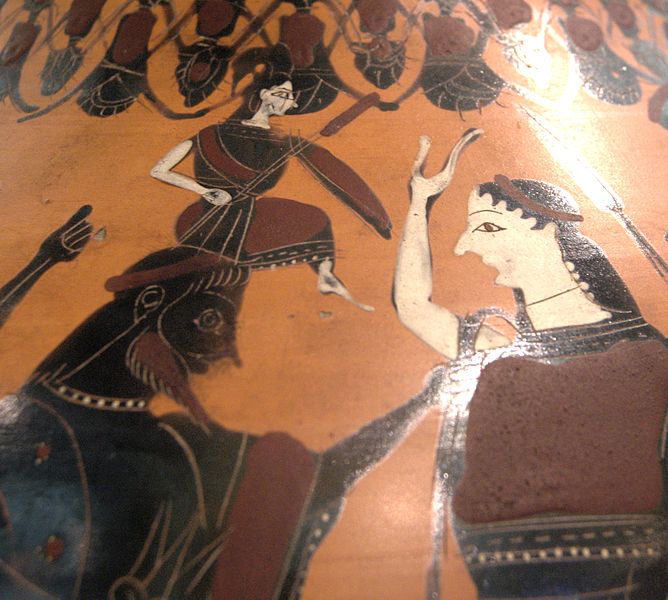
Zeus with Athena popping out of his head. Like a daisy!


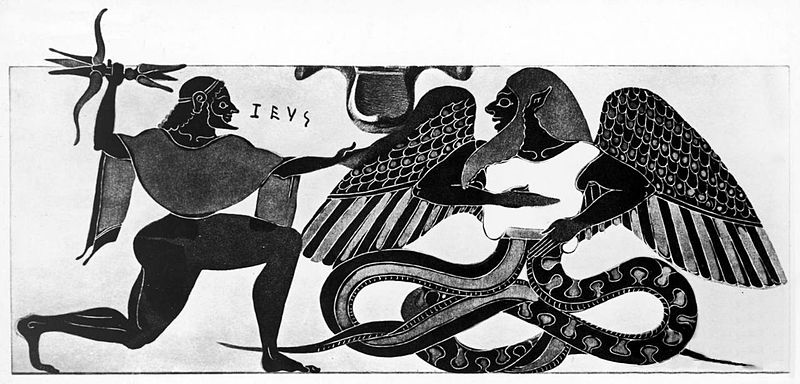
Zeus fighting Typhon, beard a-wagging!


Zeus and Hera having sexy hangouts!


However, the Romans, as they do, changed things up somewhat; early Rome didn't do much shaving, but by the second century B.C.E. clean-shaven faces had caught on as a serious fashion, denoting the discipline of the empire and visually reminding all and sundry that they weren't lazy hedonists who couldn't be bothered to pick up a razor or these other barbarian tribes with their face-forests (ironically, it was often specifically intended to broadcast to others that the Roman with such nicely shorn cheeks was not Greek). However, because the majority of religious art of Jupiter was based directly on previous Greek art, the god remained bearded despite the general disfavor of beards among the populace.


Jupiter rocking it out with the royal eagle!


Jupiter laying down some household law!


Jupiter on the back of a coin, looking suave!


Now, technically, there is no "image" of the big-G God of Judaism or Christianity or Islam; he's formless and made of unbelievable splendor and so forth, is never physically described in any of the religions surrounding him, and it was actually quite expressly forbidden to try to make images of God in the ancient and even medieval stages of the religions. However, humans are gonna be humans, which means they like making art of things they feel strongly about, so pictures of God inevitably came into the general cultural consciousness. It's no surprise that the image of God that eventually formed became one of an older, imposing male with flowing beard, similar to previous depictions of gods in the Middle East, because it came out of generally the same area. Images of God were scattered and generally ununified, happening on and off from around the tenth century when the Church officially lifted the ban on divine art, but as usual it's the Renaissance that really shaped the modern conception of what God "looks like"... and the Renaissance was, of course, born in Italy and heavily influenced by the Greco-Roman myths of its bygone ages. Painters were throwing god up on a sacristy and then turning around and splashing Jupiter across a colonnade, and it's inevitable that both took on a certain similar style.

However, it's not really accurate to say that Zeus' image was used for that of the Christian God; honestly, it really wasn't. As you can see from all the pictures up above there, the only things that images of Zeus and images of God really have in common is the beard and a certain air of importance, and even those usually aren't shown the same way. Zeus is usually naked or scantily clad, showing off his badass physique (because the ancient Greeks and Romans loved them some physique!); God is seldom shown in a full-body image, and when he is is almost invariably in long, concealing robes. Zeus has the typical Greco-Roman beard going on, closely shaved and curly, and when we have color usually black or brown; God usually has a flowing stick-it-in-your-belt beard, and is almost always grey or greying. Zeus appears in active poses, passing judgment, throwing thunderbolts, schmoozing with his wife and so on; God is usually passive, peering down at the action from heaven, or occasionally waving his hands to make pronouncements or bestow blessings.

There are exceptions to all of these, of course, but the bottom line is that the two deities really weren't actually conceived of all that similarly. Ancient Greek religion, which placed great emphasis on personal skill, majesty and personality, conceived and artistically represented their god as an athletic but imposing young ruler, a living and attractive part of the universe, while Christianity, which instead emphasizes God's omnipotent power and all-encompassing benevolence, needed a symbol with less action and more dignity, turning to the shorthand of venerable old age and benevolent distance from the world to represent the object of their worship.

Basically, God has to be dignified and fatherly, and Zeus has to be badass and sexy. The overlaps, prior to the modern day, are present but few.

However, I'd argue that it's not the image of God that's being infiltrated by Zeus in the modern day, but rather the other way around. Modern pop culture images of Zeus are clearly influenced by Christianity's ideal of the distantly benevolent, aged patriarch, leading to many, many images in which the King of Olympus has turned to white hair and overlong beard or appears far more distant from events that he might otherwise.


Age of Mythology's Zeus, with familiar muscles and beard but distinctly older than most Greek sources would have shown him.


God of War's Zeus, with beard a-flowin' and obviously advanced age.


Age of Zeus' Zeus, looking like he escaped from an old folks' home for people with superpowers.


Clash of the Titans' Zeus, not yet grey but rocking a crazy barbarian beard and restricted to moping around his house on Olympus for the whole movie hoping people will love him again.


Tip of the iceberg - go to any popular site for art and plug in the word "Zeus", and you'll see page after page of long white beards. The modern idea of what a god - specifically a fatherly, in-charge god - looks like has not only solidified the modern conception of the Christian god but now in reverse affects the gods of other cultures as well (Odin also gets a lot of this - the more modern the image, the more likely he is to look like an old and benevolent father figure instead of a crazy-ass war god).

Now that I've spent most of an hour looking at pretty amphora pictures instead of other useful things I should probably be paying attention to, we can finally roll on down to the last question, which is how Zeus might feel about all this mess. It's a question for individual Storytellers - every ST has different ideas about the exact personality of a given god in their games - but we'd probably assume that Zeus is perfectly fine with all of the above, when and if he notices it (which probably isn't a lot, he's a pretty busy guy). Zeus has always been one of the gods most recognized, worshiped and bowed to in the western world, and it probably doesn't even occur to him to be pleased by the continuing endurance of his image - that's just the natural order of things, after all. You don't get pleased that air still exists when you want to breathe; Zeus probably isn't pleased when mortals still love him, because he has a perfectly healthy ego and would never expect them to do otherwise. Of course, he would probably like some of the old respect to get back into play - where his burnt cattle, you guys? - but he'd be much more surprised if people forgot to make pictures of him than if they make pictures that are slightly wrong.

And, being a god who has at least enough Epic Appearance to barbecue Semele, he can probably look like basically whatever "version" of himself he likes, appropriate to his needs, audience and the moment. Most of the time, we assume he remains his youthfully bearded, sexily muscled Greek self, but since it's unlikely that those expecting to see a long grey beard are going to be any less impressed by him, the exact details are mostly superfluous. Zeus is Zeus. Bow down and everyone will get along just fine.

Monday, April 22, 2013

The Course of True Love

Question: I don't know if you play DOTA, or even know of it, but Zeus is a character in it. In DOTA, he's fighting other, lesser creature, and since its a game they can fight back. The explanation for this is that Hera, sick of his sleeping around, turns him into a mortal (but he still has some power) until such time as he learns to be faithful. So, thoughts, opinions? Why or why not would this be able to happen? Personally, I thought that his brothers would get PISSED and stop her, but I don't know for sure.

Heh, we know the DOTA (Defense of the Ancients, for those who don't, a battle mod for online multiplayer in Warcraft III). We're old WC3 players ourselves, and now John is dancing around the room singing about it.

While the Lord of Heaven is totally awesome to have on a DOTA team, we wouldn't duplicate his circumstances in Scion for a few reasons. The most important one is that we feel strongly that there should not be powers in the game that can drop someone Legend permanently, no matter who's doing it or why. It would be horrendously overbalanced, being immediately the most powerful ability in the entire game (Death of the Soul is already bananas, and it can only do this to gods for a few ticks!), capable of instantly rendering any and every god or Scion murderable, controllable and comparatively helpless when dealing with foes of his former Legend or higher. When your Legend is taken away, you lose all your powers and innate abilities that are higher than that current Legend, representing not just an insane loss of XP but a massive and incontrovertible drop to where you are literally incapable of dealing with the people and problems you know anymore. The gods that had the power to drop others' Legend would outright rule the world with no competition except for one another, and everyone else would be at their depressing mercy.

It's a case where one of the golden rules of roleplaying comes into play: is this something that you would find absolutely horrible, unfair or grounds for immediately quitting the game if it happened to your character? If so, it should not be in the game at all, because if it is, at some point it might happen to the PCs. If you can't look your player in the eye and say, "Sorry, bud, you drop from Legend 10 to 4 permanently and lose all your powers," it probably shouldn't be an option for things that can happen to NPCs, either. On top of that, we don't think losing Legend dots from any agency other than your own actions makes much sense in Scion's setting; Legend isn't just your power stat but also represents your importance to the World and its religions, the strength of your renown and stories, and the general effect you have on the universe as a whole. Dropping your Legend means erasing your renown and power in mythology from the universe itself, and it runs counter to the entire idea of Legend as the measure of a god's existence.

That doesn't mean this scenario couldn't happen in Scion, though, just that we would probably operate it differently. Zeus can presumably drop his own Legend and stay lower-powered indefinitely if he has the Avatar Birthright, so the easiest assumption here is that he's the one keeping himself at a lower Legend rating. This is a marital spat, after all, and while the king and queen of Olympus don't have them very often, they're legendarily disruptive when they do; Hera might simply have kicked him out until he proved he could behave himself, and he's trying to do that to appease her. If that doesn't feel like enough to convince him to give up the comfy throne for a while (which is reasonable - he presumably has a lot to do, and while he's very fond of Hera he also sometimes gets pissed off rather than apologizing for his shenanigans), Hera could enforce his desire to do these things with some of her own powers. Demand a Labor would make it in Zeus' best interests to prove his love to his wife because it would be very difficult for him to get anything else done before he did, and it would be a simple thing for Hera to hit him with any number of unpleasant, crippling or painful Justice boons, refusing to grant him a Pardon until he earned it.

Of course, this would be a very bad idea while the gods are busy trying to fight a war against high-powered enemies, but love (and Virtues) sometimes makes people do crazy things. As for Hades and Poseidon, I could see them being peeved if Zeus being AWOL interferes with their own plans or makes the defense of Olympus more difficult, but as a generality I imagine they probably wouldn't care about whether or not Hera is inflicting marital vengeance on her husband. They don't have Loyalty and aren't really big on interfering in their brothers' affairs, so they'd be most likely to shake their heads and ignore it unless it started causing them personal problems. There's also a possibility that they'd get up to more shenanigans of their own than usual, too - with Zeus, the only dude in their pantheon who can really try to argue with them about anything, out of commission, now's the perfect time for power plays or vengeance gambits that might not normally be worth it.

I think Zeus' absence and the PCs' actions, either to help him succeed or try to get things done in his absence, could be a lot of fun as the foundation plot for a chronicle. You could call it "When Mama Ain't Happy."

Friday, April 19, 2013

Spot the Difference

Question: Zeus has, in a number of myths displayed an impressive command of shapeshifting, even going so far as to impregnate Danae in the form of a shower of gold. Do you think it would be too much of a stretch to give him Illusion as associated? And if not, what are the criteria you look for while giving out this particular association? Most other purviews are fairly self-explanatory, but Illusion has always been a purview I have not been able to properly ascertain the applicability of.

You're not alone. Illusion is probably the most difficult purview to assign to a god of all of them, which shouldn't be too surprising. It is, after all, a set of powers dedicated to looking like you're doing other things, which makes it difficult to notice it happening without a really great degree in Shenanigans Studies.

To get the easier question out of the way, no, we wouldn't consider Illusion for Zeus. He does do quite a bit of shapechanging, but that's the only thing he ever does that could be interpreted as an Illusion power, and it's something even a Legend 5 Scion could probably do with Dreamcraft and a decent roll. Combined with the total lack of illusionist, trickster or dream imagery associated with Zeus, it's just not enough to justify saying that he has the Avatar of the purview.

As for deciding when a god should have Illusion, however, there's no really clear answer and it's sometimes just exceptionally difficult to figure out. Some gods do have Illusion, but others are good at mundane disguises, using Magic spells creatively, messing around with their Appearance or just really great liars. There are a few good hallmarks we look for, but in the end sometimes we just have to make a judgment call and keep refining it if we come up with new stories or information.

Some gods are very easy to identify as masters of illusion; Manannan mac Lir is a good example of this, since he not only shapechanges but also does things like laying permanent veils of invisibility over people to separate them and conjuring up false images of a phantom fleet to confound his enemies. For those gods who aren't actively conjuring up visions, those who perform a lot of different transformations are often candidates, particularly if they transform into various different kinds of things instead of only animals or only different images of people (Loki's a good example of this kind of illusion usage). Gods who manipulate dreams or visions in others, like Morpheus, for example, are also possible candidates for Illusion since they specialize in creating and manipulating unreality. Gods who obscure reality in some way and are called upon to do so on behalf of others are also possible illusionists, which is the case for Marishiten, who was called upon to obscure the movements of armies and confuse their enemies.

But these are all just indicators; some gods that do those things really aren't suitable candidates for Illusion, while others that don't still end up with the purview (like Brahma, who is lord of creation in a world where all things created are illusions). It's also important to consider what the god is the patron deity of, what his character is as a god and whether or not those things affect his eligibility for the purview. We consider tricksters to be more "likely" candidates for Illusion than some other kinds of gods, since bending reality and creating diversions is part of their character as gods, and similarly we might consider gods who are known as dreamweavers or shapeshifters before others. Conversely, gods who do things that might be illusions but who have characters completely opposite the idea - Zeus, for example, who represents divine order and doesn't have a trickstery bone in his body, falls under this category - are poor candidates for gods who can embody The Trickster in times of need.

But, of course, every trickster does not have Illusion, and every god with Illusion is not a trickster. In the end, it's a judgment call based on stories and epithets and divine personality, like all the other purviews, but since the purview is about uncertainty, confusion and misdirection by nature, it's correspondingly harder to pinpoint than something straightforward like Fire or Guardian.

Basically, Illusion is more of a headache than most purviews. There's no quick and easy absolute, just a set of guidelines and possibilities to come to with an open mind.

Tuesday, March 26, 2013

Happy Families

Question: Suppose a child of Zeus finds out about his or her parentage prior to Visitation and asks to serve Hera as a preemptive means of appeasing her. Is this the kind of thing that Hera might accept? If so, is she going to single out the Scion for poor treatment or treat him or her the same as the rest of her adopted children?

Neat idea! Although a little difficult to pull off - not a lot of ways for mortal children of the gods who haven't had Visitations yet to find out about their birth parents or go talk to goddesses, but I'm sure there could be some way it could happen.

I think Hera would be likely to find it an interesting gesture, and depending on what kind of mood this supplicant Scion caught her in, she might be willing to adopt him. But alas, she would never treat him the same as the rest of her children; not only is she probably not inclined to, but she's almost actually incapable of doing so.

Hera has Vengeance, like all of the Dodekatheon, and is probably one of those who has it at a full, unapologetic five dots to boot. Even if she genuinely likes someone, if her Vengeance says they've done her wrong and need to be lashed out against, that lashing out has a good chance of happening. This poor Scion is coming in with no bargaining power, nothing to offer (because he's still a mortal - he has potential, but she doesn't yet know how that will develop) and no features except being the living evidence of Zeus' disrespect for their marriage, and as a result he's rolling the dice on even surviving his attempt to make nice with her. If she does keep it under control long enough to accept him, he's won a single battle in a possibly neverending war, because her Vengeance will continue to rail against him whenever she sees him.

Of course, if she turns out to really like the kid, she's more likely to be willing to try to roll against her Vengeance and pay Willpower to keep him in one piece, but if she doesn't have a reason to go to all that trouble, she's probably going to make his life hell at least some of the time. Then, too, there's always the danger that she'll make a catastrophic roll one day and hit Vengeance Extremity, at which point the Scion or his philandering biological daddy are both potentially in deep trouble as she goes to rampage mode. The more the Scion can do to ingratiate himself with her, from praising her, bringing her gifts, performing her tasks and speaking out against Zeus' misbehavior, the better his odds will be, but every god has the occasional moment of Virtue-motivated insanity, and Hera's not immune to that.

Just generally speaking, Virtues aside, Hera is probably always going to be harder on this Scion than on her others. He's going to get worse jobs, more difficult problems and colder treatment at the very least; he'll need to prove himself to her in ways that the other children, chosen by her and from less painful origins, don't. The sins of his father are going to hang over his head for a long time, and while he can certainly work to change her perception of him, the simple act of asking Hera to take him on won't make her forget where he came from or prevent her from responding emotionally. Think of the usual response a normal human husband or wife might have to suddenly having to raise their spouse's lovechild from an affair, and then multiply that by the giant overblown emotions of the gods. It can happen, but it won't be easy.

But it's definitely still possible, and I think it would make for a very interesting character story to see how that Scion tried to handle the family politics around him and decided to grow and side with one, the other, or neither of these hugely bad-tempered parents. It's a perfect plot for someone with the Expositor or Penitent nature, and depending on how well the Scion pulled it off, could lead to considerable political power for him on Olympus once he ascended to godhood himself. Hera has accepted Scions of Zeus before - Dionysus and Heracles, though both went through severe trial by fire before she stopped harassing them - and potentially could again, but it's all in how you play it.

And Hera is a pretty awesome patron for a young hero and pretty fond of blessings and forcing the other gods to provide aid or stay out of the way, so there are certainly also rewards for working for her. It's a hard road but one that probably can't help but lead to some really rewarding stories.

Sunday, October 28, 2012

Mother of Disaster

Question: Whatever happened to Metis? Is she still in Zeus’ stomach? How would you go about causing Zeus and Metis to copulate and conceive without Zeus being any the wiser as to the identity of his partner (most likely with the intervention of other pantheons and heavy use of Darkness, Illusion and/or Magic)? What do you think would happen in such a situation (assuming that Zeus did not find out about the child’s existence until it was safely out of his reach)?

Well, Metis got eaten, that is what happened to her. But past that point, there are a couple of interesting options.

The easiest is probably to assume that she escaped when the rest of the Titans did; sure, she was in Zeus' stomach and not Tartarus, but with all the shenanigans going on, it's not far-fetched to think that she might have escaped in the confusion or with the help of other Avatars (or gods!) with an interest in seeing Zeus deposed. We already know from the case of Cronus and his devoured children that in Greek myth being eaten doesn't necessarily mean being digested or killed, so events might have transpired to make Zeus vomit her back up. He might be desperately trying to marshal the Dodekatheon to find her before it's too late, or he might be hiding the fact that he's lost her while he tries to manage it on his own, loath to let the rest of the pantheon know that his grip might be slipping. Metis on the loose is a very dangerous prospect for Zeus; he's not known for being overly perceptive or brainy, and Metis is the very embodiment of craftiness. I don't think you need all that much extra help from other gods for her to seduce him again; Metis' Manipulation score can probably already overcome Zeus' Perception without her breaking a sweat, and her ability to plan amazing plans is way out of his league.

However, we're also pretty fond of the idea that Metis is still in Zeus' stomach, chilling out. She's a zillion times smarter than he is, after all, so it makes sense to us that she might have allowed herself to be eaten as part of some larger plan; maybe she wanted to prove a point, maybe she's trying to avoid ruining Zeus, or maybe she's just playing a much more complex, long-range game. She could have all kinds of crazy goals that being inside Zeus helps her achieve - already she didn't have to go to Tartarus with the other Titans, right?

Furthermore, I doubt she needs to actually have sex with Zeus again to create this foretold son; she's actually in him, and if she has basic Health boons or other powers to help her could easily get pregnant without having to come back out and do things the old-fashioned way (she already gave birth to a baby while inside him once, after all!). Even more interesting, she might be able to meddle with Zeus' reproduction from within - since Metis is now contained within Zeus and therefore kind of part of Zeus, any children he sires while she's in there could also be considered her children if she does some behind-the-scenes wizardry, making any son Zeus has now potentially the fulfiller of the Prophecy.

We always like to leave the door open for any Scion of Zeus to possibly be the foretold harbinger of doom. They don't have to be - especially PCs, who can make their own choices about what their relationship with Zeus is like - but it's always a neat possibility to have out there. Zeus would probably get warnings that things were about to happen - he is, after all, a powerful oracular god - but, just as in the past, he isn't really well-equipped to find out about or handle situations that aren't specifically brought to his attention, so it probably wouldn't be difficult at all for the foretold son of Zeus to survive long enough to be a threat. It'd be very interesting for Zeus to shepherd his own Scion along without realizing that he was helping the very person destined to defeat him, or for the boy to grow up under the wing of Athena, the only other living child of Metis and Zeus.

Wednesday, September 19, 2012

The Boss' Wife

Question: So Zeus and Hera tend to be constantly at each others throats, and their (meaning of course Zeus', since Hera, at least in myth, tends to be quite faithful as far as I know) kids often get to be the pawns of their marital arguments, much like Hercules and the Labors. I would say it is safe to imagine that Hera would torment almost any and all Scions of Zeus. Is there any hope for the children of the Olympian king? Or are there always going to be snakes in all their cribs and madness-induced murder?

Hera is, indeed, completely and totally faithful only to Zeus; even the wacky mystery religions, which come up with truly insane side genealogies and affairs for many of the Greek gods, never touch her. As the goddess of marriage and the family who has never had any lover before her husband, she couldn't have any flesh-and-blood Scions of her own without not only breaking the rules but actually flouting her own central representation as a goddess. She has no children that are not also Zeus' children with the possible exception of Hephaestus, who in some alternate versions is her parthenogenic son and does not have a father.

On the other hand, Zeus probably has, like, all the Scions, and you're right, Hera is unlikely to be happy about any of them. While the Titan war has certainly put the gods in dire straits and Scions are certainly necessary for them to eventually triumph, it's unlikely that Hera would be able to ignore her own nature or her husband's infidelity even in the name of cooperation and the war effort (after all, she adopts her Scions, so why can't he?). Scions of Zeus are probably always going to have to deal with her anger and dislike, which could range from infanticide attempts to making their missions hellish to sabotaging their every move when they get to Olympus and are on her home turf. I would say that, in the name of Scion's setting, Hera will probably not actively try to murder Zeus' Scions most of the time as much as make them the most miserable people in creation (murdering their families, for example, totally not off-limits); she's a savvy lady and she understands the need for shock troops, but if calm and logical reason was enough to override five dots of Vengeance, none of the Greek gods would have half the problems they do.

If you're worried about Scions of Zeus feeling too picked on, feel free to spread the anti-love around to other Scions who spring from Zeus' misbehavior; after all, Greek gods are all about punishing several generations of those who offend them, so Scions of Hermes, Apollo, Artemis or Persephone might also find her wrath turned upon them for being the grandchildren of Zeus' affairs. (Scions of Dionysus may be exempt, since he's the only illegitimate child of her husband who ever managed to convince Hera that he was a great guy and she should love him. Beleagured targets of her wrath may want to go beg him for advice on how he did it.)

Or if you're looking for a way to have a Scion of Zeus who doesn't have a giant bullseye painted on his forehead, consider having him be the son of both Zeus and Hera instead of born out of wedlock; as long as Hera was willing to take on a low-Legend Avatar form for the conception and birth, we rule that goddesses can give birth to Scions who aren't full gods from the outset (this is what Vishnu and Lakshmi, and other famously monogamous couples, usually do in our games). Of course, that depends on whether your Storyteller is down with it - I know of some games that require both parents to be in low-Legend Avatar form to have non-god children, and some that don't allow it at all - but it might be a good workaround for that rare, shining Scion of Hera who is her blood child, or of Zeus who isn't marked for extraordinarily angry goddess reprisal.

By the way, an interesting theory was suggested to me via email by a fellow Scion enthusiast the other day; the idea was that since the prophecy that Zeus' son will overthrow him is still in effect, Hera is actually killing off all his bastards in an effort to protect him from it coming to pass, rather than just because she hates them (though, again, Vengeance, so she probably hates them at least a little). They don't know who the mother of this prophesied son might be, so Hera may actually be acting to save her husband from himself and preserve their rule of Olympus by murdering children who might threaten him when they grow up. Considering that Scions are exactly the sort of children who have mighty prophecies spring up around them, she wouldn't be off-base to fear that any new son might be the chosen one. So for those looking for a version of Hera that is more sympathetic and supports the legendary solidity of their marriage more, that might be an interesting plot point all on its own.

Alas, Scions of Zeus will always have a hard row to hoe, even if they're trying their very best to impress their cranky stepmother. But that's how it goes when you're the destined sons of the ruler of the Greek universe; nobody said being at the top was going to be easy.